Nice Tourist Scams: A Guide to Staying Safe on the French Riviera
Last updated July 2026. Nice tourist scams rarely turn violent, but distraction pickpocketing, taxi overcharging, and beach theft cost visitors real money every season. Most schemes cluster on the Promenade des Anglais, in Vieux-Nice, and around Nice Côte d'Azur Airport, where crowds and unfamiliarity work in the scammer's favor. The sections below name the specific streets, squares, and setups worth watching for, from Place Masséna's petition clipboards to the beach stretch along Quai des États-Unis.
How Safe Is Nice, Really?
Nice tourist scams are almost entirely nuisance crimes rather than violent ones. Losing a phone off a café table is far more likely than facing a physical confrontation. For the fuller picture, including neighborhoods and after-dark conditions across the city, see the Nice safety overview. None of this is unique to Nice; the same distraction and overcharging patterns are common across popular coastal destinations wherever dense tourist crowds meet high visitor spending. What changes from place to place is the exact street or square where a given con runs, which is why local specifics matter more than a general warning. Treat the sections below as the tactical layer: exact streets, squares, and setups where visitors actually lose money.
- Distraction and team pickpocketing in dense crowds
- Theft from towels and bags left unattended
- Price-inflation tricks aimed at anyone who looks unfamiliar with local rates
Where Nice Tourist Scams Happen Most
Nice tourist scams cluster in a handful of predictable places, all of them dense with visitors and easy to blend into. Pickpocketing activity is reported to peak during Nice Carnival in February, when Promenade crowds are thickest.
- Promenade des Anglais: the seafront boulevard where pickpocket teams and bracelet sellers work the crowds, especially near beach entrances.
- Cours Saleya: the flower and food market in Vieux-Nice, where bag-watching gets hard among the stalls and lunch crowds.
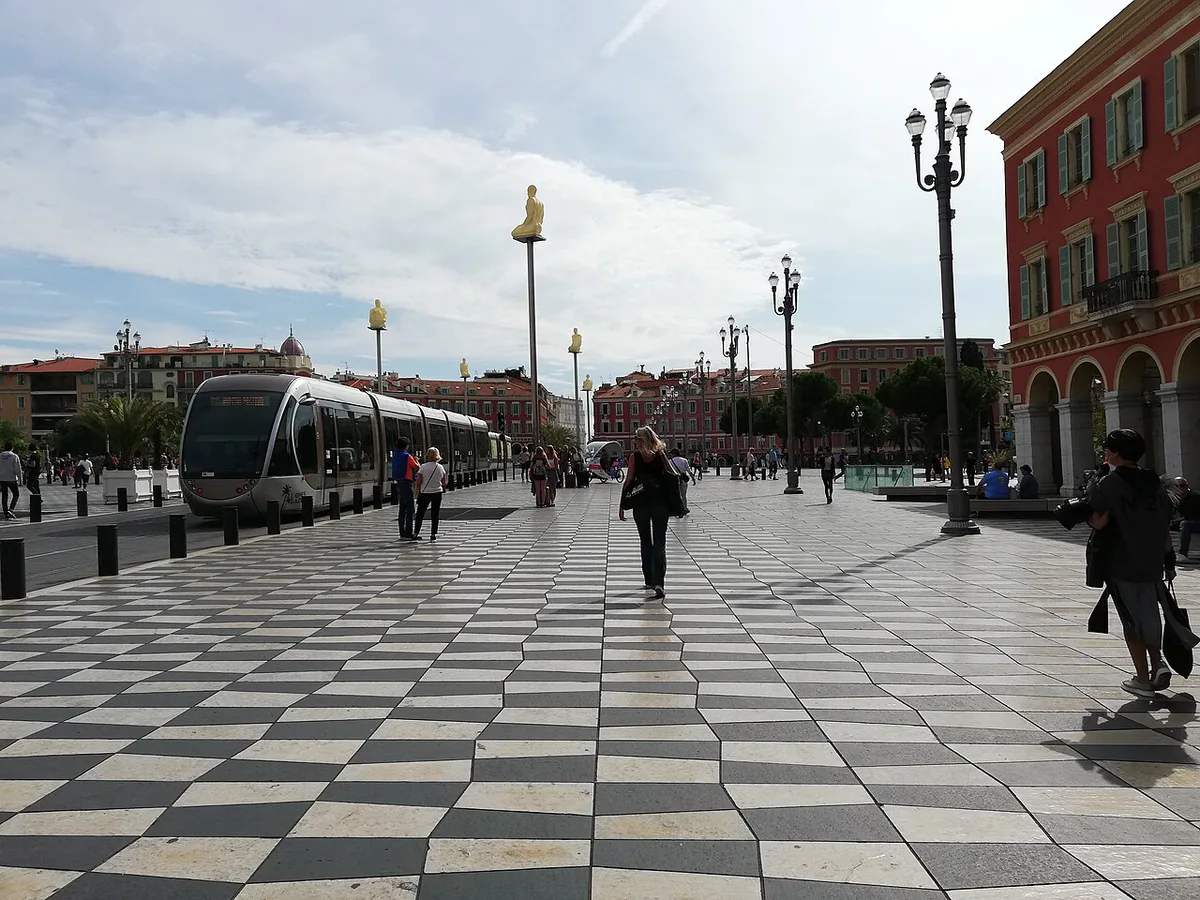
- Place Masséna: the main square, home to the fake charity petition described below.
- Vieux-Nice's narrow pedestrian streets: tight alleyways near Castle Hill with an easy exit for distraction teams.
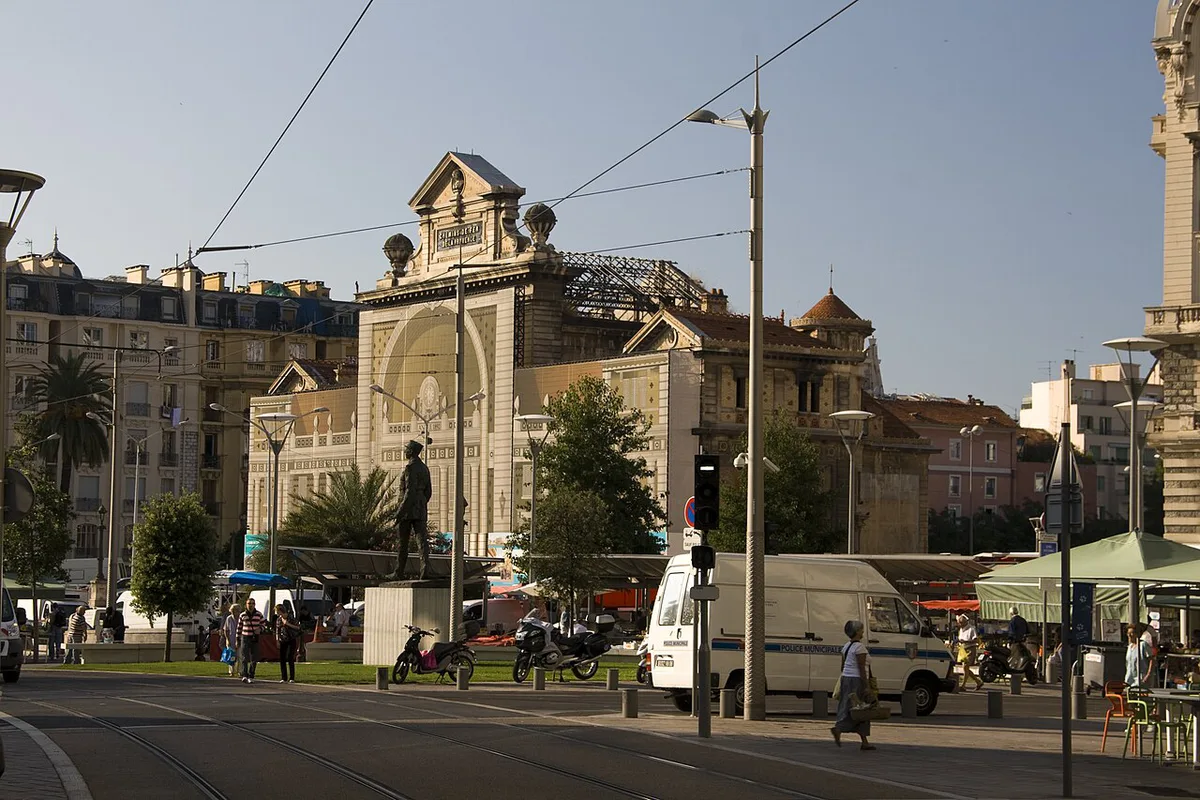
- Gare de Nice-Ville: the main train station, where surrounding streets call for extra caution after dark. The Nice Areas to Avoid: Safety Map, Tourist Traps & Where to Stay (2026) guide breaks down exactly which streets.
Airport and Taxi Scams: From Nice Côte d'Azur to Your Hotel
Nice Côte d'Azur Airport is the single most common entry point for Nice tourist scams. Unlicensed or opportunistic drivers wait in the unregulated drop-off areas outside the Terminal 1 and Terminal 2 arrivals halls, ahead of the marked taxi rank. They offer a flat 'discount' rate before you've had any chance to compare it. A second con appears once you're inside a legitimate cab: the driver claims bags in the trunk cost extra. The posted fixed fare at the rank already includes luggage, so refuse the surcharge and note the driver's company if they insist. Tramway Line 2 runs directly from the airport to Place Masséna for a flat ticket price well under any taxi fare, with no meter to worry about. Luggage-surcharge attempts are also reported along Boulevard du Général de Gaulle, on the route many drivers take toward the center. Ride-hailing apps such as Uber offer another way around both cons. The fare is fixed and shown before you accept, so there's no meter to dispute and no rank to queue at. Confirm the driver's plate and car model against the app before getting in, the same way you'd check a licensed taxi.
Most arriving passengers through Terminal 1 and Terminal 2 can reach central attractions like Place Masséna on Tramway Line 2, but those same hubs along the Promenade des Anglais concentrate the highest reported pickpocket and bracelet-seller activity.
- A lit rooftop taxi sign
- A meter the driver starts immediately, without prompting
- A visible license plate, queued at the signposted official rank
Street Cons and Distraction Scams
Three cons account for most reported street-level Nice tourist scams incidents in Vieux-Nice and along the Promenade. All three rely on physical contact or a moment of engagement, so the fastest defense is refusing to stop.
- Fake charity petition: a stranger near Place Masséna asks for a signature on a clipboard, then pushes for a cash donation or uses the moment as a pickpocketing distraction. Decline and keep walking without taking the pen.
- The found gold ring: someone 'discovers' a ring on the pavement beside you and offers to sell it cheap, or insists you dropped it and pressures you to pay for its return. It isn't gold; walk on.
- Friendship bracelet: a vendor on the Promenade or in Vieux-Nice ties a cord bracelet onto your wrist before you can refuse, then demands payment and causes a scene if you resist. Keep your wrists away from anyone offering a 'free' gift.
Booking and Tour Scams to Screen Out Before You Arrive
Some Nice tourist scams start before you land. A booking confirmation email may look like it's from your hotel. It sometimes names a real property near Castle Hill or in Vieux-Nice, then asks you to click through and re-enter card details to 'confirm' the room. Legitimate hotels don't ask for a card number a second time by email. Go directly to the hotel's own website, or call the number listed there, instead of clicking any link. Treat a QR code inside a booking email the same way. A related con shows up in person: unofficial 'walking tour' guides pitch cash-only tours near Cours Saleya and around the entrance to Castle Hill. They either overcharge or never produce a guide with real credentials. Book tours through an established platform or your hotel's concierge instead of accepting a street pitch.
Beach Theft on the Promenade
Beach bag theft ranks among the most reported Nice tourist scams for anyone who swims. The busiest public beach stretches, between Quai des États-Unis and the Ruhl area, see the highest concentration of reports. Private beach-club loungers, where bags sit unattended while owners swim, see it too. Thieves work in seconds while you're in the water. Take a waterproof pouch for your phone, cash, and a passport copy into the water instead of leaving valuables on a towel. Local consignes (luggage lockers) near the Promenade offer a lower-effort option before a swim than trusting an open beach spot. Swimming in pairs, so one person always stays with the bags, closes the gap fastest. Simplest of all: leave passports, spare cards, and anything not needed for the day in the hotel safe rather than carrying them to the beach.
Dining and Nightlife Money Traps
Restaurant service in France must legally be included in the menu price, printed as 'service compris.' A dishonest waiter may still add a separate 'service' or 'gratuity' line to your card total, hoping you won't check. Compare the printed bill against the menu before paying, and question any charge that isn't itemized there. The single most common way tourists lose a phone in Nice's outdoor cafes is leaving it face-up on the table. A passing hand can take it in seconds; keep it in a pocket or bag instead. Nightlife areas near the Promenade and Vieux-Nice see sharper versions of these patterns after dark. The Nice at night guide covers neighborhood-specific advice for after-dark plans.
ATM Skimming and Dynamic Currency Conversion
Dynamic currency conversion, or DCC, shows up at ATMs and card terminals along the Promenade. The machine offers to charge your card in US dollars instead of euros, at an inflated exchange rate baked into the offer. Always choose euros; your own bank's exchange rate beats the machine's conversion every time. Before inserting a card, check the slot and keypad for anything loose, glued on, or added on top of the factory hardware, since that's the signature of a skimmer. Withdraw from bank-branch ATMs where possible, rather than freestanding machines in the busiest tourist stretches.
Rental Car Break-Ins
Parked rental cars are a separate target for anyone road-tripping the Riviera from Nice. Break-ins happen when bags, electronics, or even empty-looking boxes are visible through a window. Clear the car completely before walking away, including the trunk, not just the back seat. Park in staffed or camera-covered lots rather than unattended street spots near the beach or major landmarks. Overnight, use a hotel garage or a monitored car park instead of a free curbside spot, even if it costs a little more.
Nice Tourist Scam or Normal? A Quick Reference
Not everything that feels off in Nice is actually a scam, and not every real scam feels obvious in the moment. Use this table to sort common situations fast. When in doubt, the safer move costs nothing. Decline, keep walking, and let a genuinely lost item or legitimate request find another way to reach you.
| Situation | Verdict |
|---|---|
| A stranger asks you to sign a petition near Place Masséna | Scam — decline and keep walking |
| Someone 'finds' a gold ring and offers it to you | Scam — it isn't real gold |
| A vendor ties a bracelet on your wrist before you agree | Scam — refuse contact and walk away |
| A taxi driver charges extra for luggage in the trunk | Scam — the posted airport fare already includes it |
| The bill lists a separate 'service' charge | Check the menu — service should already be compris |
| An ATM offers to charge your card in US dollars | Decline — choose euros for the real exchange rate |
How to Report a Scam in Nice
Report a scam while the details are still fresh. Petty theft and street cons generally fall to the Police Nationale, while the Police Municipale handles more local, lower-level order issues. Either can point you to the nearest station to file a report. For anything urgent, dial 17 for police or the EU-wide 112 for general emergencies. Save the report number; card issuers and travel insurers both typically ask for it.
Thieves on the Promenade and beach operate within seconds; dial 17 for police immediately and keep the report number for card issuers and travel-insurance claims.
The Scam-Free Nice Checklist
Run through this before you head out for the day in Nice.
- Take taxis only from the signposted rank outside each airport terminal.
- Confirm a lit roof sign, a running meter, and a visible plate before getting in.
- Skip clipboards, free bracelets, rings, and rosemary sprigs from strangers.
- Keep your phone in a pocket, never face-up on a café table.
- Take a waterproof pouch into the water instead of leaving valuables on your towel.
- Choose euros, not dollars, at any ATM or card terminal.
- Clear a rental car completely, trunk included, before leaving it parked.
- Compare your restaurant bill against the printed menu before paying.
- Decline booking-confirmation emails that ask for card details again; call the hotel directly instead.
- Report anything suspicious to the Police Nationale or Police Municipale while details are fresh.
Cours Saleya Market: Payment and Change Traps
Cours Saleya’s flower and food market creates ideal conditions for distraction theft. Crowds compress around stalls between Rue Saint-François de Paule and the Vieux-Nice lanes. One person may block your path or ask a question while an accomplice reaches into an open bag. Wear backpacks in front and close every zipper before entering the busiest rows.
Most established traders are legitimate, but visitors should still verify each payment. Confirm the displayed price before accepting produce, flowers, or packaged goods. Watch the card terminal screen and select euros if it offers currency conversion. Do not let anyone take your card away from the stall.
- Count cash change before leaving the counter.
- Keep wallets off stall surfaces while packing purchases.
- Ignore unsolicited help at nearby cash machines.
- Move to the edge of the market before checking directions or messages.
After shopping, stay alert in the narrow exits toward Rue de la Préfecture. These bottlenecks make phones and loosely carried bags easier targets.
Further reading: Nice on Wikivoyage · Nice on Wikipedia
Frequently Asked Questions
What is the most common tourist scam in Nice?
Distraction pickpocketing is the most frequently reported issue, working the crowds on the Promenade des Anglais, in Vieux-Nice, and around Cours Saleya market. Teams use bumps, fake petitions, or a 'free' bracelet to create a moment of distraction before lifting a phone or wallet.
Are taxis safe to use in Nice?
Taxis from the official rank at Nice Côte d'Azur Airport are generally reliable, since drivers there run the meter or quote the posted flat fare. The risk comes from unlicensed drivers who approach before the rank, and from luggage-surcharge claims once you're in the car; the posted fare already includes bags.
Is Nice safe at night for tourists?
Nighttime risk in Nice stays at the same nuisance level as daytime: pickpocketing and overcharging rather than violent crime. Extra caution is worth applying near Gare de Nice-Ville and in less-lit stretches of Vieux-Nice after dark.
Do you need to tip in Nice restaurants?
No. French law requires service to be built into the menu price, marked 'service compris.' A small extra euro or two for good service is appreciated but not required, so treat any separately itemized 'gratuity' line on the bill as something to question.
What should you do if you're pickpocketed in Nice?
File a report with the Police Nationale or Police Municipale as soon as possible, since you'll likely need it for a travel-insurance or card-fraud claim. For anything urgent, dial 17 for police or 112 for general emergencies.
What's the single easiest way to avoid Nice tourist scams?
Refuse to engage. Nearly every con here depends on you stopping to sign something, examine a 'found' item, or let someone place an object on your body. Keep walking and most of these setups fail on their own.