Avignon Public Transport Safety: Buses, Trams, and the Two-Station Trap
Last updated June 2026, this guide breaks down Avignon public transport safety across trains, trams, buses, and cycle paths so you can plan routes with confidence instead of guesswork. Avignon's Orizo network, the Virgule shuttle train linking Gare TGV and Gare Centre, and the compact intramuros core each carry different safety considerations, especially after dark or when connecting between the city's two stations. What follows walks through each hub, each line, and each time of day, with pointers to related guides on scams and after-dark risk where they matter most.
Avignon Public Transport Safety: The Quick Overview
In our editorial assessment, Avignon's public transport network is straightforward and generally safe for tourists, provided you plan for situational awareness rather than assume every stop and hour behaves the same way. The city is served by Orizo, the operator (formerly known as TCRA) that runs the local bus lines and the newer T1 tram, alongside the Virgule, a short shuttle train linking Avignon's two mainline stations, and the Baladine, small electric shuttles that circulate inside the historic walls. For a broader read on how transit safety fits into the city's overall risk picture, this guide to the overall safety picture in Avignon is worth checking before you map out routes. The core pattern to remember: risk in Avignon is less about the mode of transport and more about where and when you use it, particularly around the two stations and at the edges of the historic core after dark.
- Orizo — buses and the T1 tram line covering the city and its suburbs
- Virgule — shuttle train connecting Gare TGV and Gare Centre in about 5 to 6 minutes
- Baladine — small electric shuttles circulating inside the historic walls
- Velopop and ViaRhôna — self-service e-bikes and cycle paths for soft mobility
Gare TGV vs Gare Centre: The Two-Station Connection
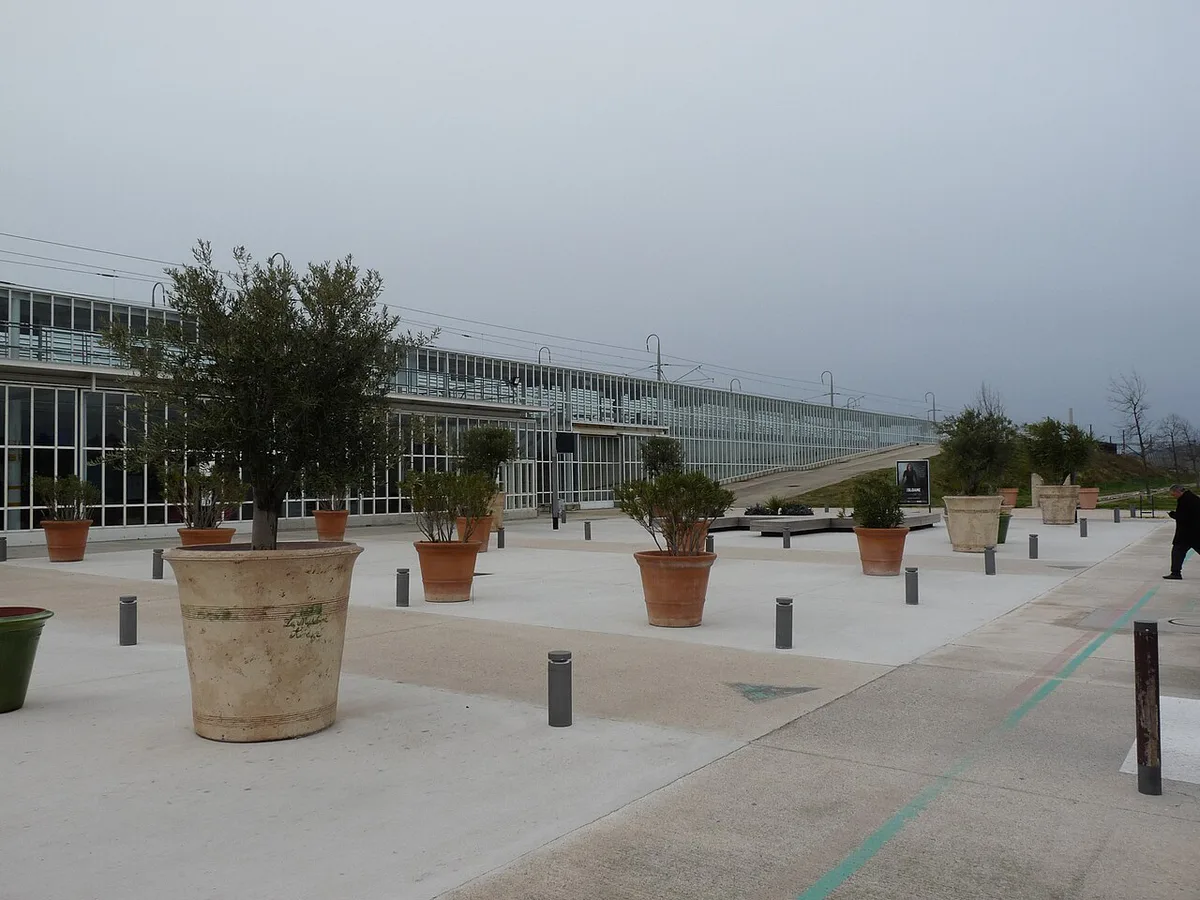
Avignon operates two distinct train stations, and confusing them is the single most common mistake that turns a routine arrival into a stressful, late-night logistics problem. Gare d'Avignon-Centre sits inside the city, roughly a two-minute walk from the historic core and about a 15-minute walk to the Palais des Papes; it opened in 1849 and remains the busier, more central hub. Gare d'Avignon TGV, opened in 2001, sits about 6km south of the center and has none of the intramuros walkability of its counterpart — arriving here expecting to stroll to the ramparts is the two-station trap that catches travelers off guard. The two stations are connected by the Virgule, a shuttle train on the TER Avignon TGV–Carpentras line that covers the gap in roughly 5 to 6 minutes. A taxi or navette (shuttle bus) covers the same 6km by road in around 15 minutes, which tracks given traffic and routing compared with the direct rail link. For late-night arrivals into Gare TGV, when the Virgule's frequency has thinned out, pre-booking a taxi or VTC is the more predictable option, since you avoid depending on a rank that may be quiet after the last few trains of the day. Gare Centre's location inside the city means more foot traffic, shops, and lighting nearby, while Gare TGV's more modern, standalone building is efficient but comparatively isolated after dark. Neither station is unsafe by design, but the safety calculus shifts once you factor in arrival time: a same-day daylight connection is easy on the Virgule, while a late arrival favors a pre-booked car.
Orizo Buses and the T1 Tram: What to Expect
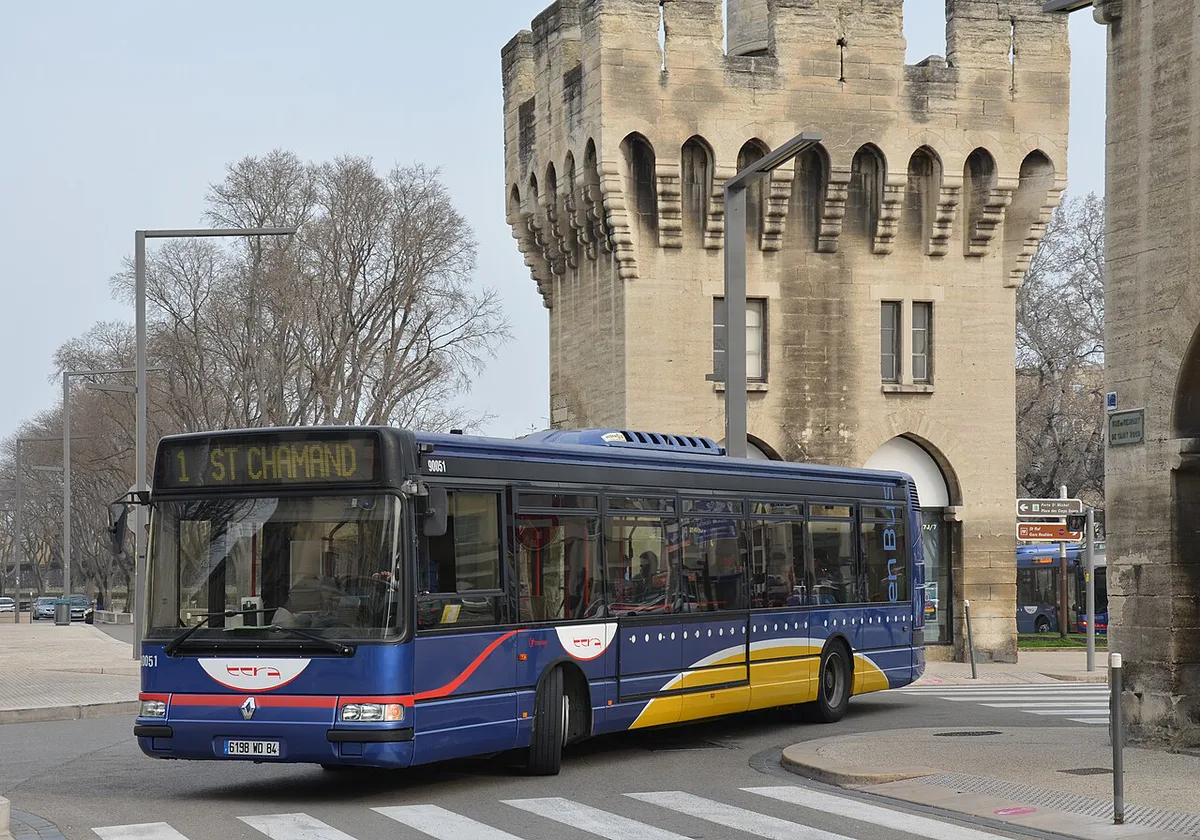
Orizo operates Avignon's buses and the T1 tram line, and day-to-day safety on both is unremarkable in the best sense: normal urban-transit awareness is enough for the vast majority of rides. The T1 tram is the newer addition to the network, running on a fixed, well-trafficked corridor, which tends to mean more visible ridership and less of the isolation you might find on a quieter late bus route. Bus safety changes character once a line leaves the intramuros core and heads toward the outskirts. Routes serving the suburbs and edge neighborhoods carry a different profile than the tram and central bus corridors, and if a route takes you near districts flagged in this rundown of neighborhoods worth extra caution, it is worth timing that leg for daylight hours or pairing it with a taxi on the return. Pickpocketing risk on Orizo services concentrates at the busiest interchange points rather than spreading evenly across the network — hubs like Poste and Gare Centre see the heaviest foot traffic and the most crowding, which is exactly the environment pickpockets favor. Keep bags zipped and in front of you at these transfer points specifically, more than on quieter residential stops. The official Orizo app displays real-time arrivals, which lets you time a walk to a stop rather than stand around an isolated corner waiting — a small habit that meaningfully reduces exposure at low-traffic stops after dusk.
Walking and Cycling: Avignon's Soft Mobility Safety Profile
Avignon markets itself around soft mobility, and the safety profile of walking and cycling here is generally favorable, especially inside the walls. The city maintains close to 260km of cycle paths, and cyclists arriving from further afield can connect via the ViaRhôna (EuroVelo 17), an 815km route running from Lake Geneva to the Mediterranean that reaches Avignon via a suspended footbridge over the Rhône to Barthelasse Island, inaugurated in autumn 2023; the Mediterranean-arc EV8 route is reachable via the ViaRhôna from Beaucaire. For short hops without your own bike, Velopop's self-service electric bikes put 300 bicycles across 29 stations in Avignon, Le Pontet, and Villeneuve-lès-Avignon, available 24/7, which is a more visible and trackable way to get around than an unfamiliar rental with no support network. Inside the walls, walking is often the safest and most efficient way to move: Avignon is a human-scale city, and its UNESCO-listed historic core, medieval streets, and squares are built for pedestrians rather than heavy traffic. The main pedestrian safety consideration is narrow streets shared with cars and delivery vehicles rather than personal-safety risk — stay alert at junctions without clear sidewalks rather than treating intramuros walking as risk-free. A free river shuttle (the bac à traille) crosses the Rhône from Quai de la Ligne, near the Pont d'Avignon, to Barthelasse Island and is fully equipped for travelers with reduced mobility, making it a low-friction, supervised way to reach the island's paths without cycling.
Night-Time Transport: Service Hours and Safer Alternatives
Orizo's bus and tram frequency drops off well before midnight, and service thins out to the point that waiting for a scheduled ride late at night is not a reliable plan; check Orizo's official site directly for the current night timetable before relying on a late departure, since frequencies are adjusted periodically. For a fuller picture of after-dark risk citywide, this guide to after-dark safety in Avignon covers neighborhood-level detail beyond transit specifically. The stops worth avoiding after dark are the isolated ones at the edge of the network rather than the busy central interchanges — a quiet suburban bus stop with no shops or lighting nearby carries more risk late at night than a crowded stop near Gare Centre. Walking alone from Gare Centre to extramuros hotels late at night, without having checked the route in advance, is one of the more common avoidable mistakes visitors make; a short taxi ride removes that variable entirely. For nights when Orizo's schedule has wound down, VTC services (Uber operates in Avignon) and Radio Taxi Avignon's local taxi ranks are the dependable fallback. Booking ahead — especially for a late TGV arrival — means you are not standing at an unfamiliar rank working out logistics at midnight.
Late arrivals into Gare TGV face isolation and thinning Virgule frequency, making pre-booked taxi or VTC the safer choice over waiting at a quiet rank. Walking alone from Gare Centre to extramuros hotels late at night without route planning is equally risky—both arrivals warrant advance planning.
Buying Tickets Safely and Dodging Common Scams
Buy Orizo tickets through official channels only: staffed Orizo boutiques, the automated machines at major stops, or SMS ticketing, all of which avoid handing cash or a card to a third party. The most common ticket-machine pitfall in Avignon, as elsewhere, is a stranger offering unsolicited help at the machine, usually as a distraction or a setup for a swapped card or overcharge; this guide to common scam tactics in Avignon covers the pattern and how to shut it down politely but firmly — decline the help and use the machine's own instructions or ask uniformed staff instead. The Avignon City Pass, issued through Avignon Tourisme, adds a convenience and security layer for visitors who plan to use transport and sights repeatedly: contactless entry reduces the number of times you need to handle cash, cards, or paper tickets in public, which in turn reduces exposure at exactly the crowded machine and turnstile moments scammers rely on.
Pickpockets and ticket-machine scammers target the same crowded hubs—Poste, Gare Centre—where foot traffic peaks and handling cash or cards is unavoidable. Keep bags zipped, use official ticket channels, and decline unsolicited help: standard caution applied where both risks concentrate.
Safety Checklist for Avignon Commuters
The comparison below reflects a qualitative, editorial read of each mode rather than a numeric score, and is meant to help you match the right option to the time of day and the leg of the journey. The Baladine electric shuttles are also worth flagging specifically for solo travelers, older visitors, or anyone who prefers a slower, more visible way to move through the center; for broader guidance on navigating the city alone, see this guide to traveling alone in Avignon.
| Mode of Transport | Safety Profile | Best For | Night Availability |
|---|---|---|---|
| Orizo bus / T1 tram | Generally secure with standard urban-transit precautions, in our editorial assessment | Daily intramuros-to-extramuros trips | Frequency drops sharply before midnight; check Orizo for current hours |
| Virgule shuttle train | Straightforward, supervised rail link between stations | Connecting Gare TGV and Gare Centre | Frequency thins late; pre-book a taxi for late TGV arrivals |
| Baladine electric shuttle | Visible, slow-speed shuttle well suited to solo or older travelers | Short hops inside the historic walls | Limited to daytime and early-evening hours |
| Walking (intramuros) | Favorable, thanks to human-scale, pedestrian-oriented streets | Short trips inside the walls | Best on lit, populated streets after dark |
| Cycling (ViaRhôna / EV8 / Velopop) | Favorable on dedicated paths; standard road-sharing caution elsewhere | Longer regional trips and Barthelasse Island | Not recommended on unlit paths at night |
| VTC / Radio Taxi Avignon | Predictable, bookable alternative once transit service has thinned | Late-night and TGV-station transfers | Available on demand; pre-book late TGV arrivals |
- Assuming Gare TGV is walking distance from the walls, when it is actually about 6km out, not the 15-minute stroll Gare Centre offers
- Walking alone from Gare Centre to extramuros accommodation late at night without checking the route beforehand
- Accepting unsolicited help from a stranger at a ticket machine instead of using official channels or asking staff
Frequently Asked Questions
Is public transport safe in Avignon in 2026?
Yes, in our editorial assessment Avignon's public transport is generally safe for tourists, with the main precautions centered on timing (avoiding isolated stops late at night) and location (being deliberate about which of the two stations you use and how you connect between them).
Should you arrive at Gare TGV or Gare Centre?
Gare Centre sits inside the city, about a 15-minute walk from the Palais des Papes, while Gare TGV is roughly 6km south of the center with no walkable route into the walls. If your train only stops at Gare TGV, plan to take the Virgule shuttle train (about 5 to 6 minutes) or a taxi (around 15 minutes by road) rather than assuming you can walk in.
How do you get between Avignon's two train stations safely?
The Virgule shuttle train on the TER Avignon TGV–Carpentras line covers the roughly 6km gap in about 5 to 6 minutes and is the most direct option during normal service hours. Late at night, when the Virgule's frequency thins out, pre-booking a taxi or VTC is the more predictable choice, particularly for arrivals into Gare TGV.
Is the Orizo bus and tram network safe for solo travelers?
Orizo's buses and T1 tram are unremarkable-safe for solo riders on central, well-trafficked routes, and the Baladine electric shuttles offer an even more visible, slower-paced option inside the walls for anyone who prefers extra visibility while getting around.
What is the biggest ticket-buying mistake to avoid in Avignon?
The main pitfall is accepting unsolicited help from a stranger at an Orizo ticket machine. Buy through staffed boutiques, the machine's own menu, or SMS ticketing instead, and treat any unprompted offer of assistance at the machine as a red flag rather than a courtesy.