
Avignon Tourist Scams: A Local Safety Guide for Travelers
Last updated June 2026, this guide breaks down the Avignon tourist scams most likely to catch travelers off guard, from petition scams near the Palais des Papes to taxi tricks outside Avignon TGV. Provence's papal city draws heavy foot traffic around Place de l'Horloge and the Pont d'Avignon, and that density is exactly what makes petty deception worthwhile for a small number of opportunists. Knowing the patterns in advance, especially during the Festival d'Avignon in July, is the simplest way to keep cash, cards, and valuables where they belong.
Is Avignon Safe? Understanding the Real Risks
Avignon is, on balance, a safe destination for both first-time and repeat visitors, and most trips pass without incident. The risk profile leans toward petty theft and scam-style deception rather than violent crime, and that distinction matters for how to prepare: a scam relies on tricking a traveler into voluntarily handing over money, a signature, or card access, while petty crime such as pickpocketing takes something without any interaction at all. Recognizing which pattern is in play in the moment is often the difference between walking away and losing a wallet. For the fuller picture on how Avignon compares to other Provençal towns overall, the overall safety guide to Avignon is the place to start; this guide focuses specifically on the deception-based Avignon tourist scams that recur around its most visited landmarks, from the Palais des Papes to Avignon TGV.
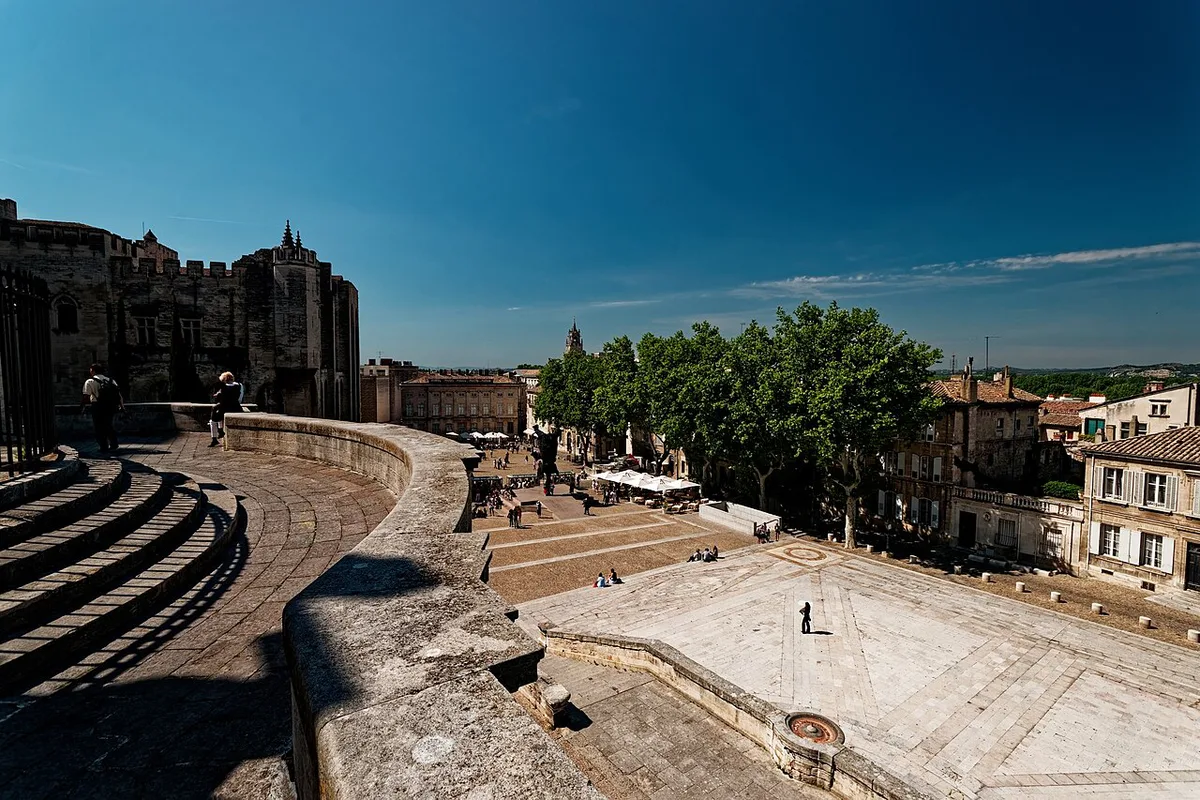
Common Avignon Tourist Scams Near the Palais des Papes and Place de l'Horloge
The historic core around the Palais des Papes and Place de l'Horloge is where Avignon tourist scams cluster most densely, simply because that is where foot traffic peaks. The same handful of street-level deceptions recur season after season, and recognizing the setup is usually enough to walk past it. For a broader rundown of which districts carry higher risk away from the main squares, see the guide to areas to avoid in Avignon.
- The petition scam: a person, often part of a small group, approaches with a clipboard asking for a signature for a charitable cause. Signing invites a follow-up demand for a cash donation, and the clipboard also creates a moment of distraction for a second person to work a bag or pocket. This is reported most often near the Palais des Papes and along Place de l'Horloge.
- The dropped ring or friendship bracelet: a classic French street scam that also shows up in Provence. A stranger finds a ring on the ground and offers it, or begins tying a bracelet onto a wrist before demanding payment for it. Declining before any physical contact happens is the simplest way out.
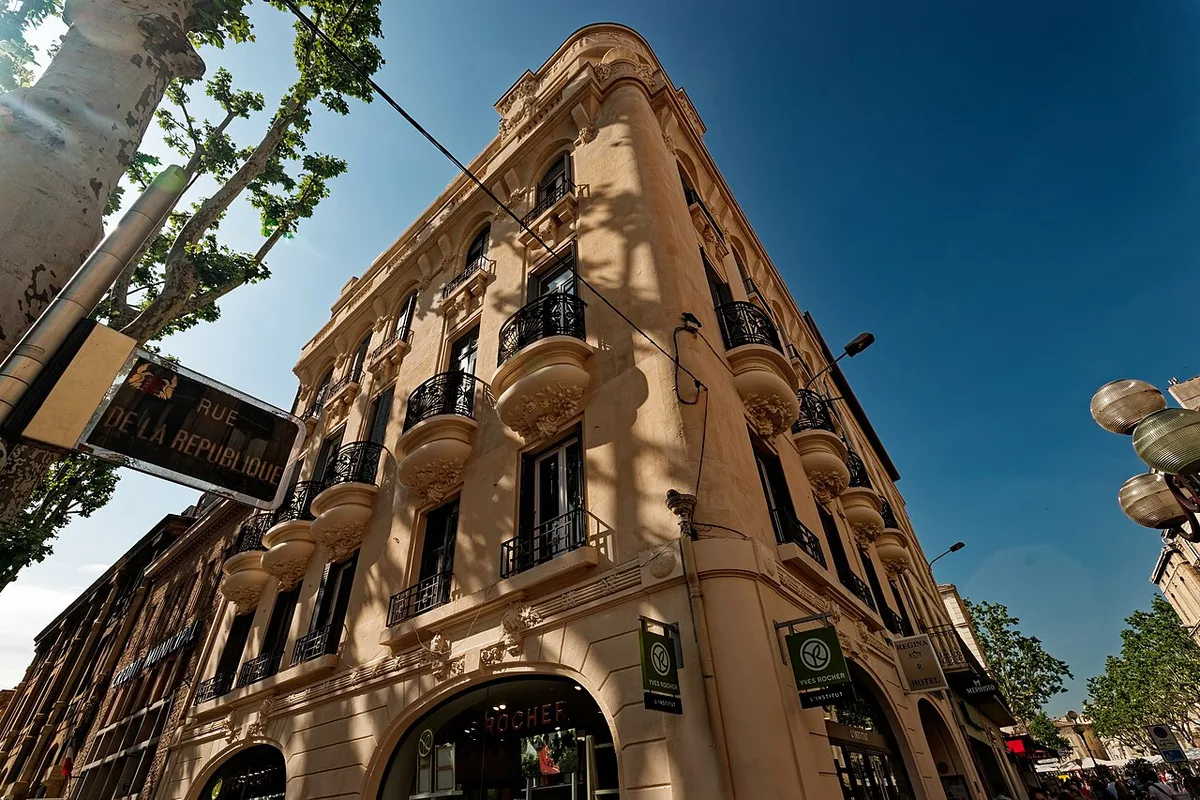
- The helpful local at ATMs: around cash machines near the Rue de la République, someone offering unsolicited help with a jammed card or confusing screen is a common distraction technique. Politely declining and shielding the keypad is enough to shut it down.
Transport Scams: Navigating Avignon TGV and Avignon Centre
Avignon has two train stations, and the gap between them is exactly what a small number of opportunists exploit. Avignon TGV sits outside the walled historic center, while Avignon Centre sits inside it, and travelers arriving on the high-speed line need either the Navette shuttle or a taxi to close that distance. That transfer moment, tired travelers with luggage in an unfamiliar station, is prime territory for transport-related scams. For a fuller look at how buses, shuttles, and taxis fit together across the city, see the guide to public transport safety in Avignon.
- The unofficial taxi trap: unlicensed drivers touting for fares outside Avignon TGV may quote a price that turns out to be inflated, or claim the official taxi rank is full or closed. Licensed taxis operate from a marked rank; walking to it rather than accepting an approach in the car park avoids the issue entirely.
- The broken meter excuse: a driver who claims the meter is broken and proposes a fixed cash price mid-journey, after the car is already moving, removes a traveler's ability to compare or negotiate. Agreeing on a price, or confirming the meter is running, before the car pulls away is the fix.
- Train station distractions: offers of unsolicited help with luggage at Avignon TGV or Avignon Centre can be a pretext for a second person to work a bag left unattended for even a few seconds. Keeping hold of bags through the platform-to-taxi transition removes the opening.
Dining and Shopping Traps in the Historic Center
Restaurants clustered immediately around major monuments and market stalls at Les Halles see enough one-time tourist traffic that a minority can get away with practices a repeat local clientele would never accept. None of this means avoiding the historic center's restaurants and markets altogether; it means reading the setup before committing to a table or a purchase.
- The tourist menu markup: fixed-price menus posted directly outside major sights such as the Palais des Papes or Place de l'Horloge are not automatically bad value, but comparing the posted price against a menu one or two streets back is a reasonable habit before sitting down.
- Hidden service fees: in France, service charge, service compris, is built into the menu price by law, so an additional obligatory service fee added at the table is worth questioning. A tip beyond that is a discretionary courtesy for good service, not a requirement, per French consumer-protection guidance published on Service-Public.fr.
- Counterfeit goods: market stalls, including at Les Halles, occasionally carry counterfeit branded goods alongside genuine Provençal products such as textiles, ceramics, and soap. Buying from stalls without clear pricing or provenance carries the usual counterfeit-goods risk found at open-air markets across France.
Festival d'Avignon Scams: Staying Safe During the July Crowds
The Festival d'Avignon in July multiplies foot traffic across the historic center, and with it, the density of both street performers and the pickpockets who work the crowds gathered to watch them. The seasonal spike also creates its own scam category around lodging and tickets that simply does not exist the rest of the year. Solo travelers moving through packed evening crowds during the festival may also want the dedicated guidance on solo female travel safety and on Avignon after dark.
- Accommodation scams: short-term rental listings that seem unusually cheap for the festival's peak dates, or that push a traveler to pay outside a platform's official system, are a recurring pattern during July. Booking and paying only through a platform's verified channel is the standard defense.
- The street performer distraction: a dense circle of onlookers around a festival performer is an easy environment for a pickpocket to work, since attention is on the show rather than on bags or pockets. Keeping valuables in a front pocket or zipped bag while watching street performances is a simple precaution.
- Last-minute ticket scams: shows that appear sold out sometimes attract resellers offering tickets at a markup with no guarantee they are valid. Buying only through the official Festival d'Avignon box office or its authorized partners avoids the risk of a worthless ticket at the door.
Red Flags, Prevention Checklist, and Genuine vs Scam Comparison
Most Avignon tourist scams share a recognizable shape: an unsolicited approach, a request that requires immediate cash, and a setup that discourages a moment's pause to think it over. For the transfer between Avignon TGV and the historic center, the Navette shuttle is the straightforward, schedule-linked option tied to train arrivals, while a taxi makes more sense late at night when shuttle frequency drops or when traveling with heavy luggage. A cross-body bag with a zip closure, worn to the front in crowded squares such as Place de l'Horloge or during festival performances, addresses most of the street-level risk described above. The comparison below separates a normal, welcome interaction from one that should prompt a traveler to disengage.
Petition clipboards, unsolicited ATM 'help,' luggage assistance at train stations, and street performer crowds all employ the same tactic: they distract a traveler while an accomplice targets an unguarded bag or pocket. Recognizing this pattern across different Avignon locations helps travelers stay alert in any setting.
| Situation | Genuine Local Interaction | Potential Scam |
|---|---|---|
| Someone approaches with a clipboard | A registered charity worker with visible ID and no cash request | A petition immediately followed by a demand for a cash donation |
| Help offered at an ATM | A bank employee inside the branch, if assistance is needed | A stranger who steps in uninvited near the keypad |
| A taxi fare at Avignon TGV | A metered fare from the official taxi rank, agreed before departure | A flat cash price quoted by an unlicensed driver in the car park |
| A stall at Les Halles | Clearly priced Provençal goods sold from a fixed, licensed stall | Unpriced 'branded' goods sold without a receipt |
- Red flag at Place de l'Horloge: a vendor or performer who blocks a direct path rather than working alongside it.
- Red flag at Place de l'Horloge: any request for a cash donation immediately following a signed clipboard or petition.
- Red flag at Place de l'Horloge: restaurant staff who will not show a printed, priced menu before seating a table.
- Red flag at Place de l'Horloge: pressure to decide immediately on a bracelet, ring, or street item without agreeing a price first.
What to Do If You Are Scammed in Avignon
Acting quickly limits the damage if an Avignon tourist scam succeeds despite precautions. Cancel any compromised bank cards immediately, and file a formal report, a plainte, with the Police Nationale. A commissariat report is also typically required for any travel-insurance claim tied to theft, so keep a copy of the reference number.
- Call 17 for the Police Nationale in a non-life-threatening theft or fraud situation, or 112 for the general European emergency number, which also connects to police, fire, and medical services.
- File the plainte in person at the nearest commissariat as soon as possible; a police report generally needs to be filed before leaving the country for it to support an insurance claim.
- Contact the bank or card issuer directly to freeze or cancel any card used in a suspected scam, and monitor the account for further unauthorized charges.
- For consumer-protection questions, such as disputed dining charges or contested purchases, Service-Public.fr outlines the legal rights available to residents and visitors in France.
Avignon Scam Hotspots by Area
Most scam risk in Avignon follows a predictable visitor route rather than spreading evenly across the city. The highest-alert stretch is the walk from Rue de la République into Place de l'Horloge and up toward the Palais des Papes, where clipboard approaches, bracelet sellers, and distraction tactics have the most passing foot traffic to work with.
Near the Pont d'Avignon and the Rhône-side viewpoints, the issue is less organized scamming and more unattended bags while visitors take photos, especially when tour groups cluster at the same lookout. Around Les Halles, check prices before buying Provençal soap, textiles, or branded-looking goods, and avoid rushed cash-only purchases without a receipt.
Avignon TGV is the separate transport hotspot because it sits outside the walled center. Treat anyone approaching before the official taxi rank or shuttle area as a red flag, especially if they claim the normal transfer options are closed, full, or too slow.
Frequently Asked Questions
Is Avignon safe for tourists in 2026?
Avignon remains a safe destination for tourists in 2026, with most risk sitting in petty theft and street-level deception rather than violent crime. Staying alert around the Palais des Papes, Place de l'Horloge, and Avignon TGV, and knowing the common Avignon tourist scams described above, covers most of the real risk visitors encounter.
What is the most common tourist scam in Avignon?
Petition and clipboard-based scams near the Palais des Papes and Place de l'Horloge, along with distraction pickpocketing in dense festival crowds, are among the most frequently reported Avignon tourist scams.
Should travelers take a taxi or the Navette shuttle from Avignon TGV?
The Navette shuttle is the straightforward, schedule-linked option for the transfer between Avignon TGV and the historic center, while a licensed taxi from the official rank makes sense late at night or with heavy luggage. Either way, avoid unlicensed drivers approaching in the car park.
Do restaurants in Avignon require a tip on top of the bill?
No. Service charge, service compris, is built into menu prices by law in France, so any additional tip is a discretionary courtesy for good service rather than a requirement.
What should tourists do if they get scammed in Avignon?
File a plainte at the nearest commissariat, cancel any compromised bank cards immediately, and call 17 for the Police Nationale or 112 for general emergencies. A police report is typically needed to support any related travel-insurance claim.
Are pickpockets a bigger risk during the Festival d'Avignon?
Yes. The Festival d'Avignon in July draws dense crowds around street performers and the historic center, and that density is exactly the cover pickpockets rely on, making festival dates the period to be most deliberate about bag placement and valuables.


