Bucharest Areas to Avoid: A Guide for Travelers
Last updated July 2026. Most guides to Bucharest areas to avoid start with Ferentari and Rahova, two low-income Sector 5 districts with little to offer visitors and no reason to detour toward. This guide separates neighborhoods with real safety concerns from ones that are simply inconvenient, and links out to the fuller Bucharest safety guide for city-wide context.
The Reality of Safety in Bucharest
Bucharest ranks among the safer capitals in the European Union for violent crime. Numbeo's Safety Index and European Commission crime reporting are commonly cited to make that comparison, and in our editorial assessment the city holds up well against Paris and London on that measure. The real risk profile here is petty rather than violent: pickpocketing on crowded trams and buses, overcharging at unlicensed taxi ranks, and a short list of peripheral districts with little to no visitor infrastructure. None of that makes Bucharest a dangerous destination by Western European standards. It does mean a handful of neighborhoods are worth skipping, not because they threaten tourists directly, but because they offer nothing to see and little reason to detour toward. That pattern holds across most of the city's central sightseeing routes: petty theft clusters wherever crowds gather, rather than concentrating in any one dangerous zone. US and UK travel advisories for Romania consistently classify the country at their lowest risk tiers, urging normal precautions rather than heightened caution. That advisory language lines up with what most visitors report. Crowded tourist zones, transit hubs, and a few peripheral districts call for awareness. The rest of the city functions like any other major European capital.
Which Bucharest Areas to Avoid, and Why
Four districts come up most often when Bucharest residents are asked which neighborhoods to skip. Two, Ferentari and Rahova, sit in Sector 5 south of the center. The other two, Pantelimon in Sector 2 and Giulesti-Sarbi, are cited for different reasons: outdated reputation and poor transit access rather than active risk. None of the four are formally off-limits, and none require a special detour to avoid, since they sit outside where a typical Bucharest itinerary goes.
- Ferentari (Sector 5): Bucharest's most consistently cited district to avoid. Poverty is severe and there is essentially no infrastructure for visitors: no hotels, no sights, no restaurants worth the detour. It is not a war zone, and passing along its edges by car or bus poses little practical risk, but there is no reason for a tourist to enter on foot.
- Rahova (Sector 5): A large residential district bordering the center. The stretch nearest Centrul Vechi is simply unremarkable, not risky. The deeper residential blocks farther from downtown are the part locals mean when they list Rahova as a neighborhood to skip. Most travelers who end up near it are there by accident, having booked budget accommodation without checking the map first.
- Pantelimon (Sector 2): Carries a reputation built decades ago that no longer matches reality. Today it is a working residential area with heavy traffic and no visitor sights, not a district linked to elevated crime. Locals who list it as an area to avoid are usually thinking of the past, not the present.
- Giulesti-Sarbi: Thin metro and tram coverage and little to see once you arrive. The travel time out costs more than the neighborhood returns in things worth doing, and it sits far enough from the metro network that most itineraries never come near it anyway.
Night Travel and Public Transport Safety
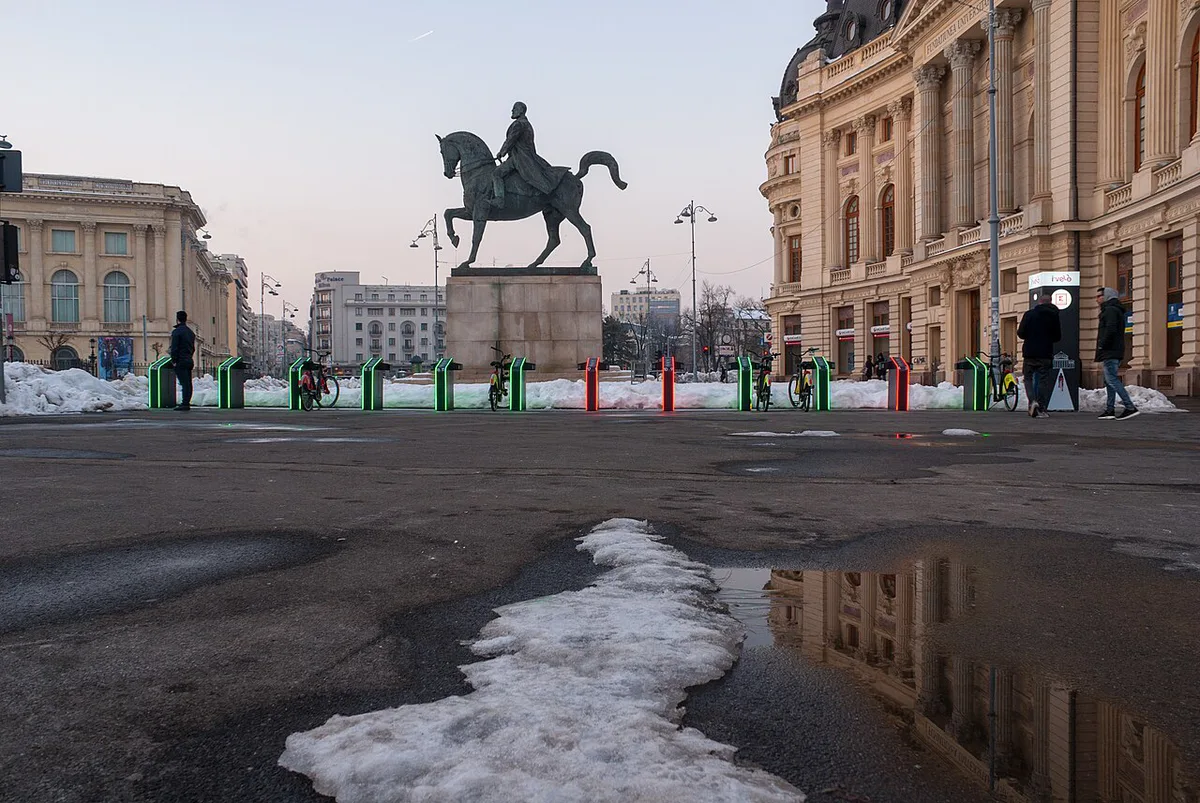
Gara de Nord, Bucharest's main train station, is the spot most first-time arrivals worry about after dark. The station itself is gritty rather than dangerous, but pickpockets work the platforms and concourse, and touts pushing unmarked taxis crowd the exits. As of 2026, booking a ride through Uber or Bolt before stepping outside sidesteps both problems. Confirm the driver's name and plate number in the app rather than accepting an offer shouted from the curb. Skip any driver who approaches you inside the station itself. For the full breakdown of scams tied to this station, see the Bucharest tourist scams guide. The Metrorex network is the safest way to move around after dark. Trains run from early morning until shortly after 23:00, when STB night buses take over on the main corridors. Once metro service winds down, stick to a booked ride-hailing car rather than walking through unlit residential streets on the city's outskirts. Crowded trams and buses are also where pickpockets are most active, so keep bags zipped and in front of you. Validate a physical ticket or activate a mobile ticket immediately after boarding any STB tram or bus; inspectors do check, and an unvalidated ticket is the most common trouble tourists run into on public transport. For a full rundown of after-dark precautions, read the Bucharest night safety guide. Daytime arrivals at Gara de Nord are considerably lower-risk than late-night ones. If a train or flight lands after 22:00, arranging pickup through a ride-hailing app in advance removes most of the friction. Keep luggage close and zipped through the concourse, since that is where opportunistic theft is most reported.
Safety vs. Inconvenience: The Neighborhood Matrix
Not every neighborhood missing from a hotel search is dangerous. Militari and Drumul Taberei, for example, are safe, heavily residential, and clogged with traffic. They hold nothing of interest to a visitor and sit well outside the central metro stops. Confusing boring with dangerous is the most common mistake travelers make when researching where to stay. In our editorial assessment, here is how the areas in this guide compare on safety and tourist relevance. Use the Tourist Interest column first. If it reads None, the safety rating almost never matters, since there is nothing pulling an itinerary in that direction anyway. A Low safety score paired with None tourist interest, as with Ferentari, is the combination that earns a firm skip. A High safety score paired with None tourist interest, as with Militari, just means there is no reason to go, not that it is risky.
Bucharest ranks safer than many European capitals for violent crime, yet most neighborhood-avoidance advice reflects inconvenience rather than danger. Actual risks—petty theft on crowded transit and at taxi stands—concentrate in crowds, not districts. Accommodation near central metro stations is the clearest practical safety move.
| Neighborhood | Safety Level | Tourist Interest | Primary Reason to Avoid |
|---|---|---|---|
| Ferentari | Low | None | Poverty, no visitor infrastructure |
| Rahova (outer blocks) | Low-Medium | None | Poverty, distance from sights |
| Pantelimon | Medium-High | Low | Outdated reputation, heavy traffic |
| Giulesti-Sarbi | Medium-High | None | Poor transit access, nothing to see |
| Militari | High | None | Traffic, distance, no tourist draw |
| Drumul Taberei | High | None | Traffic, distance, no tourist draw |
Where to Stay Instead
For a secure, well-lit base, stick to the districts repeat visitors already favor. Each of the three below sits close to transit, restaurants, and the main sights, which keeps late-night walks short. All three sit within Bucharest's central transit web, so getting between them, the airport, and Gara de Nord rarely requires a car after dark. Booking accommodation in one of these three removes most of the late-night navigation questions this guide addresses.
Choosing accommodation near central metro stops and restaurants automatically avoids peripheral inconvenient districts. The three recommended neighborhoods—all close to transit, well-lit, and well-trafficked—eliminate most of the navigation concerns this guide addresses by putting visitors in the city's safest, most accessible zones.
- Centrul Vechi (Old Town): Puts you within walking distance of Calea Victoriei's restaurants and bars and most of the central sightseeing.
- Piata Victoriei: A well-lit government and business district with a major metro interchange, convenient for reaching the rest of the city quickly.
- Floreasca: A quieter residential option northeast of downtown, close to the Calea Floreasca dining and business strip.
Common Mistakes to Avoid
A handful of repeat mistakes cause most of the trouble travelers run into in Bucharest. Avoid these and the areas above become far easier to navigate. Most of these mistakes have the same fix. Default to booked transport after dark and stay on well-lit main streets. Treat the four districts above as simply outside the itinerary, not as places requiring bravery to avoid.
- Flagging down a street taxi instead of booking through Uber or Bolt, especially at Gara de Nord.
- Walking alone through unlit outskirts late at night instead of taking the metro or a booked car.
- Ignoring queue and space etiquette on crowded STB buses and trams, where pickpockets work the crowd.
- Assuming every peripheral neighborhood is dangerous, when most, like Militari or Drumul Taberei, are simply inconvenient.
- Worrying about stray dogs in the center: the population has been substantially reduced over the past decade, though it's still sensible to give space to dogs encountered in parks on the city's edges.
How to Check an Accommodation Map Before Booking
Before booking a cheap apartment, check the map against metro access, not just the listed sector. A central address should sit near Piata Unirii, Universitate, Piata Romana, Piata Victoriei, or Calea Victoriei.
Be more cautious with listings southwest of Piata Unirii that point toward Calea Ferentari, Soseaua Salaj, or deep Rahova. They may look close by distance, but the trip can involve poorly lit streets and awkward night transport.
- Prefer a walk of 10 minutes or less to a Metrorex station.
- Treat "near Old Town" loosely if the pin sits south of Bulevardul Unirii.
- Check the route to Gara de Nord separately if you have an early train.
If the address requires a tram or bus after the metro closes, choose a better-connected base instead. In Bucharest, a slightly more central location usually saves more stress than it costs.
For trip-planning details, see US State Department Romania travel advisory.
Frequently Asked Questions
Is Bucharest a safe city for tourists?
Yes. Violent crime is rare, and Bucharest compares well with several Western European capitals on that measure, in our editorial assessment. The main risks for visitors are petty theft, pickpocketing on crowded transit, and overcharging by unlicensed taxis rather than physical danger.
What are the most dangerous neighborhoods in Bucharest?
Ferentari and Rahova, both in Sector 5, are the two districts most consistently flagged for poverty and a lack of visitor infrastructure. Neither is an active danger zone, but neither offers a reason for a tourist to visit.
Is the area around Gara de Nord safe at night?
It is manageable if you stay alert. Pickpockets and taxi touts are the main risks, not violent crime. Book a ride through Uber or Bolt rather than accepting an offer at the curb, and avoid lingering in the immediate station area late at night.
Which areas of Bucharest are best for tourists to stay?
Centrul Vechi (Old Town), Piata Victoriei, and Floreasca are well-lit, well-connected districts close to sights, transit, and dining. This guide recommends all three as a base.
Are there no-go zones in Bucharest?
Not in the sense of areas unsafe to pass through by car or metro. Ferentari is the closest example of a district with no visitor reason to enter, but it is a low-infrastructure neighborhood rather than a zone that is off-limits.
Is Bucharest safe for solo female travelers?
Yes, with the same common-sense precautions used in any major European city. Stick to well-lit streets, use Uber or Bolt after dark instead of hailing a car on the street, and treat Ferentari and Rahova as areas with no reason to visit. Centrul Vechi, Piata Victoriei, and Floreasca are well-trafficked, well-lit bases.
Do stray dogs pose a safety risk in Bucharest?
Far less than a decade ago. The stray dog population in the city center has been substantially reduced, though it is still sensible to give space to any dogs encountered in parks on the city's outskirts.
How many neighborhoods does this guide recommend avoiding?
This guide names four areas travelers commonly ask about: Ferentari, Rahova, Pantelimon, and Giulesti-Sarbi. Only Ferentari carries a genuine case for avoiding it outright; the other three are more about a lack of anything to do than any real danger.