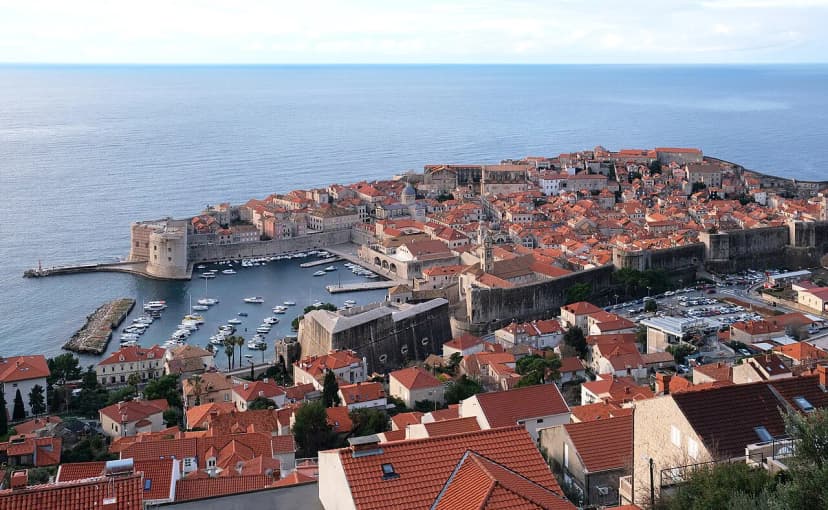
Is Dubrovnik Safe? What Travelers Need to Know Before Visiting
Last updated July 2026. Is Dubrovnik safe? The honest answer is yes: violent crime is rare and petty theft is uncommon by regional standards in this walled Adriatic port. The more relevant safety conversation here is about slick stone streets and steep stairways, not crime rates.
Is Dubrovnik Safe in 2026? The Quick Verdict
Dubrovnik is safe to visit in 2026. Violent crime against tourists is rare, both inside the walled Old Town and across the wider Dubrovnik-Neretva region. Petty theft happens, but less often than in many larger European capitals. Crime-index trackers such as Numbeo have long placed Dubrovnik toward the lower-crime end of the scale for a major European tourist destination. Vision of Humanity's Global Peace Index has also ranked Croatia among Europe's more peaceful countries in recent years, though exact positions shift annually. Treat any specific ranking number you see online as a snapshot, not a guarantee.
The U.S. State Department and the UK Foreign, Commonwealth & Development Office both publish country-specific advisories for Croatia. Check the current advisory tier before departure, since these levels get reviewed periodically and can change. Dubrovnik's Old Town also carries UNESCO World Heritage status, which means it stays heavily monitored and well-maintained year-round. The bigger day-to-day safety factor here is physical terrain, not crime. Slippery streets, steep stairways, and unguarded cliffside bars come up later in this guide. Each matters more to most visitors' trip than any crime statistic.
Crime and Petty Theft: What Actually Happens
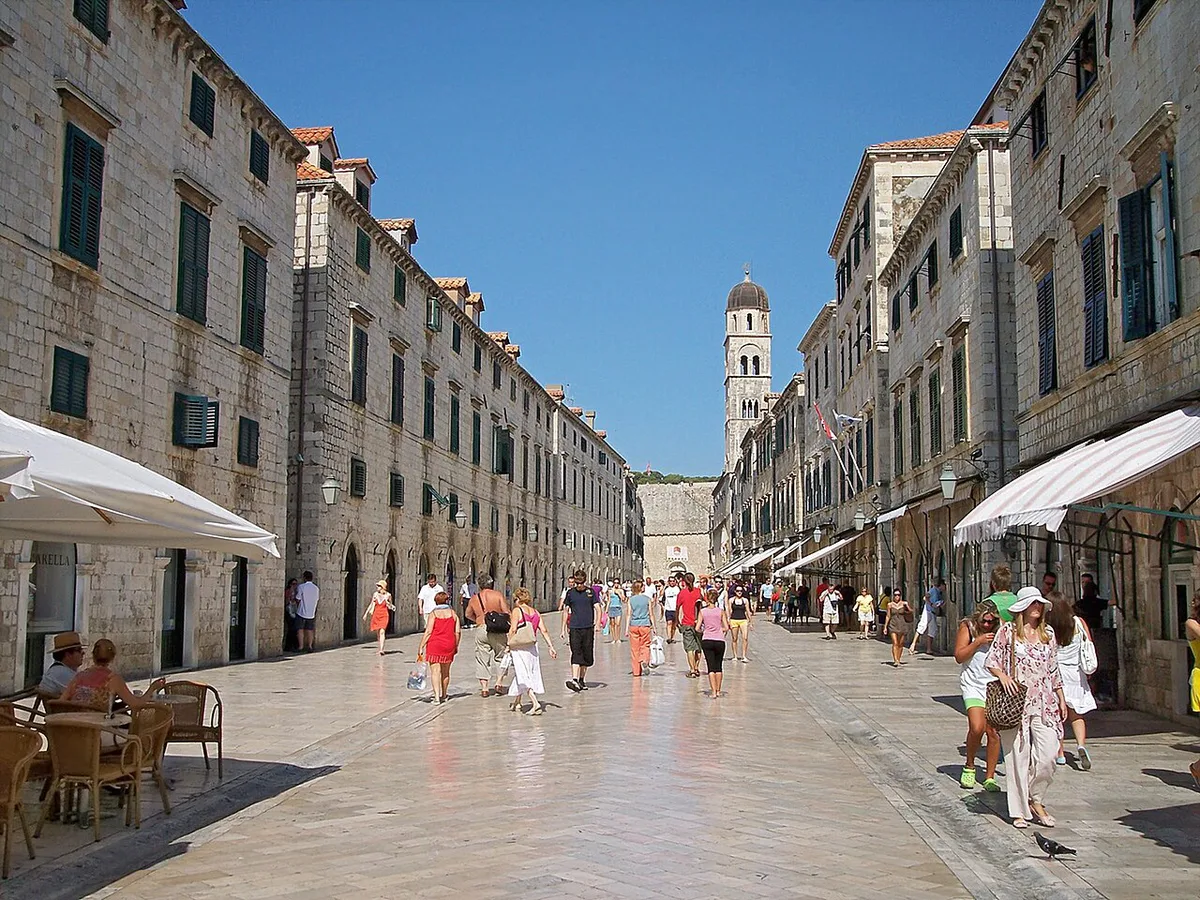
Petty theft in Dubrovnik concentrates in a handful of predictable, high-traffic spots, listed below. Pickpockets work crowds, not empty streets, so the risk rises during peak cruise-ship hours in the late morning and early afternoon. A crossbody bag, zipped pockets, and a hand near your phone in busy zones cut most of the risk.
Peak pickpocketing occurs during late morning and early afternoon cruise arrivals at Pile Gate and Stradun, but these same central streets become dark and empty after dinner crowds thin. The shift from concentrated daytime theft risk to nighttime isolation presents two distinct safety profiles.
Violent crime against visitors is uncommon in Dubrovnik. Most safety complaints from travelers involve overcharging or minor scams, not physical harm. If theft does happen, report it to the nearest police station, since a police report is usually required for any travel-insurance claim. Keep a photo of your passport and cards separate from the originals, so replacement is faster if a bag goes missing.
- Pile Gate entrance during peak arrivals
- Stradun's main promenade at midday
- The Mount Srđ cable car queue
- Crowded viewpoints along the city walls
Common Scams to Watch For
Most reported problems in Dubrovnik are financial, not violent. Overcharging is the top complaint. Some restaurants near Stradun add unlisted cover charges or round bills up aggressively, especially on cash payments. Always check a menu's posted prices before ordering, and ask for an itemized bill if a total looks off.
Unofficial taxis waiting outside Pile Gate or the cruise port sometimes quote inflated flat fares instead of using a meter or an app rate. Since Croatia fully adopted the euro on January 1, 2023, prices across Dubrovnik are euro-denominated. If a vendor quotes kuna, insists on a confusing manual conversion, or hands back unclear change, treat it as a signal to double-check the receipt. A small number of unofficial guides also approach travelers near the main gates offering tours. Stick to guides booked through a recognized operator. For a fuller rundown of these patterns and how to avoid them, see the dedicated guide to common Dubrovnik scams.
Is Dubrovnik Safe for Solo Female Travelers, LGBTQ+ Visitors, and Families?
Dubrovnik draws large numbers of solo travelers, and the Old Town's pedestrian-only core makes walking alone during the day straightforward. Streets stay busy with tourists and staff well into the evening around Stradun and the harbor. Standard precautions that work in most major cities apply here too. The solo traveler checklist below covers the specifics worth following on a night out.
Dubrovnik's tourist-facing bars, restaurants, and hotels are generally welcoming to LGBTQ+ visitors. Public attitudes across Croatia overall skew more conservative than in much of Western Europe. Discretion in quieter, more residential neighborhoods outside the main tourist zones is a reasonable precaution.
Families find the car-free Old Town easy to navigate with children, since there is no vehicle traffic to manage inside the walls. The tradeoff is physical. Steep stairways, uneven stone, and unguarded sea walls near the cliffside bars all need active supervision with young kids.
- Share your accommodation address and a rough return time with someone before a night out
- Walk back through Stradun or other lit main routes rather than side alleys
- Use a licensed taxi rank or a rideshare app instead of hailing an unmarked car
- Keep card and cash split across two pockets or bags
- Set a personal cutoff time for cliffside or waterfront bars, since lighting drops fast outside the Old Town walls
Dubrovnik at Night: Where It's Lively and Where to Be Cautious
The Old Town stays lit and populated well after dinner, with Stradun and the harbor area busy until the bars close. Street lighting inside the walls is consistent, and staff from restaurants and shops are typically still around late in peak season.
Energy drops fast once you leave the walls. Residential streets in Ploče and the hillside stairways above the city can feel empty and dim once the dinner crowds thin out. Gruž, the ferry and cruise port district, quiets down once the day's arrivals clear out.
For a full breakdown of how these areas feel after dark, see the dedicated nighttime safety guide. If you want to know which specific streets and pockets warrant extra caution at any hour, check the guide to areas to avoid.
Choosing a Base: Old Town vs Lapad vs Gruž
Where you sleep changes your nightly safety experience more than any other single decision. Old Town accommodation puts you inside the walls, walking distance from everything, but up steep stairs with heavy luggage. Lapad trades some of that convenience for a flatter, more residential feel along its main promenade. Gruž sits closest to the ferry and cruise terminals, useful for early departures but quieter after dark.
In our editorial assessment, based on the foot-traffic and lighting patterns described above, here is how the three areas compare:
| Neighborhood | Night Safety | Foot Traffic | Accessibility |
|---|---|---|---|
| Old Town (Stari Grad) | Well-lit and busy until late in peak season | Very high, including cruise-day crowds | Steep stairs; limited step-free routes |
| Lapad | Quiet residential streets; lit main promenade | Moderate, concentrated on the seafront walk | Flatter terrain; easier with strollers or luggage |
| Gruž | Quieter once ferry and port traffic clears | Lower outside arrival and departure times | Flat harbor-front streets; easy walking |
Physical Safety: Slippery Streets, Sun, Sea, and Tap Water
Dubrovnik's Old Town streets are polished limestone, worn smooth by foot traffic over centuries. When it rains, that surface turns slick fast, and Stradun's central strip is the worst offender. Pack shoes with real rubber tread, and slow down on stairs after any rain. The Old Town's stairways are also a genuine accessibility factor, not just an inconvenience, for travelers with mobility limitations or heavy bags.
Limestone streets in the Old Town turn slick after rain, and stairways have uneven stone that creates trip hazards. Libertas buses specifically provide a way to avoid the steepest walks prone to these physical risks.
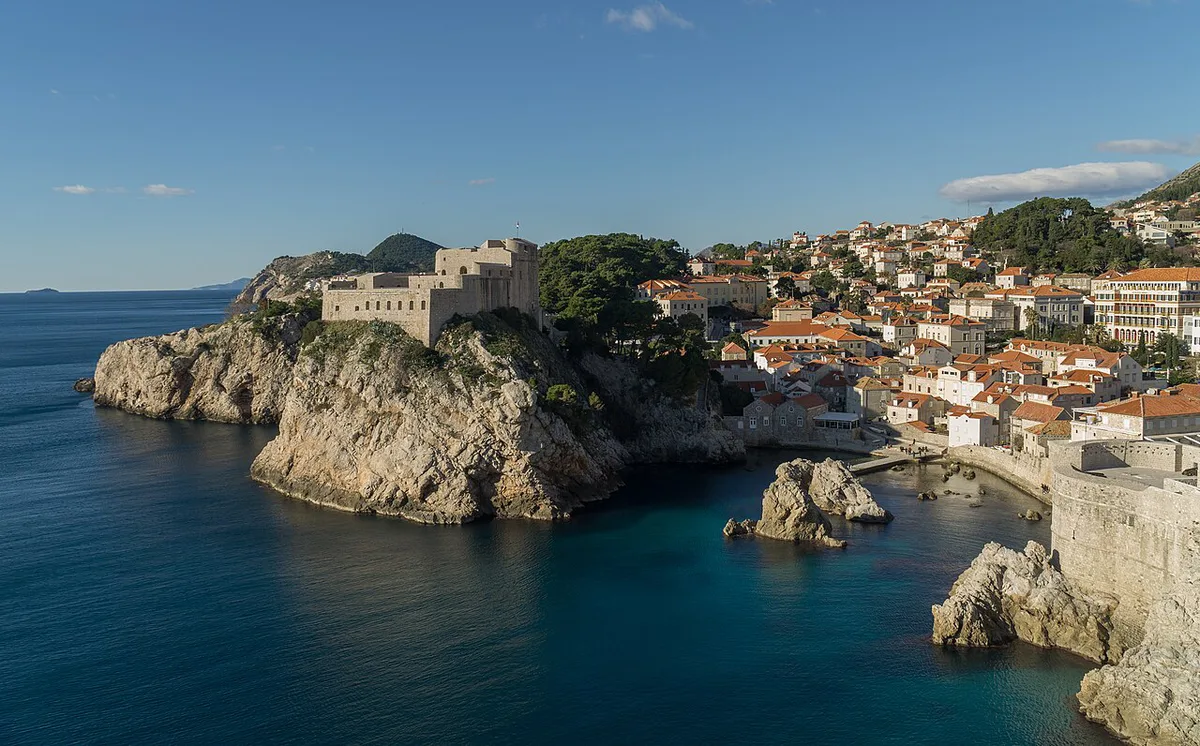
The informal cliffside bars carved into the city walls, known locally as Buža, let visitors swim and jump directly into the Adriatic. These spots are not lifeguarded. Check depth and current conditions before jumping. Skip it entirely in rough seas or with other swimmers nearby.
Summer heat and sun exposure are a bigger practical risk than crime for most visitors. Carry water on the city walls walk, where shade is limited and the loop takes longer than it looks. Tap water in Dubrovnik is safe to drink, drawn from the municipal supply and treated to standard European norms. Some travelers prefer bottled water for taste rather than safety, since municipal water is lightly chlorinated.
Getting Around Safely: Walking, Buses, Taxis, and Rideshare
Walking is the default way to move around the Old Town, since it is car-free and largely pedestrianized. Outside the walls, Libertas operates Dubrovnik's public bus network, connecting Lapad, Gruž, and the Old Town's Pile Gate entrance. Buses run frequently along the main tourist corridors and are a low-cost way to skip the steepest walks.
For taxis, look for marked, licensed vehicles with a visible meter rather than flagging an unmarked car outside the port or Pile Gate. Rideshare apps operate in Dubrovnik and typically show the fare upfront before you confirm. That upfront estimate removes most of the guesswork that comes with an unmetered street taxi. Comparing the in-app estimate against a quoted taxi fare before you get in is the simplest way to avoid an inflated price.
Airport transfers from Dubrovnik Airport in Čilipi work the same way. Book a licensed transfer or use a rideshare app rather than accepting the first offer from a driver soliciting fares inside the arrivals hall.
Emergency Numbers and Local Etiquette Rules
For any emergency in Dubrovnik, dial 112. It is the standard EU-wide number and connects to police, fire, and ambulance dispatch anywhere in Croatia. Save it in your phone before you arrive, and know your accommodation's address in case you need to give it quickly.
Dubrovnik's official Respect the City initiative sets out local conduct rules aimed at protecting the Old Town. The rules below are the ones that most often catch visitors out.
Exact hours and specifics are set locally and get updated from time to time, so check current signage around the Old Town rather than relying on last year's rules. None of these are safety rules in the strict sense, but ignoring them is the fastest way to draw a fine or a lecture from Old Town staff.
- No swimwear or going shirtless away from the beach itself
- No amplified music or loud noise in the Old Town during posted quiet hours
- No rolling hard-wheeled suitcases over the stone streets — use a soft-sided bag or carry a hard case over the worst stretches
For trip-planning details, see UK FCDO travel advice for Croatia.
Explore is safe in other cities
Further reading: Dubrovnik on Wikivoyage · Dubrovnik on Wikipedia
Frequently Asked Questions
Is Dubrovnik safe to visit in 2026?
Yes. Violent crime is rare, and petty theft is less common than in many larger European cities, though pickpocketing does happen in crowded spots like Pile Gate and Stradun.
Is Dubrovnik safe for solo female travelers?
Yes, with standard precautions. The Old Town stays lit and busy well into the evening. Stick to main routes after dark, and use licensed taxis or rideshare instead of hailing an unmarked car.
Is the tap water in Dubrovnik safe to drink?
Yes. Dubrovnik's tap water comes from the municipal supply and meets standard European treatment norms. Some travelers choose bottled water for taste rather than safety.
Is Dubrovnik safe at night?
The Old Town and Stradun stay busy and well-lit until the bars close. Residential streets and hillside stairways outside the walls quiet down fast, so stick to main routes late at night.
What is the emergency number in Dubrovnik?
Dial 112, the standard EU-wide number that connects to police, fire, and ambulance dispatch anywhere in Croatia.
Is Dubrovnik safe for families with children?
Generally yes. The Old Town is car-free, but its steep stairways, uneven stone streets, and unguarded sea walls near the cliffside bars need active supervision with young kids.
Are taxis or rideshare apps safer in Dubrovnik?
Both are generally safe. The practical edge goes to marked, metered taxis and rideshare apps, since the fare is confirmed upfront and the trip is logged digitally.
What is the biggest safety risk in Dubrovnik?
For most travelers it is physical, not criminal. Wet limestone streets, steep stairways, and unguarded cliff-jumping spots at the Buža bars cause more real injuries than crime does.
Stay Safe in Dubrovnik
Every Dubrovnik safety guide on one page — areas, scams, night rules, and getting around.