
Tbilisi Tourist Scams: 7 Common Traps and How to Avoid Them
Last updated July 2026. Tbilisi tourist scams tend to cluster around a few predictable pressure points — the airport arrivals hall, late-night bars, and currency exchange counters — rather than reflecting any broader crime risk in a city that is, by regional standards, remarkably safe. This guide breaks down the specific tricks worth recognizing, from unlicensed taxi drivers quoting inflated fares to the bar-and-hostess extortion routine aimed at solo male travelers, plus the exact steps to take if one of them catches you out anyway.
Is Tbilisi Safe? Scams vs. Real Crime in Georgia's Capital
Tbilisi is widely regarded as one of the safer capital cities in the wider region for visitors, and the practical breakdown at is Tbilisi safe for tourists holds up in day-to-day experience: violent crime against travelers is uncommon, and most neighborhoods popular with visitors are walkable well into the evening. The bigger day-to-day risk is financial rather than physical — a small set of scams that recur often enough to have well-documented patterns, engineered to separate visitors from cash rather than to harm them. For a fuller picture of how the city compares on crime statistics, the dedicated overview at Tbilisi's crime rate is worth a read before you travel. The short version for anyone in a hurry: the two scams that catch out the most travelers are unlicensed taxis overcharging on arrival and nightlife extortion aimed at solo men, and both are easy to sidestep once you know the pattern to look for.
Tbilisi's reputation for regional safety rests on low violent crime, yet travelers encounter financial scams far more often. These aren't random theft but engineered pressure—inflated quotes, confusing rates, and social manipulation—designed to extract cash from those unfamiliar with local standards.
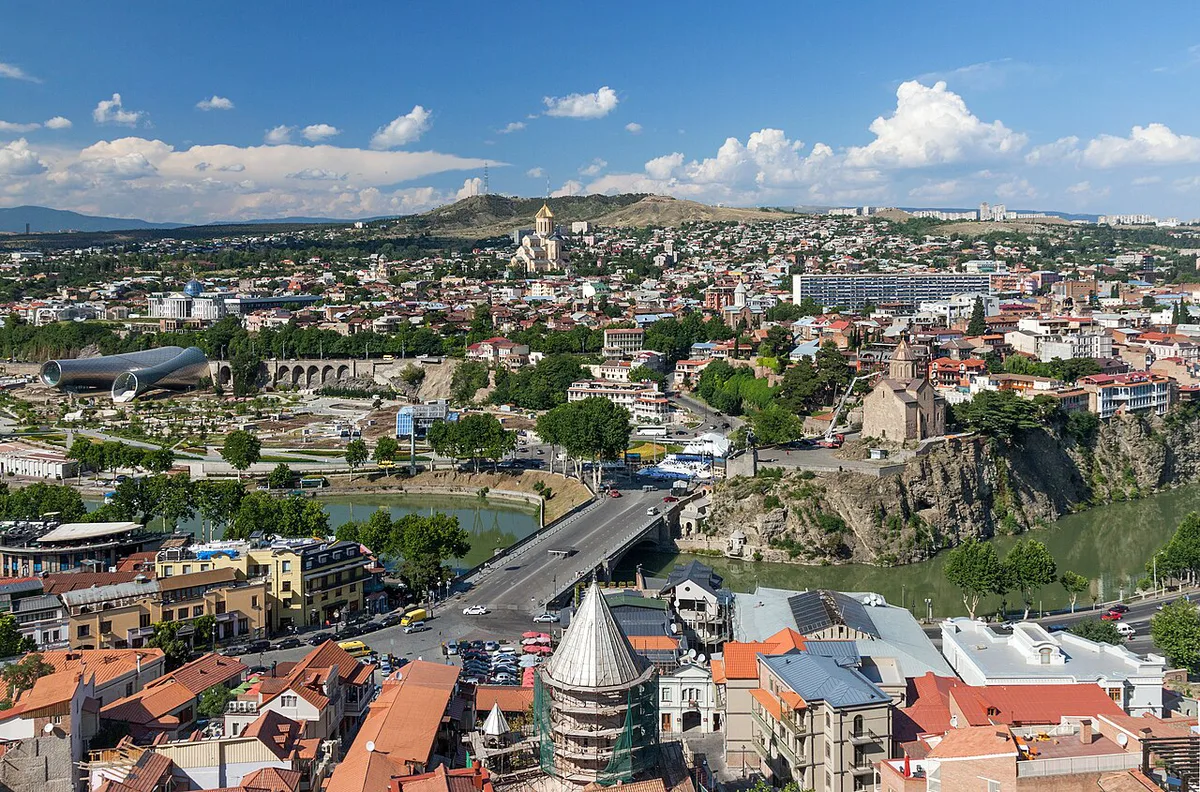
The 7 Most Common Tbilisi Tourist Scams
Before getting into detail, here is the full rundown of the scams that come up most often in traveler reports and forums about Tbilisi. None of them are unique to Georgia — most exist in some form in every major tourist city — but recognizing the local version in advance takes away almost all of their power.
Every major scam—taxis, bars, exchanges, street—exploits unfamiliarity rather than force: unlicensed status, unreviewed venues, confusing signage, and strangers approaching. Verified apps, established restaurants, clear questioning, and maintaining distance eliminate most risk.
- Unlicensed airport taxis: Drivers swarm the arrivals hall offering rides at several times the standard fare, banking on jet-lagged travelers who haven't yet set up a ride-hailing app.
- Bar and hostess extortion: Friendly locals, often women working in pairs, invite solo male tourists to a specific bar where the bill balloons and 'security' blocks the exit until it's paid.
- Money exchange tricks: Booths near tourist hubs blur decimal points and commas on their displayed rates, or quote one number verbally and pay out another.
- Distraction pickpocketing: A group asks for help with directions while one member quietly goes through pockets or bags.
- Overpriced street vendors: Popcorn sellers and souvenir stalls on Rustaveli Avenue quote inflated prices to visitors who don't know the going local rate.
- The 'free' gift scam: A stranger presses a flower, bracelet, or trinket into your hand, then demands payment once you've accepted it.
- Fake ticket inspectors and pushy begging: Occasional opportunists target riders on the Metro or buses, especially around crowded interchanges.

Airport Taxi Scams: How to Avoid Overpaying on Arrival
The most predictable Tbilisi tourist scam happens before you've even left the airport terminal. Aggressive, unlicensed drivers work the arrivals hall calling out for a taxi to disoriented, jet-lagged travelers, and if you engage, they will typically charge several times the standard fare — reports put unlicensed drivers at roughly 5 to 10 times what a metered app ride costs for the same trip. The fix is straightforward: install Bolt and Yandex before you fly, since both operate in Tbilisi and are the local norm for getting around, and they show the fare before you confirm the ride. You can use the airport's Wi-Fi to book from inside the terminal, though the signal often weakens or drops once you step outside to find your driver, so it helps to screenshot your booking details first. If you'd rather have a working data connection immediately, local SIM kiosks are available near the arrivals exit. A firm 'arra' — Georgian for 'no' — combined with simply walking past unlicensed drivers toward your app-booked pickup point ends most encounters quickly, and the modest wait for a verified ride is worth the certainty of a fair, metered fare.
| Option | Typical Cost | Booking Method | Risk Level |
|---|---|---|---|
| Bolt or Yandex app ride | Metered app rate, shown before you confirm | Book via app using airport Wi-Fi or a local SIM | Low — fare is fixed and driver is verified |
| Unlicensed airport taxi | Often 5–10x the standard app fare | Approached directly in the arrivals hall | High — no fixed rate, cash only, no accountability |
The Bar and Nightlife Extortion Trap
The scam with the highest financial and personal risk targets solo male travelers specifically. The setup is consistent: a friendly local, often two women working together, strike up conversation on the street — sometimes near Old Town or Rustaveli Avenue — and suggest a 'great local bar' nearby. Once inside, drinks or hookah are ordered, and the new acquaintances typically order little or nothing themselves. The bill, when it arrives, can run high, and by then the women have usually already left. 'Security' staff then block the exit until the bill is paid, sometimes threatening violence or claiming to be calling police who will side against a foreign tourist. The safest response is to never follow anyone — however friendly — from the street to an unfamiliar, unreviewed bar, and to stick to venues with an established footprint and online reviews, such as those clustered around Shardeni Street or Fabrika. It is also worth reading the guidance on whether Tbilisi is safe at night before planning an evening out, and cross-checking any neighborhood you're unsure of against the list of areas to avoid in Tbilisi. If you do get pulled into this situation, prioritize getting out safely over disputing the bill in the moment.
Money Exchange Deception: The Dot-and-Comma Trick
Currency exchange scams in Tbilisi follow a pattern familiar from other tourist-heavy cities: booths near the airport, Freedom Square, and major metro stations sometimes display rates using signage that blurs the distinction between decimal points and commas, making a rate look far better than it actually is. Others quote a fair rate verbally but pay out less once the transaction is done, or fold an undisclosed commission into the final amount. The fix is to ask a direct question before handing over any cash: how many GEL will you get for a set amount, such as $100? Get the number stated clearly, do the math yourself, and walk away if a booth won't answer plainly. Comparing rates at two or three booths before committing costs a few minutes and can meaningfully change what you walk away with. Always ask for a receipt — legitimate exchange operators will provide one without hesitation, and a refusal to do so is itself a red flag worth acting on.
Street Scams: Pickpockets, Vendors, and the 'Free Gift' Trick
Beyond taxis, bars, and exchange booths, Tbilisi has a handful of lower-stakes street scams worth knowing about. The most common is a distraction technique: a small group approaches asking for help with directions, keeping you engaged while one member quietly goes through a bag or pocket. Treat unsolicited requests for help from groups with a bit of extra distance, and keep valuables in a zipped, front-facing bag. On Rustaveli Avenue, popcorn sellers and some souvenir stalls are known to quote inflated prices to visitors who don't know the going local rate — a quick price check with a local or hotel staff before buying avoids the markup. Elderly women in Old Town occasionally offer kittens or puppies for sale or 'donation'; these animals are frequently not what they're presented as, and it's best to decline. A related trick involves a stranger pressing a flower or bracelet into your hand as a 'free gift,' then demanding payment once you've accepted it — simply hand it back and keep walking. Solo travelers, and particularly solo women, benefit from reading the dedicated guide to solo female travel safety, and basing yourself in one of the Safest Neighborhoods in Tbilisi: A Local Safety & District Guide makes it easier to sidestep these situations after dark.
Public Transport and Street Safety in Tbilisi
Tbilisi's Metro and bus network are generally safe and heavily used by locals, but a few opportunistic scams do surface, particularly around crowded interchanges. Occasional reports describe individuals posing as ticket inspectors and demanding on-the-spot cash fines from tourists — legitimate transport staff do not operate this way, and any request for immediate cash payment on board should be treated with suspicion. Pushy begging occasionally occurs near transport hubs and tourist landmarks; a polite but firm decline is normally enough to end the interaction. For a full breakdown of how to use the Metro and buses with confidence, see Tbilisi Public Transport Safety: A Guide to Metro, Buses & Taxis.
What to Do If You're Scammed in Tbilisi
If you do get caught out despite precautions, act quickly. Dial 112, Georgia's unified emergency number for police and ambulance services, and explain your situation as clearly as you can — English-speaking operators are generally available. Where possible, document what happened: photograph a taxi's license plate before or during a dispute, keep any receipts from money exchanges, and note the address or exact location of a bar or shop involved. This documentation makes a real difference if you need to file a report afterward. Tourist-focused police units operate in central Tbilisi and are generally better equipped to handle visitor complaints than standard precinct staff, so ask your accommodation or the 112 operator to direct you to the nearest one. Most visits to Tbilisi pass without incident — Georgians are famously hospitable, and the vast majority of interactions with locals are exactly that, genuine hospitality rather than a setup. Knowing the handful of patterns above is generally enough to keep it that way.
Frequently Asked Questions
Is Tbilisi safe for tourists in 2026?
Yes — Tbilisi remains one of the safer capital cities in the region for visitors, with violent crime against tourists uncommon. The practical risks are financial rather than physical: a handful of well-known scams rather than street crime, so basic vigilance around taxis, bars, and money exchange covers most of what travelers need to know.
What is the most common tourist scam in Tbilisi?
Unlicensed taxi drivers overcharging arriving travelers at the airport are the scam most visitors encounter first, though the bar and hostess extortion routine aimed at solo men carries the highest financial stakes.
How can travelers avoid the Tbilisi airport taxi scam?
Download the Bolt and Yandex apps before arriving, and book a ride through one of them using airport Wi-Fi rather than approaching or being approached by drivers waiting in the arrivals hall. Confirm the fare shown in the app before the driver starts the trip.
Are money exchange booths in Tbilisi trustworthy?
Some booths near the airport, Freedom Square, and major metro stations use confusing signage that blurs decimal points and commas to obscure the real rate. Ask exactly how many GEL you'll receive for a set amount before handing over cash, compare a couple of booths, and always request a receipt.
What number should you call if you're scammed in Tbilisi?
Dial 112, Georgia's single emergency number for police and ambulance services, and report the incident as soon as possible. Photograph taxi license plates or exchange receipts where you can, since documentation makes reporting to the tourist police far more effective.


