Frankfurt Areas to Avoid: A Local Safety and Logistics Guide
Last updated July 2026, this guide breaks down the real Frankfurt areas to avoid, from the specific streets inside the Bahnhofsviertel to the station exits worth choosing carefully after dark. Frankfurt is not a dangerous city by international standards, but a few blocks near the Hauptbahnhof concentrate an open drug scene and legal red-light activity that can unsettle first-time visitors. This guide separates genuine safety concerns from areas that are simply gritty, so travelers can plan routes, arrivals, and bookings with confidence rather than guesswork.
The Fast Answer: Which Frankfurt Areas to Avoid
For travelers short on time, the honest, non-alarmist version of Frankfurt areas to avoid is narrow rather than sprawling. The core concern sits inside the Bahnhofsviertel, the district wrapped around the Hauptbahnhof, specifically the cluster of blocks along Taunusstraße, Niddastraße, and Elbestraße, where an open drug scene and a legal red-light trade operate in plain view. A second, much milder caution applies to the B-Ebene, the underground passage levels beneath the main train station, once crowds thin out late at night. Beyond that tight radius, Frankfurt behaves like most large German cities: the Wallanlagen park ring, the Main riverbank promenades, and the busy squares at Konstablerwache and Hauptwache are ordinary by day and only need the usual after-dark common sense that applies in any major European city.
- Taunusstraße, Niddastraße, and Elbestraße — the Bahnhofsviertel's drug and red-light corridor
- Hauptbahnhof's B-Ebene — quieter underground levels once late-night crowds thin out
- Wallanlagen park paths — pleasant by day, best kept to lit routes after dark
- Isolated stretches of the Main riverbank — fine for evening walks along the busier, lit sections
Deep Dive: The Bahnhofsviertel and Its Two Faces
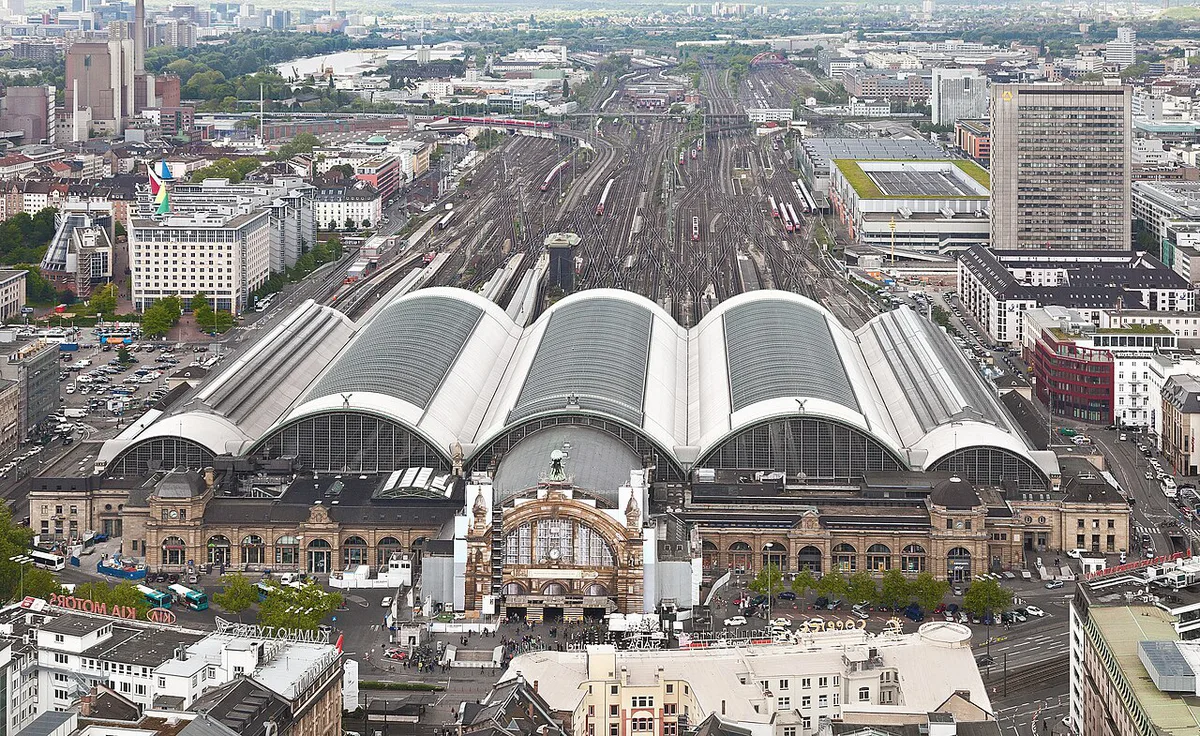
The Bahnhofsviertel, Frankfurt's District 1, is genuinely two neighborhoods layered on top of each other. Along Kaiserstraße and the streets closest to the station's main portal, the district reads as trendy and international: Turkish and Ethiopian restaurants, cocktail bars, and boutique hotels sit inside restored 19th-century buildings, and the crowd skews toward locals and business travelers rather than anyone looking for trouble. Walk one block south, though, toward Taunusstraße, Niddastraße, and Elbestraße, and the character changes fast. This pocket hosts Germany's most visible open drug scene, where public drug use happens on the street rather than hidden away, alongside a legal, licensed red-light trade that operates openly in daylight and evening hours. None of this is illegal or hidden from authorities; prostitution and the harm-reduction approach to drug use are both regulated under German and Hessian policy, which is precisely why the scene is so visible rather than pushed underground. The discomfort for visitors is real and worth planning around, but it is largely visual rather than a marker of violent danger.
Street-by-Street: Taunusstraße, Niddastraße, and Elbestraße
The three streets travelers ask about most sit close enough together to blur into one impression, but each has a slightly different character worth knowing before deciding whether to route a walk through the area or around it.
| Street | What You'll See | Traveler Takeaway |
|---|---|---|
| Taunusstraße | The legal red-light district, with licensed venues operating in daylight and evening hours | Uncomfortable for many visitors but not inherently dangerous; keep walking rather than lingering |
| Niddastraße | Frequently the most concentrated stretch of the open drug scene, with public use visible on the sidewalk | The single street most worth actively rerouting around, especially with children |
| Elbestraße | A mix of drug consumption facilities and street-level dealing near budget accommodation | Treat with the same caution as Niddastraße; not a route for sightseeing detours |
Kaiserstraße: The Safe Exception?
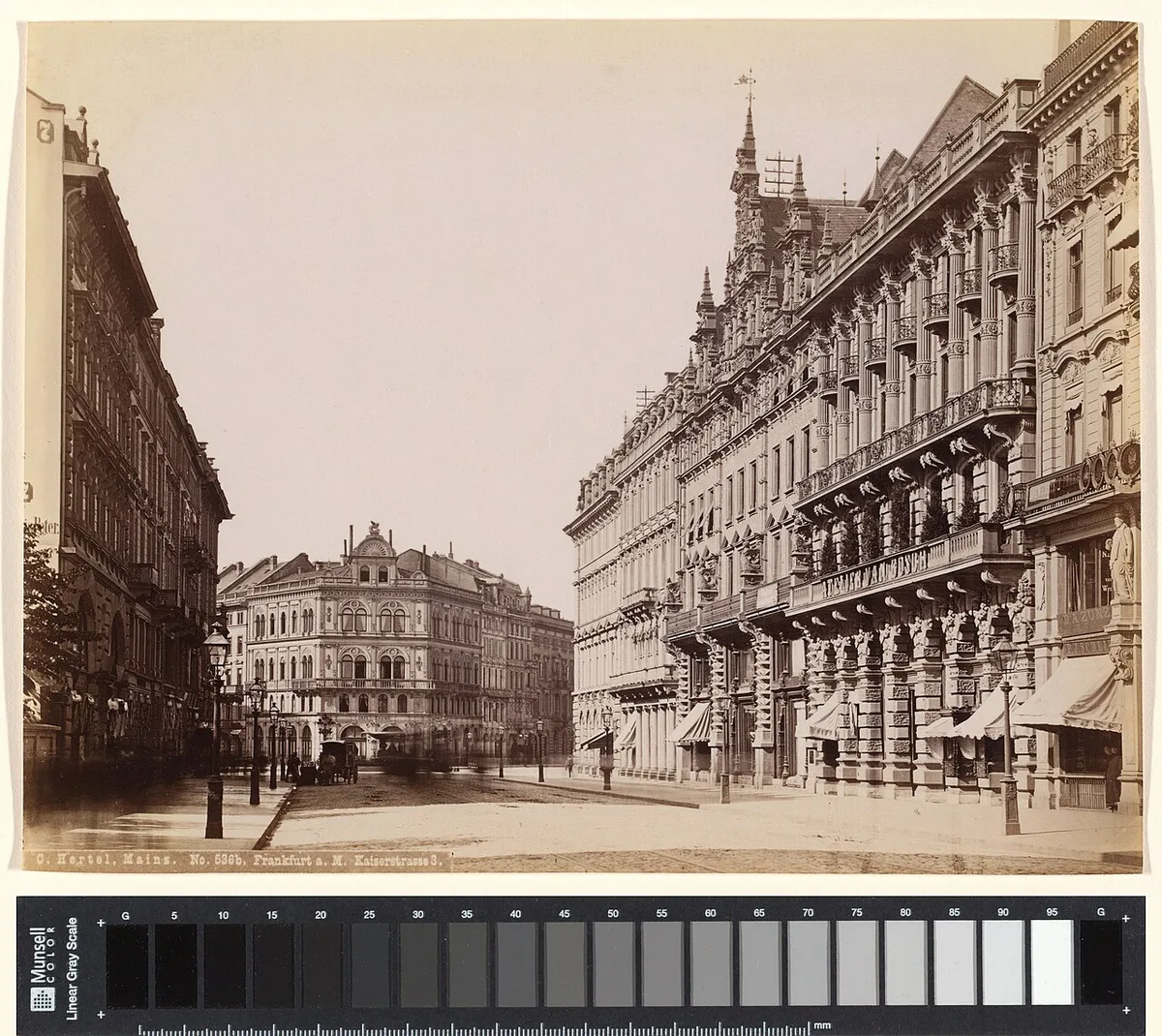
Kaiserstraße itself, the grand boulevard running from the Hauptbahnhof toward the city center, is often singled out as the exception inside a district that otherwise makes visitors uneasy. It is wide, well-lit, lined with banks, chain hotels, and restaurants, and carries heavy foot and vehicle traffic well into the evening, which in practice means fewer of the isolated corners where discomfort concentrates. That said, Kaiserstraße is not a hard boundary; side streets branch off it in both directions, and the character of the district can shift within a single block. The practical habit worth building is treating Kaiserstraße as the spine to stick to and treating anything branching south toward Taunusstraße or Niddastraße as a deliberate choice rather than a shortcut.
Navigating Hauptbahnhof (Frankfurt Central Station) Safely
Arriving by train is where most visitors first encounter the Bahnhofsviertel, often without realizing it, since the station's main hall sits at the edge of the district rather than inside the calmer city center. Exiting toward the main portal and Kaiserstraße keeps arrivals on the busier, more commercial side of the station. Exits and passages toward Düsseldorfer Straße and the southern side streets lead more directly past the blocks where the open drug scene concentrates, so it is worth taking a moment inside the station to confirm which exit leads where rather than following the nearest set of doors. The station's forecourt and surrounding blocks are also where common scams near Hauptbahnhof tend to cluster, from aggressive ticket 'helpers' to distraction attempts in the crowded hall, so arriving with tickets and directions already sorted on a phone reduces the number of reasons to stop and look lost right at the station's edge.
Transit and the B-Ebene After Dark
The B-Ebene, the underground shopping and transit level beneath Hauptbahnhof, is busy and unremarkable during the day but empties out late at night, when its long, low-ceilinged corridors can feel more isolating than the street level above. The same applies to quiet U-Bahn and S-Bahn platforms after the evening rush has cleared. RMV, the regional transit operator, equips stations and trains with visible emergency call points and staffed information points at major hubs, and choosing a car nearer the middle of the platform rather than an empty end car is a simple habit that works anywhere in the network. For a fuller rundown of what to expect on trains, platforms, and night buses, the dedicated public transport safety guide covers operator and network specifics in more depth.
Other Areas of Caution After Dark
Outside the Bahnhofsviertel, the areas that deserve a little extra awareness after dark are less about danger and more about reduced visibility and thinner crowds. The Wallanlagen, the green park ring that traces the old city fortifications, is a pleasant lunchtime and afternoon walking route but loses its foot traffic once the sun goes down, so sticking to the lit paths nearer the road is the simple fix. Stretches of the Main riverbank away from the illuminated, popular promenade near the Eiserner Steg bridge thin out for the same reason. Konstablerwache and Hauptwache, two of the city's busiest squares, are not dangerous but do draw rowdy late-night crowds around bars and the transit hubs there, which is more a petty-theft and pickpocket setting than anything else. A broader night-by-night breakdown lives in the guide to nighttime safety across Frankfurt.
Frankfurt Safety Context: Crime Rates vs. Tourist Reality
It is worth separating two different things that get blended together in most warnings about Frankfurt: the open drug scene, which is highly visible and can be genuinely unsettling to witness, and violent crime, which rarely touches tourists at all. Polizei Frankfurt maintains a police presence in the Bahnhofsviertel specifically because of the concentration of drug-related activity there, and that visible policing is itself a sign the area is monitored rather than abandoned. For visitors sticking to the well-trodden districts, the shopping streets of the Zeil, the museum embankment, and the neighborhoods covered later in this guide, day-to-day risk looks closer to that of any major European transit hub than to anything alarming. For readers who want the fuller picture beyond this one district, Frankfurt's broader safety record and the citywide crime rate figures both cover the city-level context in more detail than a single-neighborhood guide can.
Where to Stay Instead: Safest Neighborhoods for Travelers
Booking a hotel outside the immediate Bahnhofsviertel footprint solves most of the discomfort travelers ask about, without sacrificing proximity to the station or the sights. Westend, just west of the center, is quiet, residential, and close to the trade fair grounds and the Palmengarten. Bornheim and Nordend, northeast of the old town, offer a more local, cafe-and-bar atmosphere with easy tram access into the center. All three sit a short ride from the Hauptbahnhof without requiring a walk through the district's more visible blocks. The best neighborhoods for visitors guide breaks these down street by street, and travelers weighing this specifically may want the added context in the solo female travel guidance.
Frankfurt's visible drug-scene discomfort and actual low violent-crime rates toward tourists are distinct. Booking choices reflect personal comfort tolerance rather than danger-based necessity—neighborhoods outside the Bahnhofsviertel offer alternatives for those preferring to avoid visual distress.
- Solo travelers: choose Westend or Nordend for well-lit residential streets; skip budget hotels directly on Taunusstraße or Niddastraße regardless of the price.
- Families: Bornheim or Westend offer calmer evenings; avoid booking anything inside the Bahnhofsviertel's southern blocks even for a short layover.
- Business travelers: hotels on or near Kaiserstraße work well given the heavier foot traffic and proximity to the station and trade fair; side streets one block south do not.
Practical Safety Tips for Frankfurt Visitors
A handful of habits cover most of what matters, whether the itinerary includes a walk through the Bahnhofsviertel or not.
The Bahnhofsviertel's two distinct characters—Kaiserstraße's commercial energy versus Taunusstraße's visible drug scene—create different risks and appeals. Business guests can navigate the Kaiserstraße side, while solo travelers and families find Westend, Bornheim, or Nordend better suited to their comfort needs.
- Use the main portal or Kaiserstraße-facing exits at Hauptbahnhof rather than the southern side exits when arriving with luggage.
- Treat 10:00 AM and 10:00 PM as different neighborhoods on the same street: daytime Bahnhofsviertel is busy and commercial, while the same blocks feel starkly different after dark.
- Keep valuables zipped and stay alert for pickpockets around Konstablerwache and Hauptwache during weekend nightlife hours.
- Stick to lit, populated paths through the Wallanlagen and along the Main after sunset rather than cutting through quieter sections.
- Book accommodation in Westend, Bornheim, or Nordend if avoiding the Bahnhofsviertel entirely is the priority.
Summary Checklist: Staying Safe in Frankfurt
None of this requires rerouting an entire trip around one district; it mostly means walking a specific handful of blocks with open eyes rather than by accident, and choosing a home base that matches how much of the Bahnhofsviertel a traveler wants to see up close.
- Avoid lingering on Taunusstraße, Niddastraße, and Elbestraße, especially after dark.
- Use Hauptbahnhof's main portal toward Kaiserstraße rather than the southern exits when arriving.
- Remember the open drug scene is visually distressing but rarely a source of violent crime toward tourists.
- Choose Westend, Bornheim, or Nordend for a calmer home base.
- Stay alert on quiet U-Bahn and S-Bahn platforms and in the B-Ebene late at night.
Best Hauptbahnhof Exits for Messe, Westend, and City-Center Hotels
If your hotel is near Messe Frankfurt, Festhalle, Skyline Plaza, or the quieter Westend streets, you usually do not need to walk into the Bahnhofsviertel at all. From Frankfurt Hauptbahnhof, follow signs inside the station for the U-Bahn/S-Bahn concourse, trams, or the north and west-facing exits toward the trade fair side rather than drifting out onto the southern station streets. This keeps you closer to routes leading toward Friedrich-Ebert-Anlage, Platz der Republik, and the Messe area, where the atmosphere is more business-oriented and less affected by the open drug scene.
For city-center hotels, the main portal toward Kaiserstraße is still the simplest street-level exit, especially in daylight or early evening. If your booking address includes Taunusstraße, Niddastraße, Moselstraße, or Elbestraße, check the exact block before arrival and consider taking a short taxi, tram, or U-Bahn connection rather than walking there late with luggage.
For trip-planning details, see US State Department Germany travel advisory.
Frequently Asked Questions
Is the Bahnhofsviertel safe to walk through during the day?
Yes, for the most part. During daylight hours the district functions as a busy, commercial neighborhood, and the open drug scene and red-light activity along Taunusstraße, Niddastraße, and Elbestraße are visible but rarely confrontational toward passersby. The atmosphere shifts noticeably after dark, so daytime and nighttime should be treated as two different experiences of the same streets.
Which Hauptbahnhof exit should visitors use to avoid the drug scene?
Heading out through the main portal toward Kaiserstraße keeps arrivals on the busier, more commercial side of the station. Exits and passages toward Düsseldorfer Straße and the southern side streets run closer to the blocks where the open drug scene concentrates, so it is worth confirming the exit before stepping outside, especially when arriving with luggage.
Is Frankfurt dangerous for tourists overall?
No, not in the way the open drug scene might suggest. The Bahnhofsviertel's most visible blocks are unsettling to look at but rarely the setting for violent crime against visitors, and the rest of the city, from the Zeil shopping street to the museum embankment, behaves like any major European city center.
Are hotels in the Bahnhofsviertel worth booking?
Hotels directly on or near Kaiserstraße can work well for business travelers thanks to the heavier foot traffic and proximity to the station, but budget hotels closer to Taunusstraße or Niddastraße are worth skipping regardless of the discount, especially for solo travelers or families who would rather avoid the district's more visible blocks entirely.
Is public transport safe at night in Frankfurt?
Generally yes. U-Bahn and S-Bahn platforms and trains are fitted with visible emergency call points through the regional operator RMV, and choosing a car closer to the middle of the platform rather than an empty end car is a simple habit worth keeping late at night.