Frankfurt Public Transport Safety: What Travelers Need to Know
Last updated May 2026, this guide breaks down Frankfurt public transport safety across the U-Bahn, S-Bahn, trams, and buses that make up the RMV network. It separates genuine risk from the intimidating atmosphere around Hauptbahnhof, showing exactly where pickpockets, fake inspectors, and after-dark logistics actually matter versus where the discomfort is mostly appearance. Use it to plan efficient, low-stress journeys whether the trip runs through rush-hour crowds, a trade-fair week, or a late-night ride back to a hotel.
Frankfurt Public Transport Safety: What Travelers Need to Know First
Yes, Frankfurt public transport safety holds up well against other major European hubs: the RMV (Rhein-Main-Verkehrsverbund) network of U-Bahn, S-Bahn, trams, and buses is dense, frequent, and used daily by commuters, shoppers, and travelers moving between the airport, Hauptbahnhof, and the city center. Serious violent incidents on trains and platforms are rare, and the bigger practical concern for most visitors is situational: staying alert in crowded carriages, avoiding a handful of specific pockets around the main station late at night, and keeping valuables secured rather than worrying about the network as a whole. For a wider view beyond transit specifically, see Frankfurt's overall safety picture and Frankfurt's crime rate trends, both of which back up the same big-city-awareness framing used throughout this guide.
- Network operator: RMV coordinates fares and schedules across U-Bahn, S-Bahn, trams, and buses.
- Local rail/tram operator: VGF runs the U-Bahn and tram network within the city.
- Regional/airport rail operator: Deutsche Bahn runs the S-Bahn lines.
- Biggest safety-adjacent pain point: the B-Ebene underground level at Hauptbahnhof, not the trains themselves.
Safety at Frankfurt Hauptbahnhof and the B-Ebene
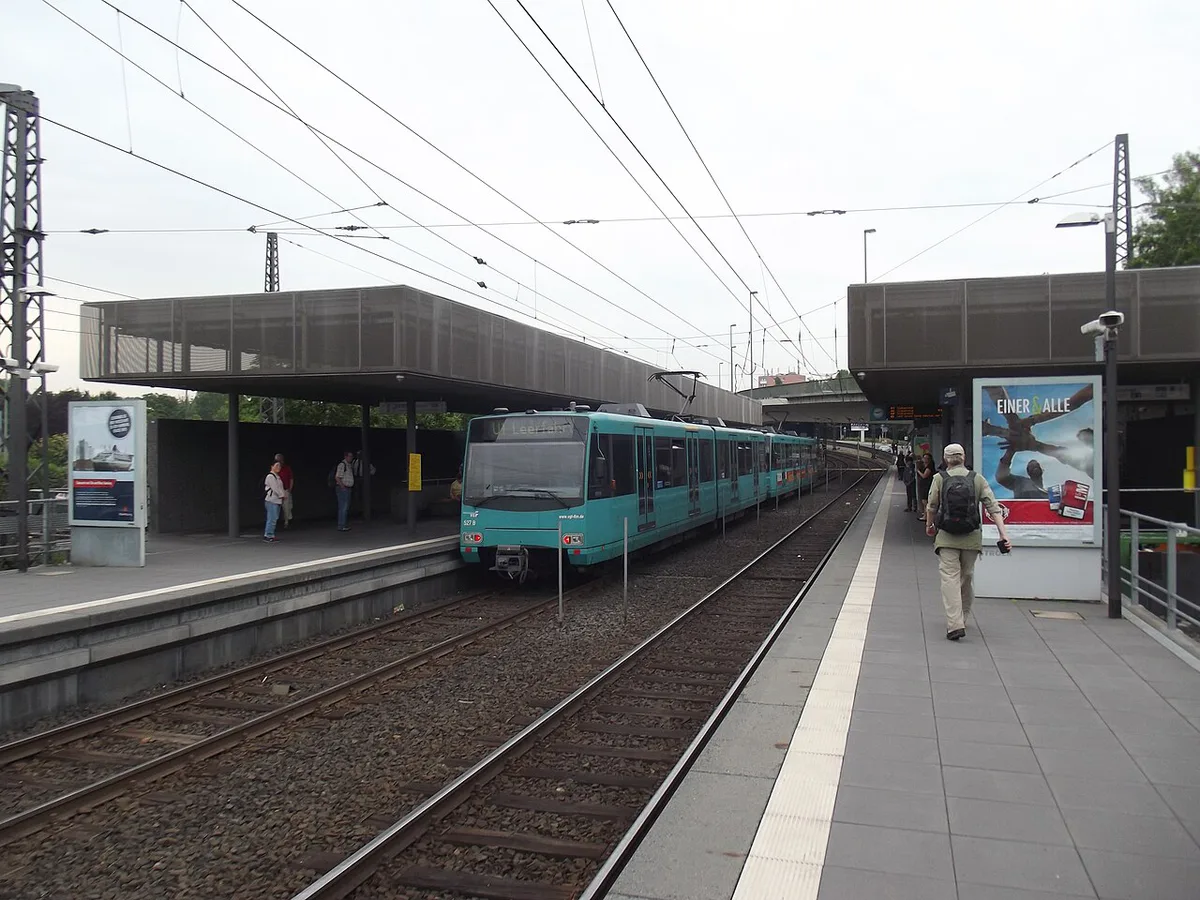
Frankfurt Hauptbahnhof is the single biggest source of transit-safety questions, and most of it comes down to atmosphere rather than danger. The B-Ebene, the underground level connecting the U-Bahn platforms to the main hall, is where open drug use and loitering concentrate, and it can feel intimidating even though outright violent crime there is uncommon. Travelers should treat the discomfort as real but distinguish it from actual danger: keep bags zipped and worn to the front, walk with purpose through the B-Ebene rather than lingering, and default to the better-lit main hall route when possible instead of cutting through quieter side corridors. Kaiserstraße, the street running from the station's main entrance toward the city center, and the surrounding Bahnhofsviertel carry a similar reputation, and the same practical advice applies there.
- Use the main hall rather than the B-Ebene when carrying heavy luggage after dark.
- Keep phones and wallets in zipped, front-facing pockets or bags while transferring platforms.
- Treat visible loitering or drug use as a reason to keep moving, not a reason to panic.
- For a fuller breakdown of which blocks warrant extra caution, see areas to avoid near the station.
U-Bahn vs S-Bahn: Comparing Security on Each Network
Frankfurt public transport safety varies slightly by mode, mostly because of who operates each network and how late it runs. The S-Bahn is operated by Deutsche Bahn and covers longer regional routes out to the airport and surrounding towns; because it runs less frequently late at night, platforms and carriages can feel emptier after the evening rush, including on the airport's regional platforms. The U-Bahn and tram network is run by VGF and covers denser inner-city routes; stations tend to stay busier and better used for longer into the evening. Every platform on both networks has emergency call points, generally marked Notruf or as SOS pillars, that connect directly to staff or emergency services if something goes wrong, and these are worth locating on arrival at any unfamiliar station.
U-Bahn maintains higher frequency and busier platforms into the evening compared to S-Bahn's sparser late-night service. Solo night travelers benefit by prioritizing U-Bahn lines, sitting in the first carriage, and waiting on populated platform sections to reduce isolation and pickpocketing exposure.
| Mode | Operator | Coverage | Late-Night Character | Key Safety Feature |
|---|---|---|---|---|
| S-Bahn | Deutsche Bahn | Regional routes, airport, satellite towns | Runs less frequently after the evening rush; can feel emptier | Notruf/SOS points on platforms |
| U-Bahn & Tram | VGF | Inner-city routes | Generally busier and well-lit further into the evening | Notruf/SOS points on platforms and in stations |
| Night Bus (Nachtbus) | RMV/VGF network | City-wide overnight coverage | Fills gaps once last scheduled trains finish | Driver visibility; boarding near the front |
Riding Frankfurt Transit at Night as a Solo Traveler
Frankfurt's transit system does not stop overnight thanks to the Nachtbus (night bus) network, which fills in for reduced U-Bahn and S-Bahn frequency once the last scheduled trains finish their runs. Solo travelers riding after dark get the most benefit from a few consistent habits: sit near the driver on buses or in the first carriage on trains, choose busier platforms over empty ones even if it means a short wait, and have the next connection or exit planned before boarding rather than checking a phone mid-platform. Frankfurt also has taxi options built around night travel, including women-focused night taxi services, as an alternative when a direct transit connection is not appealing that late.
- Board near the driver on buses; choose the first carriage on trains where possible.
- Wait on well-lit, populated sections of the platform rather than empty ends.
- Have the exit or next connection mapped before the journey starts.
- Consider a women's night taxi service as an alternative to a late, quiet transit connection.
- Read Frankfurt safety after dark and solo female travel safety tips before a late arrival or departure.
Spotting Scams and Preventing Pickpocketing on the RMV Network
Pickpocketing, not violent crime, is the realistic risk on Frankfurt's public transport, and it clusters around the same conditions found in any major transit system: crowded S-Bahn carriages during rush hour, Messe (trade fair) periods when trains run fuller than usual, and busy interchange platforms at Hauptbahnhof, Hauptwache, and Konstablerwache. Typical tactics involve a distraction, someone blocking a door, a bump while boarding, or a request for directions, while a second person accesses a bag or pocket. A separate concern is fake ticket inspectors: legitimate RMV or VGF inspectors carry visible identification and a handheld ticket-checking device, and they will show it without hesitation if asked. Anyone demanding an on-the-spot cash payment without producing ID or equipment should be treated with suspicion.
- Keep valuables in a front pocket or a bag worn to the front, especially at Hauptbahnhof, Hauptwache, and Konstablerwache.
- Stay extra alert in the seconds around doors opening and closing at busy stops.
- Ask any inspector to show ID and a handheld ticket device before paying anything on the spot.
- See common Frankfurt tourist scams for more citywide patterns to watch for.
The Safety of Fare Compliance: Validation, Inspectors, and the €60 Fine
Ticket compliance in Frankfurt is also a safety-adjacent issue, because getting caught out at the wrong moment can turn into an unwanted encounter with an inspector rather than a genuine security risk. Riding without a valid, validated ticket, known locally as Schwarzfahren, carries a fine of €60 if an RMV or VGF inspector checks and a valid ticket cannot be produced. Always validate paper tickets before boarding where a machine requires it, and keep any ticket accessible for the length of the journey rather than putting it away immediately. The RMVgo app lets travelers buy and hold tickets on a phone, which avoids the momentary distraction of fumbling with cash or a card at a station kiosk, a small but real window that opportunistic pickpockets can exploit in a crowded hall. Physical ticket machines remain available at every station for anyone who prefers them, but treat the few seconds spent at a kiosk as a moment to keep bags close and stay aware of who is standing nearby.
Ticket purchase distractions at kiosks and cash transactions with inspectors both create windows for pickpockets. Using the RMVgo app eliminates kiosk time, while asking any inspector for ID and equipment before payment mitigates scams and associated distraction theft.
- Validate paper tickets before boarding wherever a validation machine is present.
- Riding without a valid ticket (Schwarzfahren) risks a €60 fine if checked.
- The RMVgo app reduces kiosk time and the distraction that comes with it.
- Keep tickets accessible for the whole journey rather than stowing them immediately.
Emergency Contacts and Where to Get Help on Frankfurt Transit
If something does go wrong on Frankfurt's transit network, the Bundespolizei (Federal Police) maintain a presence at Hauptbahnhof specifically because of its role as the city's main transit hub, and uniformed officers or a station office can be approached directly for help. Notruf/SOS call points on platforms connect straight to staff, and stations participating in Safe im Bahnhof-style initiatives post visible signage about who to contact and where. Travelers who would rather minimize time spent around Hauptbahnhof altogether can also base themselves in one of the Safest Neighborhoods in Frankfurt: Where to Stay with easy tram or U-Bahn access to the center, which reduces exposure to the station's busiest corners without sacrificing convenient transit connections.
- Bundespolizei (Federal Police) maintain a visible presence at Hauptbahnhof.
- Notruf/SOS pillars on platforms connect directly to staff or emergency services.
- Look for Safe im Bahnhof-style signage at major stations for local contact points.
- Basing accommodation in a well-connected, lower-risk neighborhood cuts down on time spent at Hauptbahnhof.
Safer Transfers at Hauptwache and Konstablerwache
Hauptwache and Konstablerwache deserve separate attention because many visitors transfer there without realizing they are not just ordinary stops. Both sit under the Zeil shopping area and connect multiple U-Bahn and S-Bahn lines, so they are usually busy, central, and well used rather than isolated. The practical risk is crowding: watch bags on escalators, ticket-machine areas, and platform edges where people bunch up before trains arrive.
At Hauptwache, follow signs carefully because exits lead toward different parts of the city center, including the Zeil, Goetheplatz, and nearby shopping streets. At Konstablerwache, expect more evening activity because it is a major interchange for trams, buses, and night services. If a platform feels uncomfortable, move toward the main flow of passengers, look for the Notruf/SOS point, and wait near other riders instead of at the far end of the platform.
Frequently Asked Questions
Is the Frankfurt U-Bahn safe to ride at night?
Yes. The U-Bahn, run by VGF, tends to stay busier and well-lit later into the evening than the S-Bahn, and the Nachtbus network covers routes once trains stop running. Sitting in the first carriage near the driver and choosing busier platforms are the main precautions worth taking.
Is Frankfurt Hauptbahnhof dangerous for tourists?
It is not dangerous in the sense of high violent-crime risk, but the B-Ebene underground level and the immediate surroundings can feel uncomfortable due to visible drug use and loitering. Standard precautions, staying alert, keeping bags secure, and walking through rather than lingering, are enough for most travelers.
How can travelers tell a real ticket inspector from a scammer on Frankfurt transit?
Legitimate RMV or VGF inspectors carry visible identification and a handheld ticket-checking device and will show both without hesitation when asked. Anyone requesting immediate cash payment without producing ID or equipment should be treated as suspicious.
What is the fine for riding without a ticket in Frankfurt?
Riding without a valid, validated ticket, known as Schwarzfahren, carries a fine of €60 if checked by an inspector. Validating tickets before boarding and keeping them accessible for the trip avoids the issue entirely.
How much time should travelers plan for getting through Frankfurt Hauptbahnhof safely?
There is no fixed time requirement, but building in a few extra minutes to use the main hall route instead of cutting through quieter corridors, and staying oriented rather than rushing through the B-Ebene, is a reasonable habit during peak or late-night hours.