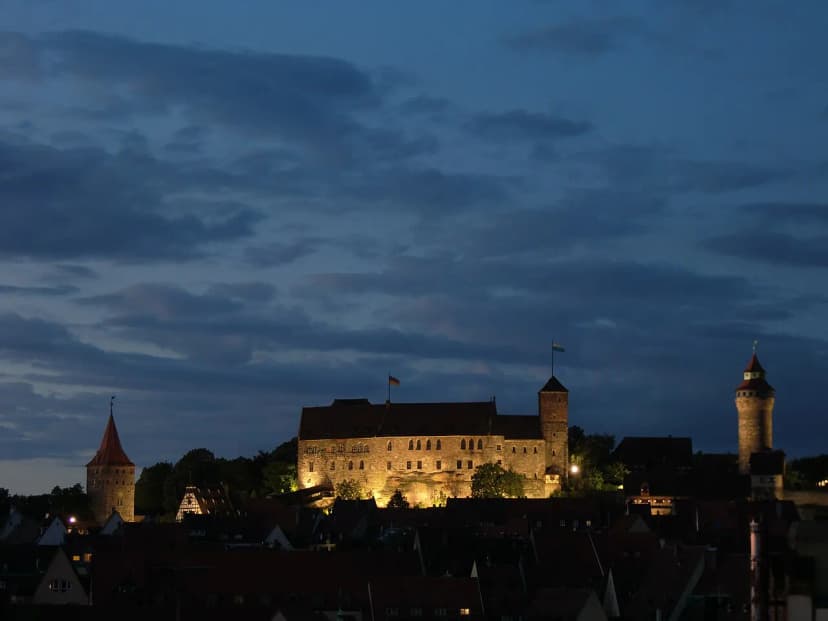
Is Nuremberg Safe at Night? A 2026 Neighborhood and Safety Guide
Last updated May 2026: is Nuremberg safe at night? Yes — Nuremberg is regularly counted among Germany's more reassuring after-dark cities, and the real question isn't whether the city is safe overall but which street you're on once midnight passes. The Altstadt's bars, restaurants, and the Handwerkerhof craft quarter stay comfortable and well-lit deep into the evening, while the Hauptbahnhof's southern fringe is the one pocket where extra caution genuinely pays off. This guide maps the neighborhoods worth trusting after dark, the transit options for getting home once the U-Bahn winds down, and the scams worth knowing about, building on the broader Nuremberg safety overview.
Is Nuremberg Safe at Night? The Verdict
For the vast majority of visitors, the honest answer is yes: Nuremberg is a safe city after dark, and violent crime targeting tourists is rare. Numbeo's data puts Nuremberg's safety index at 65.1 out of 100 and its crime index at 34.9 out of 100, figures that place the city in a low-risk, stay-aware bracket rather than anywhere near a high-crime designation. Compared with larger German hubs, Nuremberg is frequently described by visitors as feeling calmer at night, in part because its compact, walkable Altstadt core keeps foot traffic concentrated rather than scattered across sprawling entertainment districts. Locals and repeat visitors describe the medieval Altstadt as feeling secure well into the evening, with restaurants, Kneipen, and the Handwerkerhof craft quarter keeping foot traffic — and informal surveillance — high long after the shops close. The one caveat worth remembering is geographic, not citywide: the small stretch of caution around the Hauptbahnhof's southern side has more to do with public intoxication and petty theft than any organized threat, a nuance covered in more depth in the neighborhood breakdown below. Treat Nuremberg the way you'd treat any mid-sized European city at night: stick to lit main streets, keep valuables zipped away, and the odds are overwhelmingly in your favor.
Neighborhood Safety After Dark: Where to Walk and Where to Pause
Nuremberg's after-dark reputation splits cleanly along neighborhood lines, and knowing the map matters more than any citywide statistic. The Altstadt, encircled by the old city walls, is the most reassuring option: its bars, the Handwerkerhof medieval crafts courtyard, and the Hauptmarkt stay lit, populated, and easy to navigate on foot well past dinner. St. Johannis and the Gärten hinter der Veste, both close to the old town along the Pegnitz River, are quiet, residential, and generally considered comfortable for a late-night walk back to a hotel. Gostenhof, often shortened to GoHo, is Nuremberg's trendier, more nightlife-dense district — it isn't dangerous, but its concentration of bars means it rewards ordinary street smarts more than a stroll through the Altstadt does. The one pocket that consistently earns caution is the Hauptbahnhof's southern fringe, especially the Königstorpassage underpass, where loitering and public intoxication are more visible late at night even though violent incidents remain uncommon. Südstadt shows up in citywide crime figures more than other districts, but that's largely tied to non-violent, socio-economic factors rather than targeted crime against visitors — it simply warrants the same vigilance you'd use in any less-touristed residential area after midnight. For block-by-block detail on which streets to skip entirely, see the dedicated guide to areas worth avoiding.
- Altstadt — well-lit, busy with bars and restaurants, the safest late-night option
- St. Johannis and Gärten hinter der Veste — quiet, residential, comfortable for late walks
- Gostenhof (GoHo) — trendy nightlife strip, fine with normal street smarts
- Hauptbahnhof southern fringe and Königstorpassage — the one area to navigate with extra care
- Südstadt — higher in crime stats, mostly non-violent, treat like any residential district at night

Safe Nighttime Transit: U-Bahn, NightLiner, and Taxis After 1 a.m.
Getting home safely is largely a transit-planning question in Nuremberg, and the VAG-run network is built with late nights in mind. The U-Bahn extends its schedule into the early hours on Friday and Saturday nights, and its platforms and trains carry the same monitoring standards found across Germany's better-funded metro systems. Once the regular U-Bahn timetable winds down, the NightLiner bus network takes over — it typically operates Friday nights, Saturday nights, and the nights before public holidays, radiating out from the city center to neighborhoods the U-Bahn doesn't reach at that hour, which makes it the backbone for anyone staying outside the ring road. For door-to-door options, both registered taxi stands and rideshare apps such as Uber or Taxi Deutschland operate in Nuremberg and are the safer call after a late dinner or a night at a Kneipe, especially from the Hauptbahnhof area. On foot, stick to the Altstadt's main pedestrian spines — Königstraße, the Hauptmarkt, and the routes running along the Pegnitz River are consistently the best-lit choices for a walk back to a hotel. Full detail on how the network is monitored and staffed lives in the public transport safety guide.
| Transit Option | Availability | Best For |
|---|---|---|
| U-Bahn | Extended schedule Friday and Saturday nights | Neighborhoods with metro access |
| NightLiner Bus | Friday nights, Saturday nights, nights before public holidays | Neighborhoods outside the ring road |
| Taxi or Rideshare | Available throughout the night | Door-to-door after the U-Bahn stops running |
| Walking | All night | Altstadt main streets (Königstraße, Hauptmarkt, Pegnitz riverside) |
- U-Bahn — extended weekend schedule, standard German metro monitoring standards
- NightLiner — typically Friday nights, Saturday nights, and nights before public holidays
- Taxis and rideshare (Uber, Taxi Deutschland) — reliable door-to-door option after midnight
- Walking — Königstraße, Hauptmarkt, and the Pegnitz riverside paths are the best-lit routes
Solo Female Travelers at Night
Solo female travelers generally report feeling comfortable in Nuremberg after dark, particularly within the Altstadt, where well-lit main streets and a steady flow of pedestrians around the Kneipen and bar scene keep isolated stretches to a minimum. Germany's 2026 Women, Peace and Security Index score of 0.93 reflects that relatively low background risk, though the index measures national conditions rather than a guarantee for any single night out, so ordinary precautions still apply. The clearest decision point is distance and darkness: a short walk between well-populated Altstadt bars is a reasonable one to make on foot, while any route that crosses toward the Hauptbahnhof's southern side or into quieter residential streets after midnight is better handled with a registered taxi or a rideshare app rather than on foot. Sticking to groups when bar-hopping through the Kneipe scene, keeping a phone charged, and confirming a driver's license plate before getting in a car are simple habits that go a long way. A deeper, Nuremberg-specific breakdown of routes, accommodation picks, and daytime versus nighttime differences is available in the solo female travel safety guide.
Nighttime Scams and Petty Crime to Watch For
The nighttime crime tourists actually encounter in Nuremberg is overwhelmingly petty rather than violent, and it clusters in three predictable forms. Pickpocketing is the most common, and it spikes in crowded nightlife stretches of Gostenhof and the Altstadt's bar rows, as well as on packed U-Bahn carriages during the Friday and Saturday rush toward the city center. Aggressive begging is occasionally reported near the Hauptbahnhof, particularly around the Königstorpassage, where public intoxication is more visible late at night — it's rarely dangerous, but a firm decline and a walk toward a lit, populated street is the simplest response. Alcohol-related nuisance incidents, such as loud confrontations outside bars near closing time, are the other recurring theme, and they're best avoided by giving a wide berth to any group that's clearly had too much to drink. None of this is unique to Nuremberg, but knowing the pattern in advance means fewer surprises; the full rundown of scam tactics reported around the city is covered in the tourist scams guide.
While Südstadt and the Hauptbahnhof area appear in crime statistics, the specific petty crimes tourists actually encounter—pickpocketing, begging, and public intoxication—cluster around the Hauptbahnhof and Gostenhof. The Altstadt avoids this pattern because bars, restaurants, and the Handwerkerhof keep street foot traffic and informal surveillance high well after shops close.
Die Blaue Nacht and Other Late-Night Exceptions
One night stands out from Nuremberg's usual after-dark rhythm: Die Blaue Nacht, the city's annual Blue Night arts festival, when museums, galleries, and public buildings across the Altstadt stay open and illuminated well past midnight. Rather than raising risk, the enormous crowd density and heavy police and event-staff presence during Blaue Nacht make it one of the safer, higher-visibility nights of the year to be out — the main precautions become crowd-management basics like agreeing on a meeting point and keeping bags zipped, not the usual after-dark neighborhood calculus. Outside of scheduled festival nights, Nuremberg's Christkindlesmarkt season in December also keeps the Hauptmarkt and surrounding Altstadt streets busy and well-lit into the evening, which has much the same effect on nighttime comfort as a smaller-scale version of Blaue Nacht.
Die Blaue Nacht and the Christkindlesmarkt season suspend the usual after-dark neighborhood calculus: dense crowds, event-staff presence, and full illumination make the Altstadt exceptionally safe on these nights, in sharp contrast to the ordinary caution required around the Hauptbahnhof or quieter residential districts.
Practical Nighttime Logistics: Emergency Numbers, Luggage, and Language
A short list of practical details rounds out any nighttime safety plan for Nuremberg. For emergencies, dial 110 for police and 112 for fire or medical assistance — both are free to call and staffed around the clock. English-speaking assistance is generally available with Bavarian police, particularly in the central Altstadt district where officer patrols are more frequent, though a translation app is a sensible backup in a fast-moving situation. Carrying a full daypack or suitcase after dark is one of the more avoidable tourist markers, since it signals unfamiliarity with the city and slows you down if you need to move quickly; secure luggage storage services such as Qeepl, which lists rates from €4.39 per day with €1,000 in insurance coverage, let you drop bags before an evening out rather than hauling them through the Hauptbahnhof at night. None of these steps are unique to Nuremberg, but combined with the route-planning and transit tips above, they cover the practical gaps that trip up otherwise-careful travelers.
Essential Nighttime Safety Checklist for Nuremberg
Use this quick reference before heading out for a late dinner, a Kneipe crawl, or a walk back from the Hauptbahnhof.
- Do stick to the Altstadt's lit main streets — Königstraße, Hauptmarkt, and the Pegnitz riverside paths — for late walks
- Do use the NightLiner or a registered taxi once the regular U-Bahn schedule winds down, especially from the Hauptbahnhof
- Do store bulky luggage before an evening out rather than carrying it through the station after dark
- Do keep 110 (police) and 112 (fire/medical) saved in your phone
- Don't linger around the Königstorpassage or the Hauptbahnhof's southern fringe late at night
- Don't accept drinks from strangers or leave a drink unattended in Gostenhof's or the Altstadt's bar scene
- Don't carry your passport or all your cash on a night out — leave the extras in your accommodation
- Don't assume Südstadt's crime figures mean danger for tourists — they're mostly non-violent, but still favor busier streets after dark
Frequently Asked Questions
Is it safe to walk alone in Nuremberg at night?
Yes, in the Altstadt and neighborhoods like St. Johannis, walking alone at night is generally considered safe, since main streets stay lit and populated well into the evening. The exception is the Hauptbahnhof's southern fringe and quieter residential streets after midnight, where a taxi or the NightLiner bus is the more comfortable option.
What part of Nuremberg should tourists avoid at night?
The area around the Hauptbahnhof's southern side, including the Königstorpassage underpass, is the part most commonly flagged for nighttime caution due to loitering and public intoxication rather than violent crime. Südstadt also shows up in crime statistics more than other districts, largely for non-violent, socio-economic reasons.
Does public transport run all night in Nuremberg?
The U-Bahn extends service into the early hours on Friday and Saturday nights, and once it winds down, the NightLiner bus network typically covers Friday nights, Saturday nights, and the nights before public holidays. Outside those windows, a registered taxi or rideshare app is the more reliable way to get home late.
What is Die Blaue Nacht in Nuremberg?
Die Blaue Nacht is Nuremberg's annual Blue Night arts festival, when museums and public buildings across the Altstadt stay open and lit well past midnight. The heavy crowds and event-staff presence generally make it one of the safer, busier nights of the year to be out.
Are taxis and rideshare apps reliable in Nuremberg at night?
Yes — registered taxi stands and rideshare apps such as Uber or Taxi Deutschland both operate in Nuremberg and are considered a safe, convenient option for getting home after dark, particularly from the Hauptbahnhof area or after the U-Bahn stops running.
How much should travelers plan to budget for secure luggage storage before a night out?
Services like Qeepl list rates from €4.39 per day with €1,000 in insurance coverage, which is enough to drop a bag before an evening out instead of carrying it through the Hauptbahnhof after dark.