Is Nuremberg Safe in 2026? A Complete Neighborhood Safety Guide
Last updated June 2026, this guide answers the question is Nuremberg safe with a clear, practical yes for the vast majority of visitors, while mapping out exactly where a little extra caution pays off. Violent crime against travelers is rare inside the walled Altstadt, and the city's overall safety profile compares favorably with other major German hubs such as Frankfurt and Berlin. What follows is a neighborhood-by-neighborhood breakdown, solo and family travel advice, and the transport and scam logistics you need before you set out.
Is Nuremberg Safe in 2026? The Quick Answer
Yes: Nuremberg ranks among Germany's more comfortable large cities for visitors, and violent crime directed at tourists is uncommon. According to Numbeo's crime data as referenced for 2026, Nuremberg carries a safety index of roughly 65.1 out of 100 and a crime index of about 34.9 out of 100 — figures that place the city in a low-risk band for a first-time visitor, though they should be read as a general baseline rather than a guarantee. Compared with Frankfurt, whose central station district has a rougher reputation, Nuremberg's compact, walkable Altstadt feels calmer after dark and is easier to navigate on foot. Berlin's far larger footprint means its safety profile swings more by district, whereas Nuremberg's core tourist zone is small enough that most visitors never leave the well-lit, well-policed center. None of this replaces ordinary common sense: keep valuables zipped away in crowds and treat the historic old town as your default base.
Violent crime against visitors is rare across Nuremberg, but the city's measurable risk concentrates in pickpocketing at dense-crowd moments—the Hauptmarkt, Christkindlesmarkt, and peak transit hours. Temporal and locational awareness replaces general caution.
- Safety index: approximately 65.1/100 (Numbeo, 2026 reference)
- Crime index: approximately 34.9/100 (Numbeo, 2026 reference)
- Violent crime targeting tourists: rare
- Overall read: low risk, stay aware
Nuremberg Neighborhood Safety Breakdown: Green Zones and Caution Zones
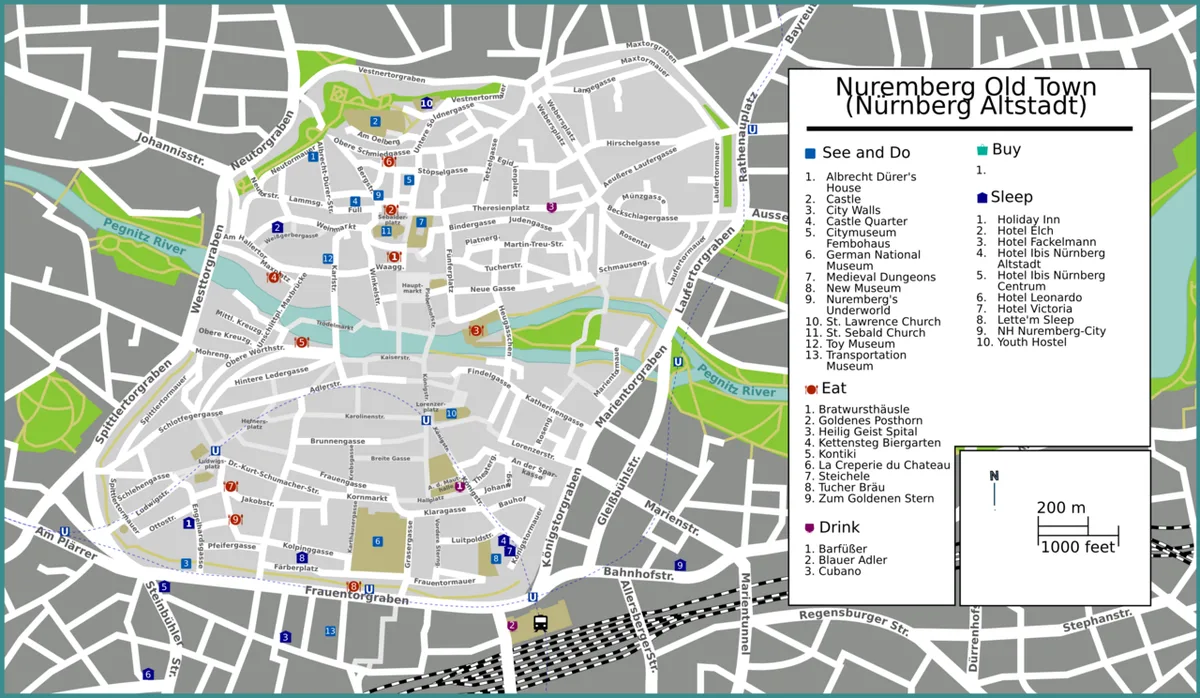
Nuremberg's safety picture is best understood as a walled medieval Altstadt surrounded by a ring of very different districts. The consistently safest pockets are Altstadt (Old Town), St. Johannis, and Gärten hinter der Veste — all known for well-lit streets, a visible police presence, and a steady flow of pedestrians well into the evening. St. Johannis pairs its tranquil, family-friendly streets and proximity to the Pegnitz River with a lower incidence of reported crime, while Gärten hinter der Veste offers a quieter, more residential feel close to the city center. Gostenhof, often shortened to GoHo, and Südstadt sit in a different category: both are gentrifying, culturally interesting districts with a genuinely gritty reputation that outpaces the statistical risk in many pockets — daytime visits for cafes, street art, and independent shops are generally fine, but it pays to be more alert after dark and to stick to busier streets. For the fullest street-level detail, including which specific blocks carry the most caution, see the dedicated neighborhoods to avoid breakdown.
- Altstadt (Old Town): safest, most policed, best base for first-time visitors
- St. Johannis: quiet, family-friendly, riverside, lower reported crime
- Gärten hinter der Veste: residential, green, calm after dark
- Gostenhof (GoHo) and Südstadt: gentrifying but grittier reputation — fine by day, more alert at night
Areas to Approach with Extra Awareness
The one pocket that concentrates most of the grit locals and repeat visitors mention is the streets immediately around the Hauptbahnhof (Main Station), particularly late at night. It is important to separate feeling from fact here: statistically the station area is not a high-crime hotspot for tourists, but its visible homelessness and open drug use give it a rougher atmosphere than the rest of the city center, which can feel uncomfortable even when nothing actually happens. The practical approach is simple — move through the station area with purpose rather than lingering, keep bags zipped and in front of you, and if you are arriving on a late train, head straight into the Altstadt or to a taxi rank rather than wandering nearby side streets. For a fuller rundown of after-dark logistics across the whole city, including which routes and hours warrant more caution, use the dedicated guide to walking safety after dark.
Solo Travel and Female Safety in Nuremberg
Nuremberg has a strong reputation for low harassment levels, and solo and female travelers generally report comfortable experiences across the city's main tourist areas. Germany scored 0.93 on the 2026 Women, Peace and Security Index, a figure that reflects relatively low structural risk nationally and helps frame Nuremberg's own reputation for calm, low-hassle streets. Practical habits still matter: download the VAG app to track trams, buses, and trains in real time so you are never guessing at a schedule in an unfamiliar area, stick to the well-trafficked stretches of the Altstadt after dark, and be cautious about accepting drinks from strangers in nightlife settings, the same as anywhere in Europe. Social safety at beer gardens and during major festivals such as Christkindlesmarkt is generally good thanks to steady crowds and visible staff, though dense crowds are exactly where pickpockets work, so keep bags closed and in view. For a deeper, dedicated breakdown of solo and women's travel safety, including accommodation and nightlife-specific tips, see the guide to female solo travel safety.
Public Transport and Nighttime Logistics
Nuremberg's public transport network — U-Bahn, S-Bahn, and trams, all run through the VAG system — is well-maintained, closely monitored, and considered very safe by both locals and visitors. Pickpocketing is the main risk to watch for, and it concentrates on crowded trains and platforms during peak commuting hours rather than late at night, so keep bags zipped and valuables away from outer pockets when carriages fill up. For late-night journeys once the regular network winds down, Nightliner buses run as a safe, affordable alternative to walking long distances across the city after dark, following key routes out of the center toward residential districts. Registered taxis and mainstream ride-sharing apps are widely available and add another reliable layer of security for late returns from restaurants, bars, or festival grounds. Full route-by-route detail, including which lines and stations carry the most late-night footfall, is covered in the dedicated public transit safety guide.
Common Scams and Petty Crime to Watch For
Serious crime against tourists is rare in Nuremberg, but petty theft and a handful of low-level scams are worth knowing before you travel. Pickpocketing is the most common issue, and it clusters around the Hauptmarkt (Main Market Square) during peak tourist season and around the Christkindlesmarkt, where dense, distracted crowds are an easy target. A second pattern to watch for is the petition or fake-charity approach near the central station — overly friendly strangers asking you to sign something or donate on the spot are best politely declined without stopping to engage. Aggressive panhandling can also occur in the same station-adjacent streets covered above. Because carrying heavy luggage between check-in and check-out makes travelers a more visible target, using secure storage such as Qeepl, which offers luggage storage from €4.39 per day with €1,000 in insurance coverage, is a practical way to move around hands-free rather than dragging bags through crowded squares. For the full list of tactics and how to spot them in advance, see the guide to typical tourist scams.
Safety During Christkindlesmarkt and Blaue Nacht
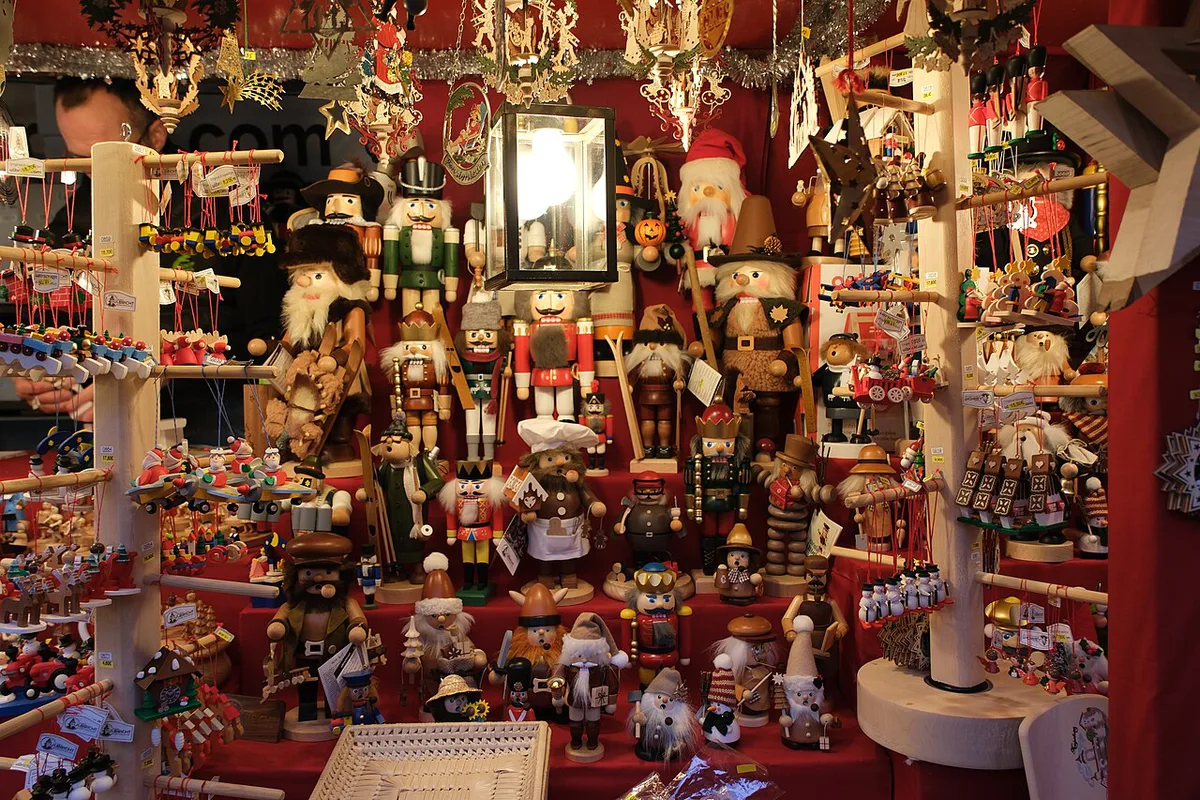
Nuremberg's two signature events bring the city's biggest crowds, and crowd density rather than crime rate is the main safety factor to plan around. The Christkindlesmarkt, held in the Hauptmarkt through the holiday season, draws dense, slow-moving crowds where pickpocketing risk rises noticeably compared with an ordinary weekday visit — keep bags closed and to the front, and agree on a meeting point with any travel companions in case you get separated. Blaue Nacht (Blue Night), the city's evening festival of light and late-opening museums, similarly fills central streets and squares after dark; the areas involved are the same well-policed Altstadt streets covered earlier, so the same crowd-awareness habits apply rather than any different neighborhood risk. In both cases, using secure luggage or bag storage before you head into the crowds, and sticking to main thoroughfares rather than quieter side streets, keeps the evening low-hassle.
Christkindlesmarkt and Blaue Nacht's steady crowds and visible staff create strong social safety, yet these same dense gatherings concentrate the city's highest pickpocket risk. Securing bags and planning meeting points serve both reassurance and theft-prevention purposes.
Practical Logistics and Emergency Information
Keep two numbers saved before you arrive: 110 for police and 112 for fire and medical emergencies, both free to call and staffed around the clock. Central Nuremberg has a good density of pharmacies (Apotheke) and hospitals, so minor medical needs are rarely more than a short walk away in the Altstadt or surrounding districts. Language is rarely a barrier for safety-related interactions — police and other officials in a city with Nuremberg's tourist volume generally speak workable English, so reporting an issue or asking for directions in an emergency is straightforward even without German. As with any major European destination, registering your accommodation address with a travel companion and keeping a photo of your passport separate from the original document are sensible extra precautions rather than signs of unusual risk.
Neighborhood Safety at a Glance
For a fast comparison, here is how Nuremberg's key districts stack up on the factors that matter most to visitors, based on the neighborhood detail above and in our editorial assessment rather than any numeric scoring system.
| Neighborhood | Family Friendliness | Nightlife Safety | Proximity to Sights |
|---|---|---|---|
| Altstadt (Old Town) | High | High | Excellent — walking distance to major sights |
| St. Johannis | High | Medium-High | Good — short tram ride to center |
| Gärten hinter der Veste | High | Medium | Fair — quieter, more residential |
| Gostenhof (GoHo) | Medium | Medium — more caution after dark | Good — close to center |
| Südstadt | Medium | Medium — more caution after dark | Fair — a short transit ride out |
For trip-planning details, see UK FCDO travel advice for Germany.
Explore is safe in other cities
Frequently Asked Questions
Is Nuremberg safe to walk at night?
Yes, in the well-lit, well-trafficked streets of the Altstadt, St. Johannis, and other central areas, walking at night is generally comfortable. The main exception is the streets right around the Hauptbahnhof, where a visible rougher atmosphere warrants moving with purpose rather than lingering; Nightliner buses and registered taxis are a reliable alternative to a long walk after dark.
Is Nuremberg safer than Frankfurt?
Nuremberg is generally seen as the calmer of the two, particularly around each city's central station district, where Frankfurt carries a rougher reputation. Nuremberg's compact, walkable Altstadt also makes it easier for visitors to stay within well-policed, tourist-friendly streets throughout a stay.
What is the safest city in Germany?
There is no single universally agreed answer, since rankings vary by source and methodology, but Nuremberg consistently places among the country's safer larger cities thanks to its low violent-crime profile and compact, well-monitored historic core. Smaller German towns often edge out any big city on raw statistics, but for a major destination with significant tourist infrastructure, Nuremberg compares well against peers like Frankfurt and Berlin.
Is public transport in Nuremberg safe for children and families?
Yes. The VAG-run U-Bahn, S-Bahn, and tram network is well-maintained and closely monitored, and families commonly use it to move between the Altstadt and family-friendly districts like St. Johannis. As on any busy public transport system, keep an eye on personal belongings during crowded peak-hour trips.
What should travelers do about pickpockets and scams in Nuremberg?
Stay alert in dense crowds at the Hauptmarkt and around the Christkindlesmarkt, decline unsolicited petitions or donation requests near the central station, and consider secure luggage storage between check-in and check-out so you are not carrying bags that make you a more visible target.
Stay Safe in Nuremberg
Every Nuremberg safety guide on one page — areas, scams, night rules, and getting around.