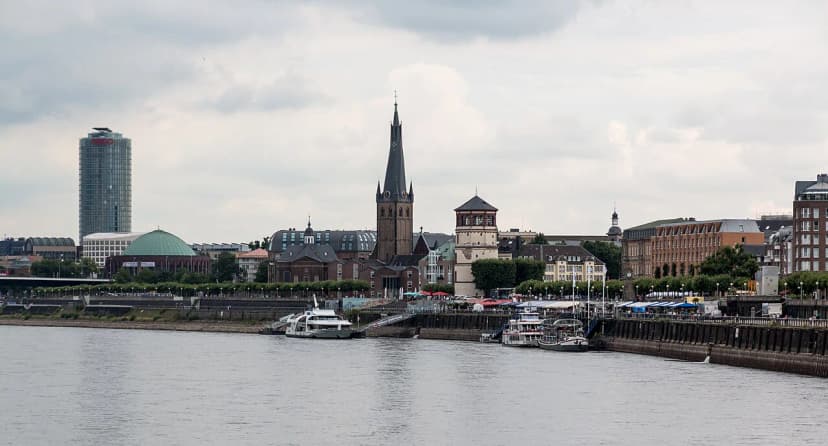
Is Dusseldorf Safe? A Localized Safety Guide and Neighborhood Breakdown
Last updated February 2026, this guide answers the question most travelers search before booking a Rhineland trip: is Dusseldorf safe? The short answer is yes — Dusseldorf is a safe, affluent city where violent crime against visitors is rare, and the practical risks are hyper-local rather than citywide. This guide breaks down which neighborhoods to prioritize, how to read the Altstadt's rowdy-but-policed nightlife, and what to know about transport, scams, and solo travel before you land.
Quick Answer: Is Dusseldorf Safe in 2026?
The short answer: yes, Dusseldorf is a safe city to visit in 2026. As the affluent commercial and fashion hub of the Rhineland, Dusseldorf combines a compact, well-policed city center with a public transport network considered one of the more efficient in Germany, and violent crime targeting tourists is genuinely rare. According to Numbeo's crowd-sourced data, Dusseldorf's safety index currently sits around 67.3 out of 100, with a crime index near 32.7 — figures that place it comfortably in the 'safe' band for a major European city, though Numbeo's numbers are perception-based and shift over time, so treat them as a directional signal rather than an official crime statistic (Germany's Federal Criminal Police Office, or BKA, publishes the official figures if you want harder data). Compared to other German hubs, Dusseldorf tends to feel calmer and more contained: its nightlife concentrates in one well-known, heavily trafficked district rather than sprawling across multiple neighborhoods the way it can in Berlin, and its main station area, while it warrants the same standard vigilance as any European Hauptbahnhof, doesn't carry the more entrenched issues sometimes associated with Frankfurt's station quarter. The practical takeaway: the real risk in Dusseldorf isn't citywide danger, it's hyper-local — a handful of specific streets, the Hauptbahnhof's busiest corners, and the Altstadt at peak drinking hours are where extra awareness pays off, and the rest of the city runs closer to routine big-city caution.
Neighborhood Safety: Where to Stay vs Areas That Need Extra Awareness
Dusseldorf's neighborhoods vary more in noise level and tourist infrastructure than in genuine danger, but knowing the map still helps you plan. Oberkassel, across the Rhine from the historic core, is an upscale residential district with tree-lined streets, boutique shopping, and a consistently calm evening atmosphere — a strong pick for families and business travelers who want quiet nights. Kaiserswerth, Dusseldorf's oldest quarter to the north, pairs medieval streets and riverside walks with a low-key, family-friendly feel. Stadtmitte offers the convenience of a central base with a more residential, less crowded character than the shopping core around Königsallee. On the other end, neighborhoods like Oberbilk and Garath draw more online chatter than the on-the-ground reality supports: Oberbilk's rougher reputation traces back to its industrial past and proximity to the Hauptbahnhof, while Garath is largely a quieter residential suburb with little tourist infrastructure rather than a genuinely dangerous one. Both call for the same big-city awareness you'd use anywhere — securing bags, sticking to well-lit main streets, and skipping unfamiliar side streets after dark. For a deeper breakdown of specific streets to plan around, see this guide to areas to avoid in Dusseldorf. Flingern-Nord deserves a specific update: older online threads still describe it as edgy, but the district has gentrified rapidly with a growing concentration of design studios, cafés, and renovated housing, and in current conditions it reads closer to an up-and-coming creative quarter than an area of concern. Around the Hauptbahnhof itself, the strategy that works for most travelers is simple: move purposefully rather than lingering near the main entrances, keep bags zipped and to the front in the ticket hall and on platforms during the busiest commuter windows, and head straight for a taxi rank, tram stop, or your accommodation rather than pausing to check directions in the most congested spots. None of this reflects a danger unique to Dusseldorf's station — it's the same big-city station etiquette that applies at any major European Hauptbahnhof, and Dusseldorf's is well-staffed and well-lit throughout the day and evening.
| Neighborhood | Editorial Safety Read | Noise Level | Best For |
|---|---|---|---|
| Oberkassel | Very safe, in our editorial assessment | Quiet to moderate | Families, upscale stays |
| Kaiserswerth | Very safe, in our editorial assessment | Quiet | History, families, slow travel |
| Stadtmitte | Safe, in our editorial assessment | Moderate | Central convenience, business trips |
| Flingern-Nord | Increasingly safe as it gentrifies, in our editorial assessment | Moderate | Design-conscious and foodie travelers |
| Altstadt | Safe but rowdy at night, in our editorial assessment | High, especially weekend nights | Nightlife, bar-hopping, short stays |
| Oberbilk | Caution advised, in our editorial assessment | Moderate to high near the station | Budget stays, not ideal for first-time visitors |
| Garath | Caution advised, in our editorial assessment | Low to moderate | Not typically a tourist base |
Is Dusseldorf Safe for Solo and Female Travelers?
Solo and female travelers consistently rate Dusseldorf among the more comfortable German cities to navigate independently. The city's compact core, well-lit main streets, and dense concentration of hotels, cafés, and public transport stops make it easy to stay in populated areas without much extra planning. Standard precautions still apply: stick to well-lit, busy streets after dark, use registered taxis or official ride-hailing rather than unmarked cars, and let someone know your general plans for the evening. Dusseldorf is broadly English-friendly in hotels, restaurants, and shops, but emergency services and police may default to German, so it's worth saving the German words for 'help' (Hilfe) and 'police' (Polizei) alongside the emergency numbers 110 for police and 112 for fire and medical. Nightlife areas, including the Altstadt, are also worth extra attention: keep an eye on your drink at busy outdoor bars and stick with people you trust when moving between venues late at night. For a full walkthrough of neighborhood-specific advice, transport tips, and nightlife guidance aimed at solo and female travelers, see this solo female travel safety guide.
Solo travelers find Dusseldorf among the more comfortable German cities because of its compact core, well-lit streets, and dense hotel and transit infrastructure, making it easy to stay in populated areas. Nightlife concentrates in one heavily policed district.
Safety at Night: The Altstadt and the 'Longest Bar in the World'
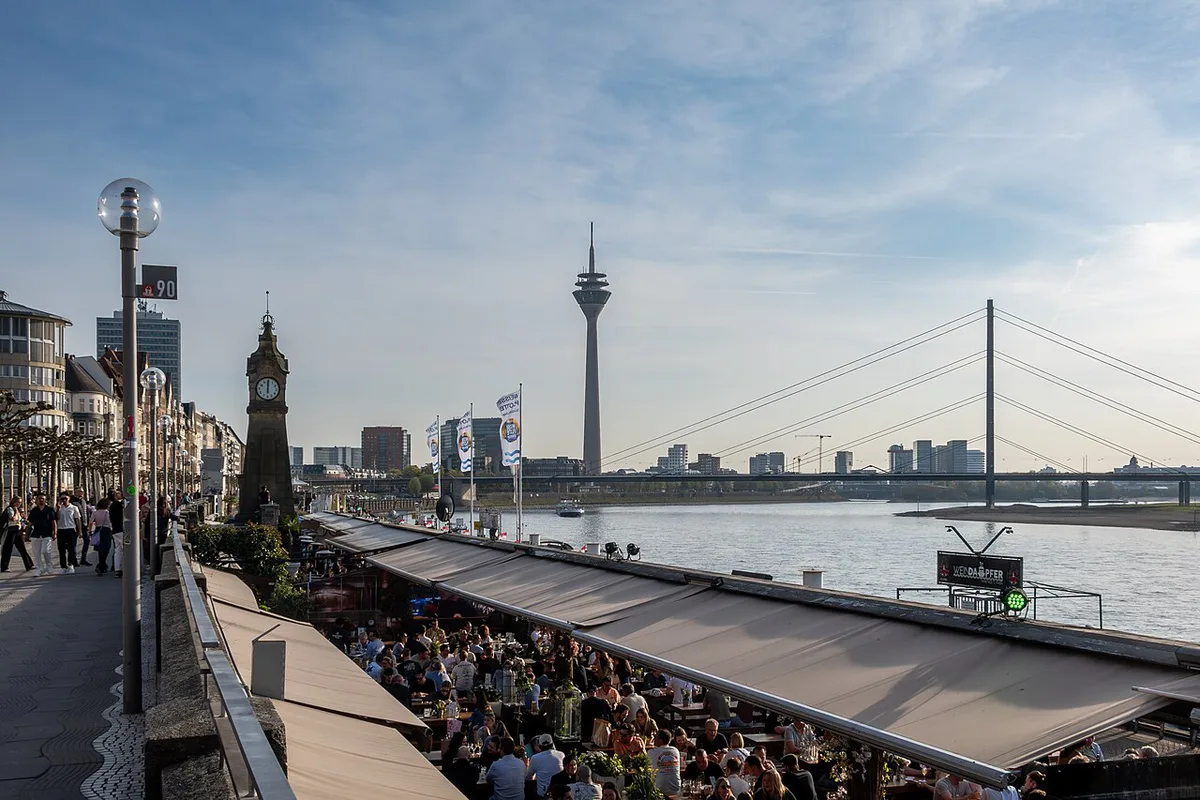
The Altstadt, often nicknamed the longest bar in the world for its sheer density of pubs and breweries, is the one part of Dusseldorf where the real risk isn't crime — it's crowd behavior. Expect a heavy police presence on weekend nights, but also expect narrow, packed lanes full of visitors drinking Altbier late into the evening, which translates to jostling, raised voices, and the occasional drunken argument rather than premeditated crime. Keep valuables zipped and close in the densest stretches, watch your drink at outdoor bars, and pace your night if you're planning to walk back rather than take transport. The Rheinuferpromenade along the river is a popular evening walking route and is generally well used and well lit near the Altstadt end, but it thins out and gets darker the further you move from the crowds, so apply the same caution you'd use on any unfamiliar riverside path after dark. For an hour-by-hour breakdown of how the Altstadt and riverfront change after sunset, see this guide to whether it's safe to walk in Dusseldorf at night.
Public Transport Safety: U-Bahn, Trams, and Night Buses
Dusseldorf's public transport network — U-Bahn, S-Bahn, trams, and buses operated by Rheinbahn — is well maintained, closely monitored, and considered one of the more reliable systems in Germany. Trains and platforms are generally safe throughout the day, with the main tourist-facing risk being pickpocketing on crowded lines during rush hour rather than violent crime. After the regular network winds down, Rheinbahn's NachtExpress night bus lines cover the city, giving a documented, staffed alternative to walking home from the Altstadt or riverfront late at night. Taxis and ride-hailing options are widely available around the Hauptbahnhof and Altstadt for a more direct route home. As with any transit system, keep bags zipped and in view, stay alert during the busiest commuter windows when pickpockets have the most cover, and avoid dozing off with valuables loose on late-night rides. For platform-by-platform and line-by-line detail, see this guide to Dusseldorf Public Transport Safety: A Practical Guide to Fines & Security.
Common Scams and Petty Crime Prevention
Violent crime against tourists is rare in Dusseldorf, but petty theft and low-grade scams follow the same patterns found in any major European shopping city. Königsallee, Dusseldorf's upscale shopping boulevard, draws dense foot traffic and is a known hotspot for pickpocketing, especially around outdoor cafés and department store entrances. Around the Hauptbahnhof, watch for 'helpful' strangers who approach at ticket machines offering unsolicited assistance — a common setup for distraction theft — and treat unsolicited petition-signers or charity collectors with the same skepticism you'd apply at home, since fake-charity approaches are a documented tactic in busy pedestrian areas. The safest response to all of these is the boring one: keep bags zipped and in front of you in crowds, decline unsolicited help at ticket machines, and don't sign or donate on the street without verifying the organization first. For a full rundown of scam patterns specific to the city, see this guide to common tourist scams in Dusseldorf.
Petty theft concentrates in specific, predictable contexts: rush-hour U-Bahn/S-Bahn lines, crowded Königsallee, and the Altstadt on weekend nights. Standard precautions—front-facing zipped bags and heightened awareness in these moments—suffice. Violent crime against tourists remains genuinely rare citywide.
- Pickpocketing hotspots: crowded stretches of Königsallee, department store entrances, and busy U-Bahn/S-Bahn carriages during rush hour
- Ticket machine 'helpers': decline unsolicited assistance at Hauptbahnhof ticket machines and use official staff or apps instead
- Fake charity or petition scams: politely decline signing or donating on the street without verifying the organization first
- Distraction theft: stay alert when someone creates a commotion or bumps into you in a crowded area
Practical Safety Directory: Emergency Numbers and Medical Care
Keep Germany's two emergency numbers saved before you land: 112 covers fire and medical emergencies and is answered in English as well as German, while 110 reaches police directly. Dusseldorf has a dense concentration of clinics and pharmacies (Apotheke) throughout the central districts, and hotel front desks can typically point you to the nearest one quickly if something minor comes up during your stay. If you're storing bags for a same-day layover or before a hotel check-in, third-party luggage storage services around the city offer a more secure alternative to leaving bags unattended in cafés or station lockers — providers such as Qeepl, for example, list rates from around €4.39 per day with theft or damage coverage up to €1,000.
- Police: 110
- Fire and medical emergencies: 112
- Pharmacies (Apotheke): widely available in central districts; ask your hotel front desk for the nearest one
- Luggage storage: third-party providers such as Qeepl offer secure storage from around €4.39 per day with up to €1,000 in coverage
Final Safety Checklist for Your Dusseldorf Trip
Dusseldorf rewards ordinary city awareness rather than heightened alertness. Use this checklist as a quick pre-trip reference before you head out each day, and revisit the neighborhood, transport, and scam sections above for more detail on any point that applies to your trip.
- Do keep emergency numbers 110 (police) and 112 (fire/medical) saved in your phone before you land
- Do stick to well-lit, busy streets in Oberbilk and Garath after dark rather than cutting through quiet side streets
- Do watch your bag closely on U-Bahn and S-Bahn lines during rush hour and in the Altstadt on weekend nights
- Don't accept unsolicited help at Hauptbahnhof ticket machines or sign anything for street petitioners
- Don't treat Altstadt rowdiness as a crime risk — it's mostly alcohol-fueled crowding rather than targeted danger
- Do use registered taxis, ride-hailing, or Rheinbahn's NachtExpress night buses instead of walking long stretches alone late at night
Hauptbahnhof Arrival Strategy: The First 3 Minutes
Dusseldorf Hauptbahnhof feels busiest where platforms, ticket machines, fast-food counters, and the Konrad-Adenauer-Platz forecourt meet, so the safest arrival strategy is to leave that pressure zone quickly and deliberately. Before you step off the train, open your route and decide your exit: use the west side toward Konrad-Adenauer-Platz for taxis, trams, U-Bahn links, Immermannstraße, Stadtmitte, and onward travel to Heinrich-Heine-Allee or the Altstadt; use the quieter east side toward Bertha-von-Suttner-Platz if your hotel is behind the station.
In the first three minutes, keep your bag zipped and in front, avoid stopping at ticket machines with luggage exposed, and decline unsolicited help. If you need transit tickets, use the Rheinbahn app or move to a less crowded machine after you have cleared the main flow. For late arrivals, choose a taxi from the official rank or a direct U-Bahn/tram connection rather than wandering through side streets while checking your phone.
For trip-planning details, see UK FCDO travel advice for Germany.
Explore is safe in other cities
Frequently Asked Questions
Is Dusseldorf safe to visit alone?
Yes. Dusseldorf is considered one of the more comfortable German cities for solo travelers, with well-lit central districts, reliable public transport, and a compact core that makes it easy to stick to populated areas. Standard solo-travel precautions — sticking to busy streets at night and using registered transport — apply here as anywhere.
Is it safe to walk at night in Düsseldorf?
Generally yes in the central and well-trafficked areas, including most of the Altstadt and the Rheinuferpromenade near the old town. The main night-time consideration is crowd behavior in the Altstadt rather than crime, plus the usual advice to avoid poorly lit, empty streets in outlying residential districts.
What areas of Dusseldorf should be avoided or approached with caution?
Oberbilk and Garath carry rougher reputations online, largely tied to Oberbilk's industrial past and proximity to the Hauptbahnhof and Garath's residential, non-touristy character, but neither is a no-go zone — both call for ordinary big-city vigilance rather than avoidance.
Is Düsseldorf English-friendly for tourists?
Yes, most hotels, restaurants, and shops operate comfortably in English. Emergency services can default to German, so it helps to know the emergency numbers (110 police, 112 fire/medical) and a couple of basic German words in case help is needed quickly.
How does Dusseldorf compare to Berlin or Frankfurt for safety?
Dusseldorf is generally regarded as calmer and more contained than Berlin's larger, more spread-out nightlife districts, with a smaller, more walkable core that's easier to navigate safely on foot.
What is the safest area to stay in Dusseldorf?
Oberkassel and Kaiserswerth are consistently the calmest, most residential options, while Stadtmitte offers a safe, central base if proximity to the main sights matters most for your trip.
Stay Safe in Dusseldorf
Every Dusseldorf safety guide on one page — areas, scams, night rules, and getting around.
Dusseldorf Safety Guides
- Dusseldorf Areas to Avoid: Safety Guide & Neighborhood Map
- Is Dusseldorf Safe at Night? Neighborhoods & Nightlife Safety Guide
- Dusseldorf Tourist Scams: Common Red Flags & How to Avoid Them
- Is Dusseldorf Safe for Solo Female Travellers?
- Dusseldorf Public Transport Safety: A Practical Guide to Fines & Security