Is Dusseldorf Safe for Solo Female Travellers?
Last updated May 2026, and the short answer for anyone asking whether Dusseldorf is safe for solo female travellers is a confident yes, provided you make one smart booking decision before you arrive. Dusseldorf functions like most well-run German cities: efficient transit, well-lit central districts, and a relatively low-key street culture outside of a few predictable nightlife pockets. The real variable isn't the city as a whole but where you sleep, since the blocks immediately around the Hauptbahnhof and Worringer Platz carry a rougher, more transient feel than the rest of town.
The Verdict: Is Dusseldorf Safe for Solo Female Travellers?
Dusseldorf is, on balance, a comfortable and manageable destination for women travelling on their own. It lacks the aggressive street hassle reported in some larger European capitals, has a compact and walkable core, and runs a transit network that most residents use at all hours without much thought. The caveat locals and repeat visitors give consistently is about accommodation, not the city itself: skip the cheapest listings clustered right around the station and Worringer Platz, and the rest of the experience tends to line up with expectations. For the fuller citywide picture, including how Dusseldorf compares with other German cities on general safety, the broader Dusseldorf safety overview is worth reading alongside this guide.
Understanding Dusseldorf's Safety Landscape
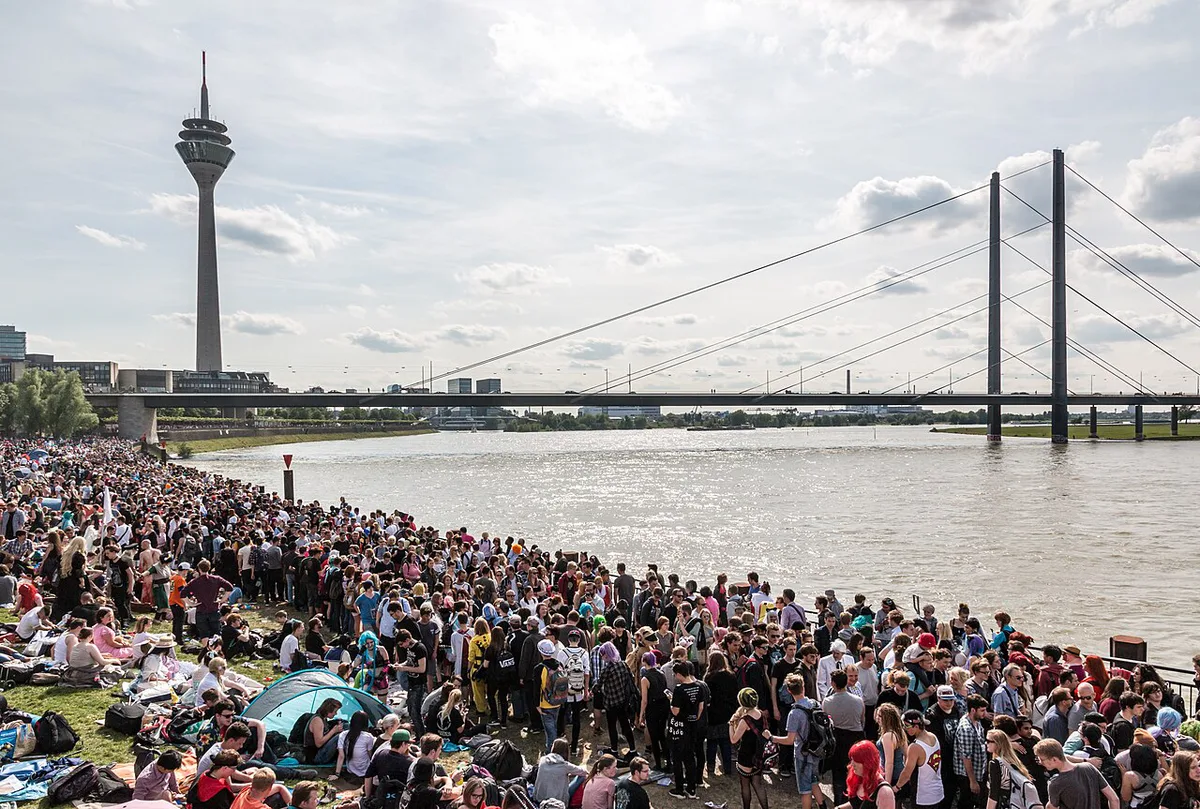
Dusseldorf is a business and fashion hub on the Rhine, and its centre reflects that: office towers, retail streets, and a compact Altstadt rather than sprawling districts to get lost in. Local crime patterns tracked in the Polizeiliche Kriminalstatistik for North Rhine-Westphalia skew toward opportunistic property crime, such as pickpocketing in dense tourist and nightlife zones, rather than violent street crime targeting travellers. The practical takeaway for a solo woman is that ordinary city awareness, rather than special precautions unique to Dusseldorf, covers most of what you need: keep bags zipped and in front of you on trams, avoid flashing phones or cash in the Altstadt's busiest lanes late at night, and treat the immediate station forecourt as a place to pass through rather than linger.
Crime patterns in Dusseldorf center on opportunistic property theft, not violent street crime—a notable contrast to aggressive street culture in some major European cities. Standard city awareness with zipped bags and attention in crowded areas covers most risk.
Safe Neighborhoods vs Areas to Exercise Caution
Where you base yourself matters more in Dusseldorf than almost any other safety factor. Pempelfort offers a quieter, residential feel with easy tram access into the centre, which suits travellers who want distance from nightlife noise. Oberkassel, just across the Rhine, is an upscale, low-key district popular with longer-term visitors. Flingern and Bilk both work well too, trading a slightly grittier, more local edge for lower prices and easy U-Bahn or tram links to the centre, and the fringe of the Altstadt itself is fine once you're a block or two back from the densest bar strip. The one area worth genuine caution is the immediate footprint of the Hauptbahnhof and Worringer Platz, where budget hotels sit closest to late-night loitering and a more transient crowd. For a fuller breakdown of blocks to sidestep, see the dedicated areas to avoid guide.
- Pempelfort: quiet, residential, tram-connected, a solid pick for a low-key stay
- Oberkassel: upscale and calm, across the Rhine from the centre
- Flingern and Bilk: local, affordable, well served by U-Bahn and tram
- Altstadt fringe: fine once away from the densest bar-strip blocks
- Book away from the immediate Hauptbahnhof and Worringer Platz footprint
Navigating the World's Longest Bar: Altstadt Safety at Night
The Altstadt's nickname, the World's Longest Bar, is well earned: its narrow lanes pack in a dense run of pubs and beer halls that fill up fast on weekend nights. During the day, it is simply a historic old town with shops, cafes, and river views, and it's easy to walk through solo without a second thought. After dark, especially Friday and Saturday, the atmosphere shifts toward stag and hen parties and a heavier drinking crowd, which can mean more catcalling or unwanted attention directed at solo women rather than any real physical danger. The practical response is less about avoiding the Altstadt and more about picking your moments: enjoy it earlier in the evening, keep to the busier main lanes rather than quiet side alleys, and treat a rowdier crowd as a reason to head home a little earlier rather than a reason to skip the district. For a deeper look at how the city changes after sunset citywide, the nighttime safety guide covers it in more detail.
The Altstadt's daytime riverside cafes are comfortable solo-dining options, but the district transforms into a rowdy drinking scene after dark on weekends. Strategy: enjoy it early evening, then use NachtExpress or taxis for late-night transit instead of lingering.
Public Transport Safety for Solo Women
Dusseldorf's Rheinbahn network of U-Bahn lines, trams, and buses is generally reliable and well used by women travelling alone at all hours, with regular daytime service giving way to the Rheinbahn NachtExpress night bus network once the U-Bahn winds down. Platforms and carriages tend to be well lit and monitored, and standing near the driver's compartment or in busier carriages is a simple habit worth keeping late at night. Taxis and ride-hailing apps remain the most door-to-door option when a route home involves a longer walk at the end, and are worth the modest extra cost after a late Altstadt evening. The table below is a quick reference for choosing a mode based on the time of night.
| Transport Mode | Daytime | Late Night (after midnight) |
|---|---|---|
| U-Bahn / Tram | Reliable, frequent, comfortable solo | Rheinbahn NachtExpress covers key routes; stick to busier carriages |
| Walking | Fine in central districts and the Altstadt fringe | Avoid quiet side lanes near Hauptbahnhof/Worringer Platz |
| Taxi / Ride-hailing app | Convenient but rarely necessary | Best option after late Altstadt nights or long walks home |
Common Scams and Social Nuances in Dusseldorf
Dusseldorf doesn't have a reputation for elaborate tourist scams the way some Southern European cities do, but the usual big-city caution still applies: watch for pickpockets working the crowded Altstadt lanes and any packed tram at rush hour, and be wary of overly persistent conversation starters near nightlife strips who steer you toward a specific bar with inflated drink prices. Socially, Germans in general and Dusseldorf residents in particular tend toward reserved, businesslike directness rather than intrusive friendliness, which many solo women find easier to navigate than more overtly attention-seeking cultures. A polite, brief 'nein danke' closes down unwanted street approaches quickly and is well understood. For a fuller rundown of the tricks to know before you land, check the common tourist scams guide.
Solo Dining and Socializing: Best Spots for Women
Immermannstrasse, known locally as Little Tokyo for its concentration of Japanese and other East Asian restaurants, is one of the best solo-dining hubs in the city: it's brightly lit, busy well into the evening, and full of counter-seating ramen and noodle spots where solo diners are entirely unremarkable. Konigsallee, Dusseldorf's grand boulevard of shops and cafes, works well for a solo daytime coffee or lunch with people-watching built in, and its cafes stay comfortable for women dining alone. The Altstadt's daytime cafes along the river are another easy, low-pressure option, best enjoyed before the evening crowd builds. Across all three, the common thread is visibility and foot traffic, which tends to be the most reliable proxy for solo-friendly in any city.
- Immermannstrasse (Little Tokyo): high-visibility ramen and noodle counters, comfortable solo any evening
- Konigsallee cafes: bright, busy, easy for a solo coffee or lunch stop
- Altstadt riverside cafes: pleasant by day, best visited before the evening bar crowd arrives
Emergency Information and Local Resources
Standard European emergency numbers apply in Dusseldorf, and the Bundespolizei maintain a visible presence at the Hauptbahnhof specifically because of its transient night-time crowd, so approaching an officer there if anything feels off is a reasonable first move. VisitDuesseldorf.de lists the city's official visitor centre locations for maps, transit questions, or general orientation on arrival. Building a short arrival checklist before landing removes a layer of stress from the first few hours in an unfamiliar station.
- Save the address of your accommodation offline before arrival, in case data access is delayed
- Note the location of the nearest official visitor centre or Bundespolizei post at the Hauptbahnhof
- Keep a screenshot of your Rheinbahn route and the NachtExpress network map for late-night backup
- Share your accommodation and general itinerary with someone before you land
- Book accommodation outside the immediate Hauptbahnhof/Worringer Platz blocks in advance rather than on arrival
Frequently Asked Questions
Is it safe to walk alone at night in Dusseldorf?
Generally yes in the central, well-lit districts, though the Altstadt gets rowdier on weekend nights and the immediate area around the Hauptbahnhof and Worringer Platz is best avoided late at night in favor of a taxi or the Rheinbahn NachtExpress.
Which areas of Dusseldorf should solo travellers avoid?
The main caution is the immediate footprint of the Hauptbahnhof and Worringer Platz, where late-night loitering is more common. Pempelfort, Oberkassel, Flingern, Bilk, and the Altstadt fringe are all considered comfortable bases in comparison.
How do I use public transport safely as a woman in Dusseldorf?
Stick to busier carriages on the U-Bahn and trams, especially after dark, and rely on the Rheinbahn NachtExpress night bus network once regular U-Bahn service winds down. A taxi or ride-hailing app is a reasonable substitute for the final stretch home late at night.
Is Dusseldorf Hauptbahnhof safe at night?
It carries a visible Bundespolizei presence, but the surrounding blocks can feel less comfortable late at night due to a more transient crowd. Passing through is fine; booking accommodation elsewhere and treating the immediate forecourt as a through-point rather than a place to linger is the better approach.
What should solo female travellers pack for arrival in Dusseldorf?
A short arrival checklist covers most of it: your accommodation address saved offline, a screenshot of your Rheinbahn route, awareness of the nearest visitor centre or Bundespolizei post, and a plan shared with someone else before you land.