Is Barcelona Safe? What Travelers Need to Know for 2026
Last updated May 2026, this guide answers the question travelers ask most before booking a trip: is Barcelona safe for a city that draws enormous crowds to La Rambla, the Gothic Quarter, and its beaches every summer? The short answer is that violent crime stays rare, but petty theft is common enough that pickpocketing has become the city's defining travel-safety issue. This guide breaks down where the real risk sits, which neighborhoods to prioritize, and the practical steps to take if something does go wrong.
The Short Answer: Is Barcelona Safe Right Now?
For 2026 travel, Barcelona sits alongside other major Western European capitals in terms of overall personal safety: violent crime against visitors is uncommon, and most trips pass without any incident more serious than a crowded metro car. The reputational risk that actually matters is theft, not assault. Barcelona is routinely described as one of Europe's pickpocketing hotspots, and that single fact should shape how you pack, where you walk, and how you behave in dense tourist zones. Treat the city the way you would any major transit hub: keep valuables secured, stay alert in crowds, and the odds of an incident-free stay are strongly in your favor. For a deeper statistical breakdown of how petty theft compares with violent offenses, see the dedicated Barcelona crime data breakdown.
Understanding Barcelona Crime Rates: Violent vs Petty Theft
The Ministerio del Interior and Catalonia's Idescat statistics office both track crime at the regional level, and the consistent pattern they show is a split profile: rates of assault, robbery-with-violence, and other serious offenses against tourists remain low compared with the scale of Barcelona's visitor numbers, while theft-related offenses, especially pickpocketing and bag-snatching, make up the overwhelming majority of tourist-reported incidents. Travel advisories from bodies like the US State Department and the UK Foreign Office reflect the same split, generally rating Spain as safe for travel while flagging petty crime in Barcelona specifically as a recurring concern in their Spain-wide guidance. This is why locals and repeat visitors alike describe the city's risk profile as one-dimensional: the danger to a typical trip is a stolen phone or wallet, not a violent confrontation. A full statistical comparison against other major EU cities, sourced from official reporting, is broken down in the Barcelona crime rate overview.
Barcelona's theft concentrates at standard city hotspots—crowded transit, major landmarks, tourist beaches—requiring no specialized security, just urban vigilance: valuables secured, attention in crowds, normal after-dark caution. The risk is manageable, not exceptional.

High-Risk Areas and Common Barcelona Tourist Scams
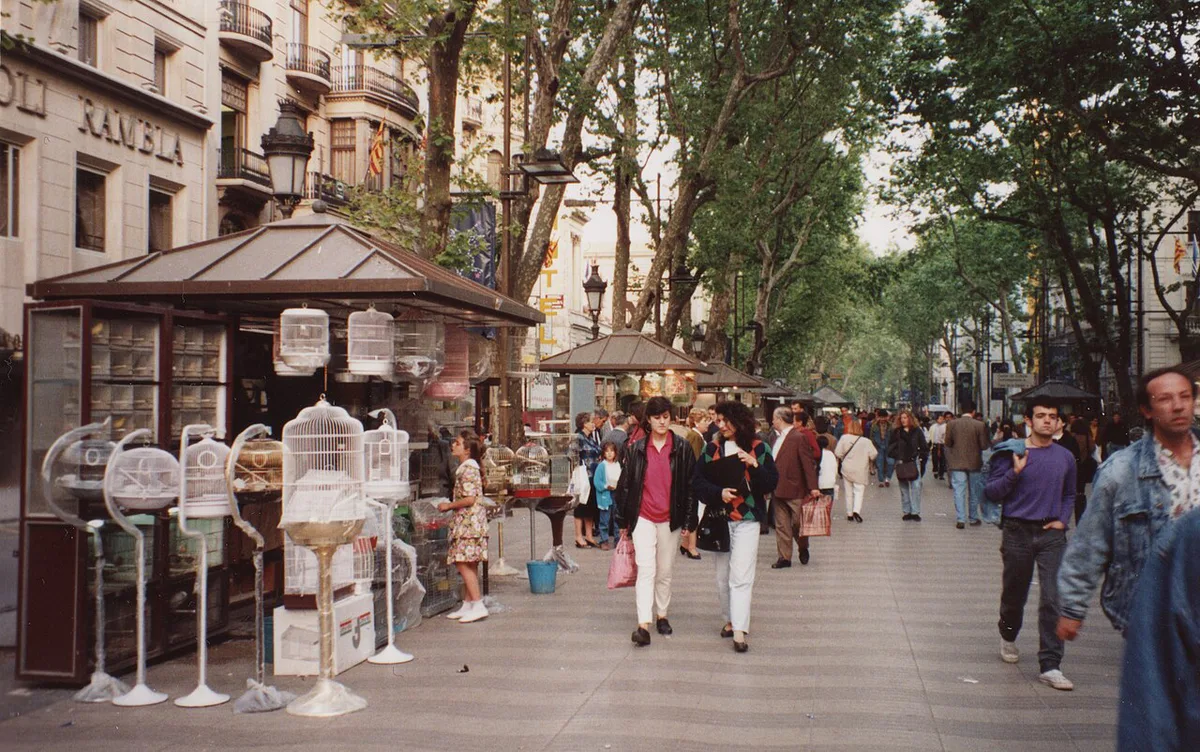
Petty theft in Barcelona concentrates in a handful of predictable locations: La Rambla and its immediate side streets, the Metro during rush hour, crowded beachfront promenades, and outdoor terraces where bags are left unattended on chair backs. Pickpocket teams tend to work in pairs or small groups and rely on distraction rather than force. Two mechanics show up again and again in incident reports and are worth knowing before you arrive. The first is the so-called bird poop scam, where an accomplice discreetly smears a substance on a traveler's shoulder, then a second person offers to help clean it off, using the moment of distraction to lift a wallet or phone. The second is the football trick, where a small group appears to be playing with a ball or engages a traveler in a brief, seemingly friendly interaction, using close physical contact and quick hand movements to access pockets or bags. Neither relies on aggression, which is exactly why they work on distracted travelers. A cross-body bag worn in front, phones kept in zipped inner pockets rather than back pockets, and a healthy skepticism toward unsolicited physical contact from strangers cover most of the risk. For a full rundown of scam variations circulating in 2026, including ones targeting restaurant bills and taxi routes, see the dedicated guide to common Barcelona tourist scams.
- La Rambla and its side streets: peak pickpocket activity, especially in early evening crowds
- Metro during rush hour: bag-snatching and pocket theft in tightly packed carriages
- Beachfront promenades: unattended bags and phones left on towels or chairs
- Outdoor terraces: bags hung on chair backs or placed under tables out of sight
Safety by Neighborhood: Where to Stay and Where to Avoid in Barcelona
Neighborhood choice affects both how safe a stay feels and how much petty-crime exposure a traveler actually gets, since some districts combine high tourist foot traffic with narrow, crowded streets that are easier for pickpocket teams to work. Eixample offers wide, well-lit boulevards, a strong police presence, and a residential feel that many travelers find the most reassuring base. Gràcia is quieter and more local, with a village-like layout that keeps crowd density low outside of festival periods. The Gothic Quarter is atmospheric and central but has narrow medieval lanes that get extremely congested at peak times, raising the odds of a distraction-based theft even though violent incidents remain uncommon there. El Raval has historically carried the strongest areas-to-avoid reputation, particularly at night, due to a mix of tourist density and pockets of higher petty-crime activity; a full breakdown of which specific blocks warrant extra caution is covered in the guide to Barcelona Areas to Avoid: A 2026 Neighborhood Safety Guide. In our editorial assessment, based on centrality, noise level, and how safe each area tends to feel after dark, the trade-offs shake out as follows. For a longer, block-by-block comparison built specifically around where to book accommodation, see the dedicated guide to the The Safest Neighborhoods in Barcelona: A 2026 Local Safety Guide.
| Neighborhood | Centrality | Noise Level | Safety Perception (Editorial Assessment) |
|---|---|---|---|
| Eixample | High | Moderate | High |
| Gràcia | Medium | Low | High |
| Gothic Quarter | High | High | Medium |
| El Raval | High | High | Low to Medium |
Solo Female Travel Safety in Barcelona
Solo female travelers generally report feeling comfortable in Barcelona's main tourist and residential districts during daylight hours, with the same petty-theft precautions applying regardless of who is traveling. The practical adjustments worth making are less about the city being unusually risky for women and more about standard urban common sense: choosing well-lit, populated routes after dark, sharing a live location with a contact when heading back to accommodation late, and using a licensed taxi or rideshare rather than walking through unfamiliar streets alone late at night. Catcalling and unwanted attention on nightlife-heavy streets is the more common friction point reported by solo female travelers, rather than serious crime. Staying in neighborhoods like Eixample or Gràcia, which combine central access with a quieter evening atmosphere, tends to reduce this friction. A full set of neighborhood-specific and nightlife-specific guidance for women traveling alone is covered in the dedicated solo female travel safety guide.
Defenses operate at three levels: structural (choose Eixample or Gràcia over narrow Gothic Quarter lanes), behavioral (lit routes, location-sharing after dark), and physical (cross-body bag, zipped pockets). Each addresses different theft-risk aspects.
Public Transport and Nightlife Safety in Barcelona
The Barcelona Metro, operated by TMB, is safe for tourists in the sense of violent incidents being rare, but it is also one of the highest-risk settings for pickpocketing precisely because of how crowded carriages get during peak hours and major events. Keep bags in front of you, avoid having a phone out near the doors just before they close, a common moment pickpockets exploit, and be extra attentive on the lines that serve major tourist stops. Once regular Metro service winds down late at night, the NitBus night bus network takes over as the main public transport option, running routes across the city through the overnight hours; it is generally reliable but naturally quieter and less monitored than daytime Metro service, so the same after-dark precautions apply while waiting at stops. For walking home after dark, stick to main streets with active foot traffic rather than cutting through quiet side streets, even if it adds a few minutes to the route. A full comparison of transport options, including which lines and stops warrant extra vigilance, is available in the guide to Barcelona Public Transport Safety Guide: Metro, Buses & Night Travel, while nightlife-specific guidance on venues, timing, and getting home safely is covered in the dedicated breakdown of Barcelona safety after dark.
Practical Logistics: What to Do if Something Goes Wrong
If a theft does happen, the first practical step is filing a denuncia, the formal police report required for insurance claims and replacement documents. This can typically be done at a Mossos d'Esquadra or Guàrdia Urbana police station, and tourists should specifically look for SATE, the Servicio de Atención al Turista Extranjero, a specialized tourist police service designed to handle reports from foreign visitors, often with multilingual staff and a faster process than a general station; confirm the current SATE office location before relying on it, since these facilities do periodically relocate. Expect the denuncia process to take some time, particularly during peak season when tourist police stations see high volumes of reports, so build in a buffer if a stolen document needs replacing before a flight. For emergencies, 112 is the standard emergency number across Spain and the wider EU, covering police, medical, and fire response. If a passport is stolen, the denuncia should be filed first, since most consulates require a police report number before issuing an emergency travel document; contacting the relevant consulate in Barcelona as soon as possible after filing keeps the replacement process moving. The official Mossos d'Esquadra website is the authoritative source for current reporting procedures and station locations, and is worth checking directly if plans change close to travel dates.
- File a denuncia at a Mossos d'Esquadra or Guàrdia Urbana station, or a dedicated SATE tourist police office if available
- Call 112 for any genuine emergency involving police, medical, or fire response
- Keep a photo or scan of your passport and cards separate from the originals to speed up replacement
- Contact your consulate promptly after filing a denuncia if a passport was stolen, since most require the police report number first
Where to File a Denuncia Near the Tourist Core
If a theft happens around La Rambla, the Gothic Quarter, El Raval, Barceloneta or Passeig de Gracia, do not spend the first hour walking between small offices looking for the word SATE. In Barcelona, ordinary theft reports are normally handled through Mossos d'Esquadra, while Guardia Urbana officers can direct you to the correct reporting point if you first speak to them on the street. Before leaving your hotel, check the Mossos station locator or ask reception to confirm the closest office serving Ciutat Vella, Eixample or Sants-Montjuic, because tourist-assistance desks and opening arrangements can change.
Arrive with a passport copy, hotel address, insurance policy number, IMEI number for a stolen phone, and any bank card cancellation references. If the theft happened on the Metro, at Sants station, on La Rambla, or near the beach, note the line, station, street corner, beach name and approximate time. Consulates usually need the denuncia case number more than a specific station name, so accuracy inside the report matters.
For trip-planning details, see UK FCDO travel advice for Spain.
Explore is safe in other cities
Frequently Asked Questions
Is Barcelona safe for solo female travelers?
Yes, in general terms, with the same petty-theft precautions applying to everyone. The main friction point reported by solo female travelers is unwanted attention in nightlife areas rather than serious crime, and choosing well-lit, populated routes after dark reduces that further. See the dedicated solo female travel safety guide for neighborhood and nightlife-specific tips.
What are the areas to avoid in Barcelona at night?
El Raval carries the strongest areas-to-avoid reputation after dark due to a mix of tourist density and pockets of higher petty-crime activity, and the narrow lanes of the Gothic Quarter can also feel isolating late at night despite being central. The full areas-to-avoid guide breaks down specific streets and blocks worth extra caution.
Is the Barcelona Metro safe for tourists?
Violent incidents on the Metro, operated by TMB, are rare, but crowded carriages during peak hours make it one of the more common settings for pickpocketing. Keeping bags in front of you and staying alert near doors, especially just before they close, covers most of the risk.
How common is violent crime in Barcelona compared to other major destinations?
Official data from Spain's Ministerio del Interior and Catalonia's Idescat, along with US and UK travel advisories, consistently show Barcelona's violent crime levels as low relative to its scale as a major tourist destination, while flagging petty theft as the far more common issue. The Barcelona crime rate breakdown covers this comparison in more detail.
What should you do if your passport is stolen in Barcelona?
File a denuncia, the formal police report, at a Mossos d'Esquadra or Guàrdia Urbana station, or a SATE tourist police office if one is available, since most consulates require a police report number before issuing an emergency travel document. Contact the relevant consulate as soon as the report is filed to start the replacement process.
Stay Safe in Barcelona
Every Barcelona safety guide on one page — areas, scams, night rules, and getting around.
Barcelona Safety Guides
- Barcelona Areas to Avoid: A 2026 Neighborhood Safety Guide
- Is Barcelona Safe at Night? Local Safety Tips & Areas to Avoid
- Barcelona Tourist Scams: 10+ Common Scams & How to Avoid Them
- Is Barcelona Safe for Solo Female Travellers? A 2026 Practical Safety Guide
- Barcelona Public Transport Safety Guide
- Barcelona Crime Rate 2026
- The Safest Neighborhoods in Barcelona