Barcelona Crime Rate: Statistics, Safety Realities, and Traveler Advice
Last updated January 2026. Anyone researching the Barcelona crime rate before a trip is usually chasing one thing: a straight answer buried under headlines about pickpockets and viral warning videos. The short version is that Barcelona's numbers point to a city with high property-crime density but low violent crime, and understanding that split matters more than any single statistic. This guide walks through what the Mossos d'Esquadra and INE-adjacent figures actually show, how Barcelona compares to Madrid and Valencia, and where to put your guard up.
Is Barcelona Safe? The Short Answer
Yes, Barcelona is generally safe for tourists, but the city carries a well-earned reputation for non-violent petty theft. Spain as a whole ranks 23rd on the 2024 Global Peace Index, ahead of the UK (34th) and the USA (132nd), and homicide rates across the country sit below the European average. The distinction that matters for travelers is the gap between violent crime, which is low, and property crime, which is comparatively high. Numbeo's crowdsourced perception data puts Barcelona's Crime Index at 52.15 (Moderate) and its Safety Index at 47.85, figures that reflect visitor sentiment rather than an official government tally. For a fuller breakdown of how these numbers translate into practical risk, see the companion guide on whether Barcelona is safe.
Spain ranks 23rd globally for safety with homicide rates below the EU average, yet Catalonia leads Spain in robbery. The distinction matters: violent crime remains low; pickpocketing comprises 48.1% of reported crime, concentrated in tourist areas rather than posing broad personal safety risk.
- Violent crime: low, with Spain's homicide rate below the EU average
- Property crime: comparatively high, driven almost entirely by pickpocketing and scams
- Numbeo Crime Index: 52.15 (Moderate) — perception-based, not an official statistic
- Numbeo Safety Index: 47.85 (Moderate) — perception-based, not an official statistic
Barcelona Crime Rate vs. Madrid, Valencia, and the Rest of Spain
Catalonia's crime rate stood at 63.9 crimes per 1,000 inhabitants in 2023, notably higher than the Spanish national average, and according to data from the Spanish National Police and Civil Guard, Catalonia ranks first in the country for robbery, with most of those thefts concentrated in Barcelona and neighboring El Prat de Llobregat. That is the core of the 'pickpocketing capital' reputation: it is grounded in real data on theft density, even though it does not reflect a comparable rise in violent crime. Placed against other major Spanish cities, Barcelona's theft rate dwarfs Madrid's and Valencia's, both of which report markedly lower property-crime density in national comparisons. Zoomed out to a European scale, Numbeo ranks Barcelona 26th highest for crime among European cities, behind numerous cities in the UK, France, and Italy, which tempers the 'most dangerous city in Europe' narrative that circulates online.
| Metric | Barcelona / Catalonia | Comparison |
|---|---|---|
| Crimes per 1,000 inhabitants (2023) | 63.9 | Above Spain's national average |
| National robbery ranking | 1st in Spain (Catalonia) | Markedly higher than Madrid and Valencia |
| European crime ranking (Numbeo) | 26th highest | Behind several UK, French, and Italian cities |
| Global Peace Index rank (Spain, 2024) | 23rd safest | Ahead of the UK (34th) and USA (132nd) |
Most Common Crimes in Barcelona: Pickpocketing and Scams
Petty theft dominates Barcelona's crime composition. Pickpocketing accounted for 48.1% of crime in the city in 2023, concentrated in high-traffic tourist corridors like Las Ramblas and the Metro network, where crowds make it easy for a thief to work unnoticed. Scams made up another 15.1% of reported crime, with the majority occurring online, particularly housing and accommodation deposit scams that ask travelers to wire money for an apartment they have never seen and which may not exist. The safest way to avoid this is to withhold any deposit until you have viewed the apartment in person and signed a rental agreement, or to work through a registered housing agency. Drug-related activity is also a visible presence in certain districts, more a nuisance and perception issue for visitors than a direct safety threat. For a tactic-by-tactic breakdown of how these scams unfold on the street, see the dedicated guide to Barcelona Tourist Scams: 10+ Common Scams & How to Avoid Them.
- Pickpocketing: 48.1% of reported crime, concentrated in Las Ramblas and the Metro
- Scams: 15.1% of reported crime, mostly online housing/deposit fraud
- Drug-related activity: a visible presence in specific districts, more nuisance than danger for most visitors
- Distraction teams: pairs or groups who create a diversion while an accomplice takes bags or phones
Neighborhood Safety Breakdown
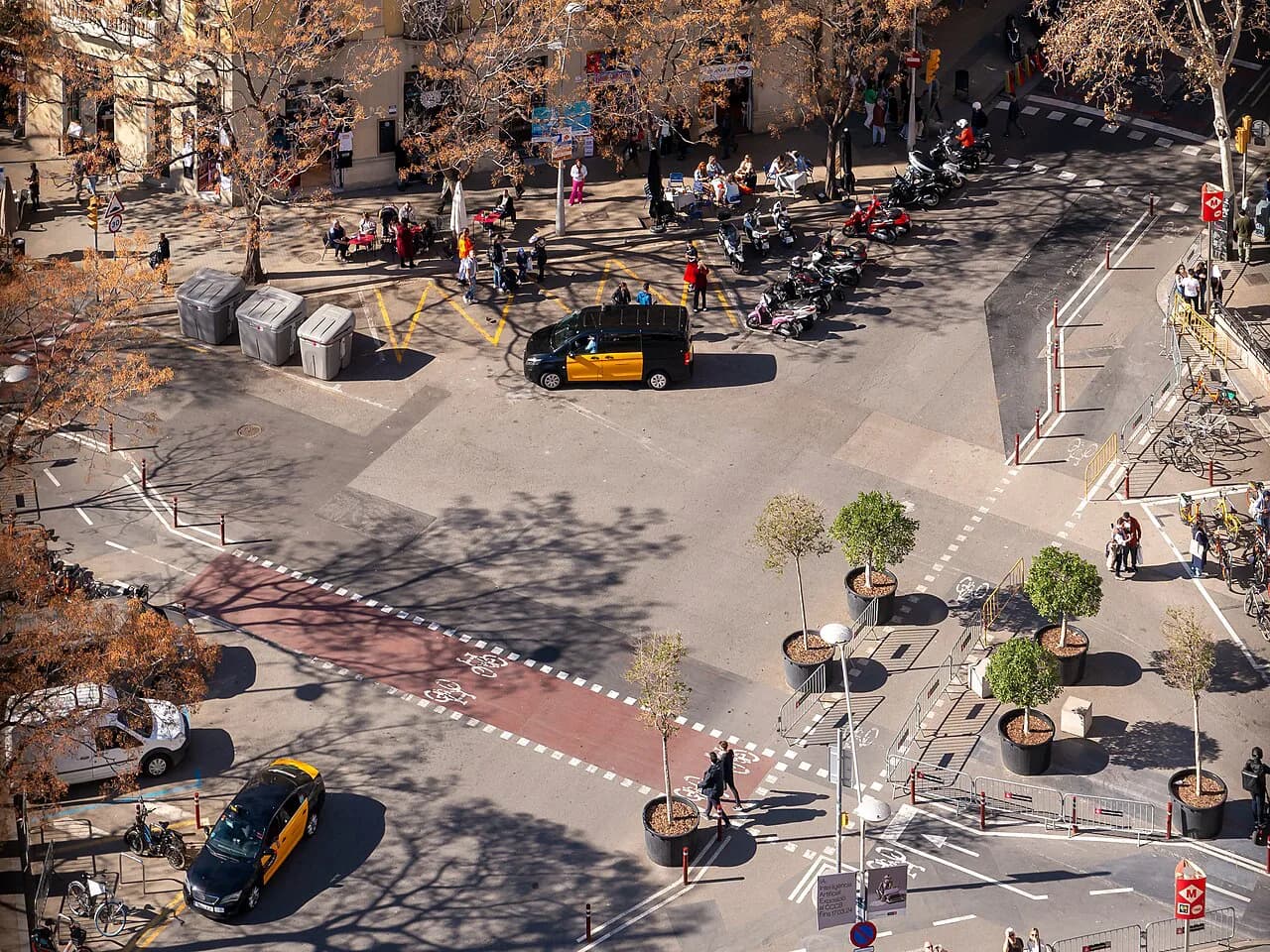
Where you walk in Barcelona changes your exposure more than almost any other factor. The Gothic Quarter, El Raval, and Las Ramblas see the heaviest concentration of pickpocketing, particularly after dark when the proximity to nightlife draws in tourists who may be distracted or intoxicated. El Born is frequently flagged alongside these areas for extra vigilance in crowds. Road safety is its own separate concern in the Eixample district, where wide multi-lane roads and dense intersections generate the highest concentration of traffic-related injuries in the city. On the other end of the spectrum, quieter residential areas trade some convenience for a calmer, lower-theft environment, though they typically come at a higher cost of accommodation. For a full district-by-district risk rundown, consult the guide to Barcelona Areas to Avoid: A 2026 Neighborhood Safety Guide, and for the calmer end of the spectrum, the roundup of the The Safest Neighborhoods in Barcelona: A 2026 Local Safety Guide.
- High-vigilance areas: Gothic Quarter, El Raval, Las Ramblas, and El Born, especially at night
- Road-safety hotspot: Eixample, due to wide multi-lane roads and dense intersections
- Quieter residential districts: generally lower theft exposure, at a higher accommodation cost
- Tourist-dense transit hubs: extra caution warranted near Metro stations feeding these neighborhoods
Safety at Night and for Specific Groups
Barcelona is relatively safe after dark, though Numbeo rates safety walking alone at night as Moderate, at roughly 41.86 out of 100, a meaningful step down from the High rating (68.70) for walking alone in daylight. The Gothic Quarter and Las Ramblas warrant extra vigilance at night specifically because of their proximity to nightclubs, which draws pickpockets hoping to target intoxicated tourists, and because the winding medieval streets in these areas make it hard to chase down or spot a thief. Barcelona's night bus network offers an alternative to walking back late. Solo female travelers generally find Barcelona no more risky than other major European cities, with bag snatching and pickpocketing the primary concerns rather than violent crime; opting for a cross-body bag worn under a jacket rather than a shoulder tote reduces the easiest opportunistic grabs. On public transport, the TMB network sees pickpocketing incidents concentrated on crowded lines and at doorways, where thieves may snatch a phone just before the doors close, and travelers connecting through El Prat airport should keep bags zipped and in sight in queues. Deeper coverage of each of these areas is available in the guides to Barcelona safety at night, solo female travel safety in Barcelona, and Barcelona Public Transport Safety Guide: Metro, Buses & Night Travel.
- Night safety rating (Numbeo): Moderate, ~41.86/100, versus High (~68.70/100) in daylight
- Night-bus network available as an alternative to walking after dark
- Solo female travelers: no greater risk than other major European cities in traveler consensus; bag snatching is the primary concern
- Public transport: watch phones and bags near Metro doors and on crowded lines, especially near tourist-heavy stops
Road and Pedestrian Safety in Barcelona
Traffic safety is a distinct risk category from crime, and the trend lines deserve attention. According to the Ajuntament de Barcelona, road deaths fell by 3.1% in 2023, but serious injuries rose by 30.8% over the same period, with the majority involving riders of two-wheeled vehicles and pedestrians. Most of these incidents cluster in the Eixample district, where the grid's wide, multi-lane roads and high volume of intersections create more conflict points between cars, scooters, cyclists, and people on foot. Crossing at signaled intersections, watching for turning vehicles at intersections with multiple lanes, and staying alert around e-scooter and moped traffic in Eixample specifically will do more for personal safety than any theft-prevention habit.
- Road deaths in Barcelona (2023): down 3.1% year over year
- Serious injuries (2023): up 30.8%, concentrated among two-wheeled vehicle riders and pedestrians
- Highest-risk district for traffic incidents: Eixample, due to wide roads and dense intersections
Practical Safety Checklist: Mistakes to Avoid
Most incidents involving tourists in Barcelona trace back to a handful of avoidable habits. Blending in rather than broadcasting 'tourist' status is one of the simplest deterrents pickpockets respond to, since visibly distracted or unfamiliar-looking visitors are easier targets. Being deliberate about bags, phones, and documents closes off the majority of opportunistic theft.
Practical advice focuses on preventing theft of bags, phones, and documents, yet a distinct threat often goes unmentioned. Serious traffic injuries in Barcelona rose 30.8% in 2023, concentrated in Eixample's wide multi-lane roads and dense intersections, where pedestrians and cyclists face the city's highest incident risk.
- Never leave a bag, phone, or wallet unattended, even briefly on a chair back or table at your feet
- Keep phones out of easy reach of cyclists, moped riders, and e-scooter riders, who can snatch and ride off
- Wear cross-body bags under a jacket rather than shoulder bags or totes
- Leave your passport locked in your accommodation; carry only a photo on your phone for identification
- Avoid engaging with street performers, 'bird poop' distraction scammers, or people holding maps or clipboards who approach uninvited
- Learn a few basic Spanish or Catalan phrases; pickpockets are more likely to target visitors who appear unable to communicate or seek help
- Be extra cautious in crowded areas like the Gothic Quarter, El Raval, and El Born, particularly after dark
- Never leave valuables unattended on the beach while swimming
Local Police Forces: Who to Contact
Spain's law enforcement in Barcelona operates across overlapping forces, and knowing which one applies saves time in an already stressful situation. The Mossos d'Esquadra is Catalonia's regional police force and the primary body for reporting most crimes, including theft, and for filing an official police report, known as a denuncia, which is required for travel insurance claims. The Guardia Urbana handles municipal and local order matters within Barcelona itself, while the Policia Nacional covers immigration and certain national-level matters. For any emergency involving police, ambulance, or fire services, the number to call is 112. Reports can typically be filed in person at a police station or, for some theft categories, online through official channels; visitors should retain a copy of the denuncia for any subsequent insurance claim.
- Mossos d'Esquadra: Catalonia's regional police, primary contact for crime reports and denuncias
- Guardia Urbana: municipal police handling local order and enforcement within Barcelona
- Policia Nacional: national police, covering immigration and certain national-level matters
- Emergency number for police, ambulance, or fire: 112
Where to File a Police Report After Theft
If your wallet, passport, phone, or bag is stolen, file a denuncia as soon as practical, because insurers and consulates usually ask for the report number. For most thefts, the Mossos d'Esquadra are the right police force; tourist-facing stations are commonly found near central areas such as Plaça de Catalunya, Ciutat Vella, and Sants, but use the official Mossos or 112 channels to confirm the nearest open office before going.
Bring your passport or other ID if you still have it, your accommodation address, a clear list of stolen items, phone IMEI or device serial numbers if available, and any bank-card cancellation references. If your passport was stolen, report the theft first, then contact your embassy or consulate; the U.S. Consulate General and many other consulates are in the Sarrià-Sant Gervasi area, not in the old city, so allow travel time.
Frequently Asked Questions
What is Barcelona's crime rate compared to the rest of Spain?
Catalonia recorded 63.9 crimes per 1,000 inhabitants in 2023, above the Spanish national average, and Catalonia ranks first in the country for robbery, with most incidents concentrated in Barcelona and neighboring El Prat de Llobregat.
Is Barcelona more dangerous than Madrid or Valencia?
Barcelona's theft rate is markedly higher than Madrid's and Valencia's, driven primarily by pickpocketing in tourist-dense areas rather than violent crime, which remains low across Spain relative to the European average.
What type of crime should travelers actually worry about in Barcelona?
Petty theft is the dominant concern: pickpocketing made up 48.1% of reported crime in 2023 and scams another 15.1%, while violent crime against tourists is comparatively rare.
Is it safe to walk alone at night in Barcelona?
Barcelona is generally safe at night, though Numbeo rates night safety as Moderate (around 41.86 out of 100) versus High for daylight walking. Extra vigilance is recommended in the Gothic Quarter and Las Ramblas, where narrow medieval streets and proximity to nightlife create more opportunistic theft.
How do you report a crime in Barcelona?
Contact the Mossos d'Esquadra, Catalonia's regional police force, to file a denuncia (police report), which is required for travel insurance claims. For any emergency, call 112.
Are Numbeo's Barcelona crime statistics official government data?
No. Numbeo's Crime Index and Safety Index figures are based on crowdsourced visitor perception rather than an official government tally, so they should be read as a sentiment gauge alongside, not a replacement for, Mossos d'Esquadra and national police statistics.