
Valencia Crime Rate: How Safe Is Spain's Third-Largest City in 2026?
Last updated April 2026, this guide breaks down the Valencia crime rate using both official police-data trends and independent perception surveys, so you can separate everyday noise from the numbers that actually matter for a visit or a move. Spain's third-largest city consistently rates as one of the calmer major urban areas in the country, with low levels of violent crime and a petty-theft profile dominated by opportunistic hurto rather than confrontational robbery. For the fuller picture beyond the statistics, the companion Valencia safety guide covers day-to-day practical safety in more depth.
The Fast Answer: Is Valencia Safe in 2026?
For most visitors, the short version holds: Valencia remains one of Spain's calmer major cities, with low rates of violent crime and a safety profile driven mainly by opportunistic theft rather than confrontational crime. Numbeo's most recent community survey, last updated 3 July 2026 with 384 contributors, rates the city's overall level of crime at 37.45 out of 100 (Low), and rates safety walking alone during daylight at 83.58 (Very High) and after dark at 60.12 (High). Those figures are perception-based, drawn from visitor and resident surveys rather than police records, but they line up with the broader picture: violent offenses are comparatively rare, while pickpocketing and petty theft are the more realistic concerns worth planning around. For a deeper breakdown of after-dark conditions specifically, see the dedicated nighttime safety guide.
- Overall crime level: 37.45/100, rated Low (Numbeo, updated 3 July 2026)
- Daytime walking safety: 83.58/100, rated Very High
- Nighttime walking safety: 60.12/100, rated High
- Dominant crime type: non-violent theft (hurto), not violent robbery
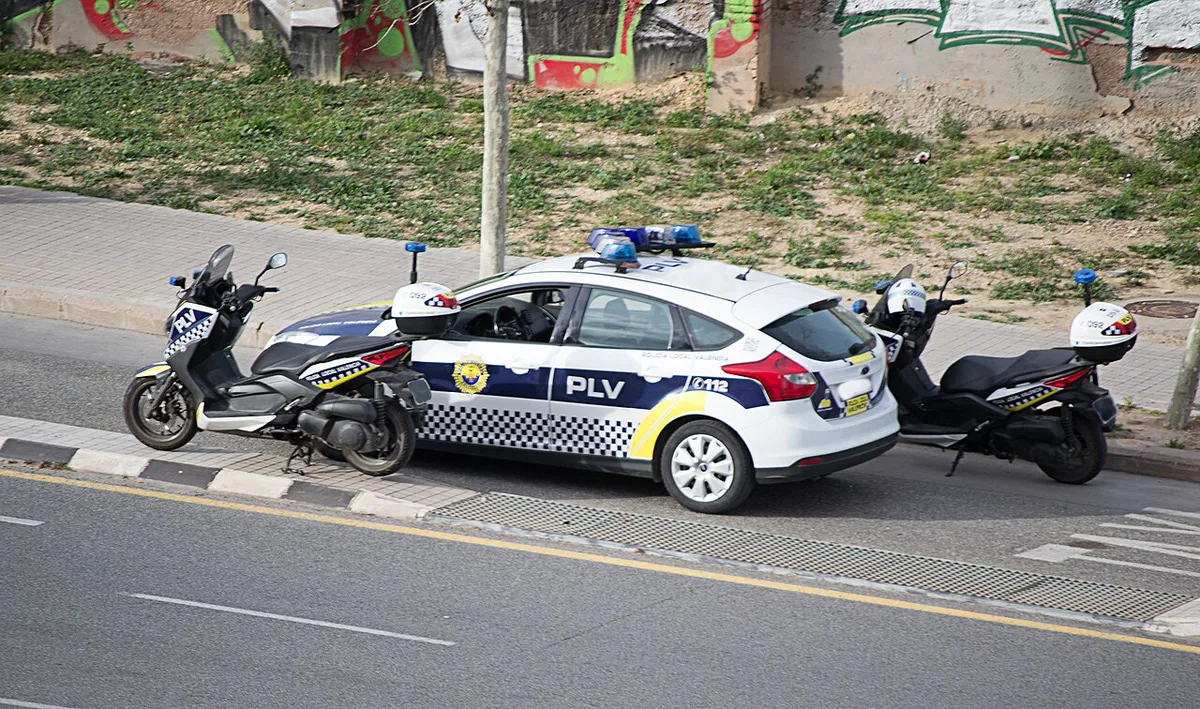
Valencia Crime Rate: Official Data vs Public Perception
It's worth separating two different data sources before drawing conclusions from any single number. Numbeo's Valencia crime rate figures are self-reported perception scores collected from website visitors over a rolling five-year window, useful for gauging how safe a destination feels but not a substitute for police statistics. Alongside the overall Low crime score, Numbeo's 'worries' indicators are similarly low: worries about a home being broken into sit at 37.84 (Low), worries about being mugged at 35.25 (Low), worries about car theft at 29.94 (Low), and worries about being physically attacked at 36.30 (Low). The one outlier is the perception of crime increasing over the past five years, which scores 57.63 (Moderate) - a gap between how safe residents feel day to day and how much they believe conditions have shifted. Official figures tell a more measured story: analysis of Spain's Ministry of the Interior data by North American Community Hub put Valencia's crime index at 31.5 out of 100 in 2024, a level the report describes as lower than cities like Barcelona and Bilbao.
Residents perceive crime increasing (57.63 moderate), but 2021's 36.3% spike largely reflects a rebound from artificially low pandemic-lockdown numbers rather than a sustained new trend; current crime remains rated Low.

Recent Crime Trends: The 2021 Rebound, Explained
Ministry of the Interior figures cited by North American Community Hub show a clear downward trend before the pandemic: total reported crimes in Valencia fell from roughly 48,000 in 2018 to about 46,500 in 2019 and 42,000 in 2020, a decline of around 12.5%, with both violent crimes and property crimes trending down over the same period. That 2020 figure, however, was artificially low - lockdown restrictions kept people off the streets and suppressed the opportunistic theft that normally drives Valencia's crime statistics. When restrictions lifted, 2021 recorded a 36.3% increase in reported crime compared to 2020, well above the 10.8% national rise and the 16% increase across the wider Comunitat Valenciana. Read in isolation, that headline number looks alarming; read against a locked-down baseline, it largely reflects a return toward pre-pandemic street activity rather than a new crime wave. The composition of the 2021 increase matters too: thefts rose from 12,229 to 19,863 cases (62.4%) and burglaries from 1,231 to 1,857 (50.9%), while drug trafficking fell 13.2%, car thefts dropped 24.2%, and violent robberies declined 16.4%. Cybercrime and online fraud also climbed roughly 18.2% over the period, inflating the topline reported-crime count without changing the physical, street-level risk that affects a typical visit.
| Year | Total Reported Crimes | Violent Crimes | Property Crimes | Drug Offenses |
|---|---|---|---|---|
| 2018 | 48,000 | 5,500 | 30,000 | 2,700 |
| 2019 | 46,500 | 5,200 | 29,000 | 2,800 |
| 2020 | 42,000 | 4,800 | 26,000 | 2,900 |
Common Safety Concerns for Travelers
The offenses that actually affect most travelers in Valencia are non-violent: hurto, the Spanish legal term for theft without force or intimidation, dominates the crime statistics far more than robo con violencia (robbery involving violence or threat). Pickpocketing clusters around dense tourist zones, crowded festivals, and packed nightlife strips, where bags left unzipped or phones left on café tables are the typical opening for opportunistic theft. Numbeo's comment threads also flag a recurring theme: 'guiris' (visiting foreigners) are sometimes described as easier targets for pickpockets who assume less local awareness of common tactics. Nightlife-related brawls, mostly late-night, alcohol-fueled disputes rather than premeditated attacks on tourists, are the other pattern worth knowing about. Two related guides go deeper on the specific tactics to watch for and how to move around the city safely: the dedicated rundown of common tourist scams and the guide to public transport safety covering buses and metro.
While reported crime rose 36.3% in 2021, violent robbery actually fell 16.4% over the same period; travelers face primarily petty theft and pickpocketing rather than confrontational crime.
- Pickpocketing in crowded tourist zones and on public transit
- Phone and bag snatching at outdoor cafés and beach areas
- Late-night nightlife brawls, mostly alcohol-related rather than targeted at tourists
- Distraction tactics that create opportunities for petty theft
Neighborhood Safety Breakdown
Crime risk in Valencia isn't evenly distributed, and the neighborhoods travelers ask about most are El Carmen, Ruzafa, and the beachfront districts around Malvarrosa and Cabanyal. El Carmen, the historic old town, packs dense nightlife and narrow streets into a small footprint, which is exactly the kind of environment where pickpocketing tends to concentrate after dark. Ruzafa's rapid gentrification has made it one of the city's trendiest areas for cafés and boutique stays, generally calm but still worth normal city awareness given the foot traffic. The beach districts see their own seasonal pattern, busier and more theft-prone in peak summer months when crowds and unattended belongings on the sand create easy opportunities. For a full comparison of where to base a stay versus where to stay alert, see the guides to the Safest Neighborhoods in Valencia: A 2026 Guide for Travelers & Residents and areas to avoid.
Valencia vs Barcelona and Madrid: Comparative Crime Data
Comparisons across Spanish cities are one of the most common questions travelers ask, and the available data points the same direction on two different measures. On absolute crime levels, North American Community Hub's analysis of 2024 figures puts Valencia's crime index at 31.5 out of 100, lower than Barcelona and Bilbao. On the rate of change, regional officials such as Partido Popular's Maria Jose Catala have pointed out that Valencia's 2021 crime growth outpaced cities including Zaragoza, Madrid, Malaga, and Barcelona - a distinct statistic from the absolute level, and worth reading on its own rather than concluding that 'Valencia is now more dangerous than Barcelona.' The table below summarizes both angles.
| City / Region | Absolute Level (2024 Crime Index) | 2021 Year-over-Year Crime Growth |
|---|---|---|
| Valencia | 31.5 / 100 | +36.3% |
| Barcelona | Higher than Valencia, per Numbeo comparative data | Lower growth rate than Valencia, per regional officials |
| Madrid | Higher than Valencia, per Numbeo comparative data | Lower growth rate than Valencia, per regional officials |
| Spain (national average) | Not published in this dataset | +10.8% |
| Comunitat Valenciana (regional average) | Not published in this dataset | +16% |
Safety for Solo Female Travelers and Expats
Numbeo's perception data offers a useful proxy for how comfortable solo travelers, including women traveling alone, tend to feel in Valencia: the worry-about-attack score sits at 36.30 (Low), and the score for being targeted based on personal characteristics such as gender is notably lower still, at 19.88 (Very Low). That doesn't erase ordinary precautions around street harassment, unlicensed taxis, or walking alone late at night in unfamiliar areas, all of which apply in Valencia as they would in any European city of comparable size. Longer-term expats face a slightly different calculus, weighing everyday petty-crime exposure against the practical realities of renting, registering, and settling into a neighborhood. The dedicated solo female travel safety guide covers route planning, accommodation choices, and after-dark habits in more detail.
What to Do if You're the Victim of a Crime in Valencia
If theft or another crime does happen, Valencia has a tourist-specific reporting channel worth knowing about before it's needed: the SATE (Servicio de Atención al Turista Extranjero) office near Plaza del Ayuntamiento, where staff help foreign visitors file a police report, or denuncia, in English and navigate the paperwork that follows, including replacement-document guidance if a passport or ID was stolen. A denuncia is also typically required for travel insurance claims covering stolen property, so filing one promptly matters even for minor thefts. For anything urgent or in progress, 112 remains the general emergency number across Spain and the wider EU, connecting to police, medical, or fire response as needed.
- Report the incident at the SATE office near Plaza del Ayuntamiento (English-language support)
- File a denuncia for any travel insurance claim on stolen property
- Call 112 for anything urgent or in progress
- Notify your card issuer and phone carrier immediately if either was stolen
The Bottom Line: Who Is Valencia Safest For?
Weighed against the data above, Valencia tends to suit a wide range of travelers well, though the trade-offs differ by who's asking. Families and retirees generally find the lower violent-crime profile and the Very High daytime walking-safety score reassuring, particularly if lodging sits in a calmer residential or newer-build area rather than the densest nightlife strips. Solo travelers and digital nomads tend to weigh the vibrancy of central, walkable neighborhoods like Ruzafa or El Carmen against slightly higher petty-theft exposure in those same busy areas - a genuine trade-off rather than a simple safe/unsafe verdict. Budget-conscious visitors should also factor in that quieter, lower-theft residential districts often carry higher rents than the lively central barrios, so 'safest' and 'cheapest' don't always point to the same neighborhood. In our editorial assessment, none of these trade-offs should discourage a visit; they're simply worth factoring into where you book and how you move around once you're there.
- Families and retirees: reassured by low violent crime and high daytime walking safety
- Solo travelers and digital nomads: strong fit, with normal petty-theft precautions in busy central areas
- Budget travelers: weigh lower-theft residential districts against their higher rents versus central barrios
Where Petty Theft Risk Is Most Practical to Plan Around
Valencia’s crime-rate discussion is most useful when tied to specific places where crowds make petty theft easier. Around the historic center, keep extra awareness near Mercado Central, La Lonja, Plaza de la Reina, Plaza de la Virgen, and the lanes of El Carmen, especially when terraces and walking tours are busy. Transport pinch points such as Estacio del Nord, Xativa metro station, and crowded tram or metro platforms are also more realistic theft spots than residential streets.
At the beach, the main risk is unattended property rather than confrontation: Malvarrosa, Patacona, and the promenade around Cabanyal become much busier in warm months. During Las Fallas, fireworks crowds, street closures, and packed plazas create the same conditions on a larger scale. The practical rule is simple: use a zipped cross-body bag, keep phones off tabletops, and do not leave bags beside chairs or towels while distracted.
Frequently Asked Questions
Is Valencia safe for tourists in 2026?
Yes, in general terms. Numbeo's most recent community data rates Valencia's overall crime level as Low (37.45/100) and rates daytime walking safety as Very High (83.58/100), with nighttime safety rated High (60.12/100). The most realistic concern for a typical visit is opportunistic petty theft rather than violent crime; see the full Valencia safety guide for the broader picture.
How does the Valencia crime rate compare to Barcelona and Madrid?
On absolute crime levels, a 2024 analysis of Ministry of the Interior data put Valencia's crime index at 31.5 out of 100, lower than cities like Barcelona and Bilbao. On the rate of change, however, Valencia's crime growth in 2021 outpaced cities including Madrid and Barcelona, according to regional officials - a separate statistic from the absolute comparison, and worth reading as its own data point rather than a contradiction.
Is petty theft common in Valencia?
It's the dominant category in the local crime statistics. Ministry of the Interior figures show thefts (hurto) rose from 12,229 cases in 2020 to 19,863 in 2021, a 62.4% jump tied to the post-lockdown reopening rather than a new trend, and non-violent theft continues to outweigh violent robbery by a wide margin in the overall crime mix.
Where can visitors report a crime in Valencia?
The SATE (Servicio de Atención al Turista Extranjero) office near Plaza del Ayuntamiento handles English-language reports, or denuncias, specifically for foreign visitors. For anything urgent or in progress, call 112, the general emergency number covering police, medical, and fire response across Spain.
Has crime in Valencia increased recently?
Reported crime rose 36.3% in 2021 compared to 2020, but that comparison uses an artificially low pandemic-lockdown baseline; the 2018-2020 trend before that showed an overall decline of roughly 12.5%. Numbeo's ongoing perception survey still rates the current overall crime level as Low as of its July 2026 update, though its 'crime increasing' perception indicator sits at a Moderate 57.63, reflecting more public concern than the Low headline score alone suggests.