
Naples Crime Rate: How Safe Is Italy's Third-Largest City?
Last updated July 2026, this guide breaks down the Naples crime rate using official Italian statistics rather than the mafia-movie stereotypes that still color a lot of online chatter. The short version: reported crime figures compiled by ISTAT (Istituto Nazionale di Statistica) and the annual Il Sole 24 Ore Crime Index do not place Naples at the top of Italy's danger list, even though the city's visible grit and organized-crime history give it an outsized reputation. For travelers, the real story splits into two very different categories, tourist-relevant petty crime concentrated around a handful of predictable spots, and organized-crime violence that is geographically confined and almost never intersects with visitor life, and this guide treats each on its own terms alongside the broader overview at is Naples safe for visitors.
Naples Crime Rate: What the Official ISTAT Statistics Show
ISTAT publishes yearly crime data broken down by province, and Il Sole 24 Ore turns that raw data into its widely cited Crime Index (Indice della Criminalità), a ranking of Italian provinces by reported offenses. According to that reporting, Naples does not consistently rank as Italy's highest-crime province; northern, wealthier cities like Milan frequently post higher totals for theft and robbery per capita, a pattern Italian outlets have flagged for years as counterintuitive given Naples' reputation. The key distinction to hold onto throughout this guide is between organized-crime homicide, which is real, historically documented, and heavily concentrated in specific outlying districts, and everyday property crime, which is the category that actually affects tourists and which behaves very differently across the city. Numbeo's crowd-sourced Safety Index is worth mentioning too, but it should be read as a subjective perception score built from user submissions rather than an official statistic, and this guide leans on ISTAT and Il Sole 24 Ore for anything presented as data.
Naples vs Other Italian Cities: The Reality Check
One of the most persistent misconceptions about the Naples crime rate is that it towers over the rest of Italy. Comparative reporting from ISTAT and Il Sole 24 Ore's Crime Index instead points to a more nuanced picture, where northern commercial hubs such as Milan register higher volumes of reported theft and robbery than Naples, even as Naples retains a stronger association with organized crime in the public imagination. Rome and Turin sit in a similar middle ground, with petty-crime profiles broadly comparable to Naples' historic center rather than dramatically safer. The table below frames how each city is typically discussed in official Italian crime reporting versus subjective perception platforms, without assigning invented point values to any of them.
| City | Reported Property Crime (ISTAT / Il Sole 24 Ore framing) | Public Perception (Numbeo, subjective) |
|---|---|---|
| Naples | Moderate; not consistently Italy's highest-ranked province | Perceived as high-risk, often disproportionate to reported data |
| Milan | Frequently reported higher than Naples for theft and robbery | Perceived as safer than Naples despite comparable or higher figures |
| Rome | Broadly comparable to Naples for tourist-area petty theft | Perceived as moderate risk |
| London | Not directly comparable due to differing national reporting systems | Perceived as safer, though petty theft in tourist zones is a known issue |
| New York City | Not directly comparable due to differing national reporting systems | Perceived as safer than a decade ago, per general public discourse |

Perception vs Reality: Why Naples Feels More Dangerous Than It Is
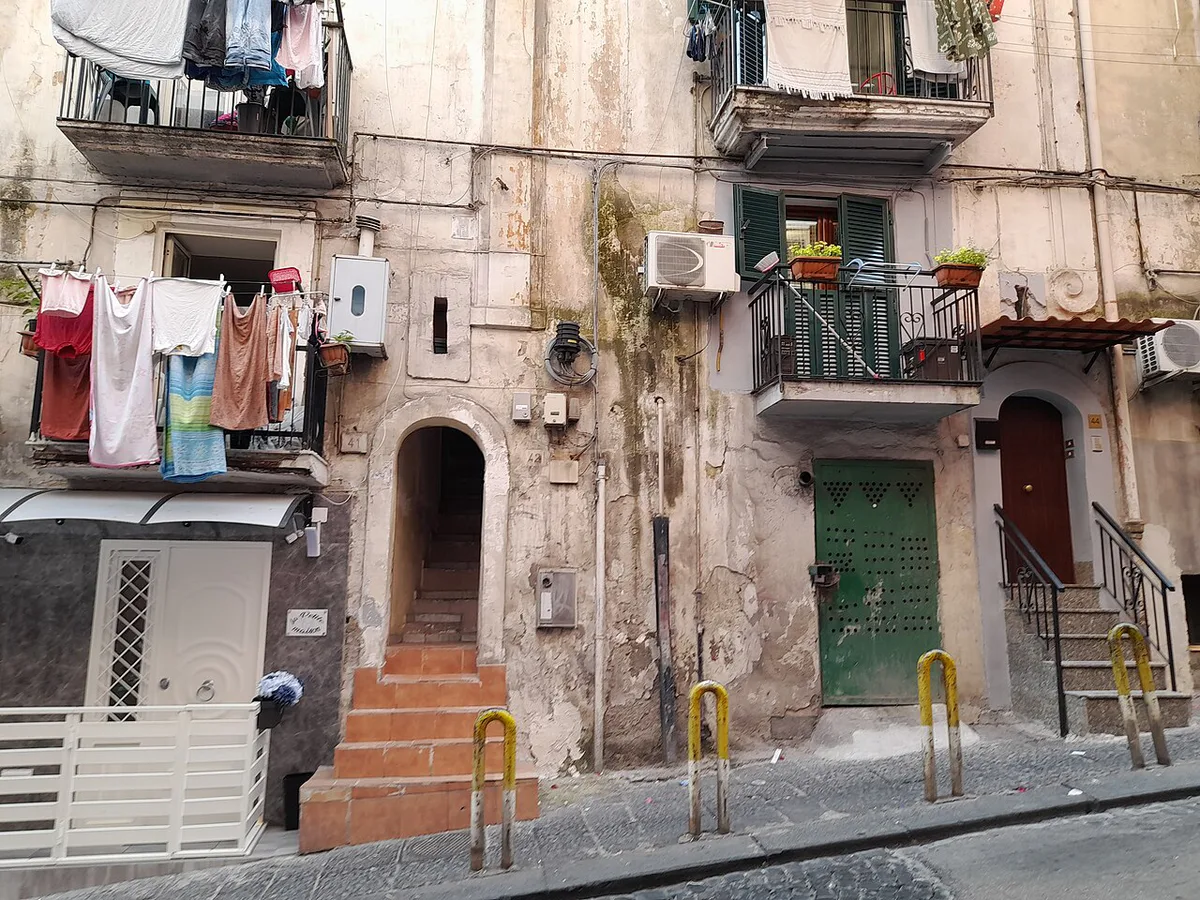
Part of what drives Naples' reputation is sensory rather than statistical: dense traffic, motorbikes weaving through pedestrian streets, peeling facades, and graffiti-covered walls in a historic center that has not been sanitized for tourism the way parts of Florence or Venice have. That visual chaos reads as danger to first-time visitors even where reported crime is unremarkable by Italian standards. None of this is a case for complacency, since common tourist scams in Naples and opportunistic theft are genuinely more common here than in tidier Italian cities, but the gap between how Naples looks and what its official statistics show is exactly why data-first sources like ISTAT matter more than gut impressions or forum anecdotes.
Official statistics show Milan reports higher theft than Naples, yet the city's visual chaos—dense traffic, graffiti—creates a false impression of danger. Organized-crime violence, which fuels Naples' reputation, is geographically confined to outlying districts, not tourist areas.
Common Crimes Affecting Tourists in Naples
The crimes that actually touch travelers in Naples are overwhelmingly property-related rather than violent. Pickpocketing, or borseggio, is the single most frequently reported issue, particularly on crowded buses, in market crowds, and around major transit hubs. The scippo, a scooter-based snatch-and-grab where a rider on a moped grabs a bag, phone, or watch and accelerates away before a victim can react, is a signature Naples crime pattern and the reason visible jewelry and phones held loosely at arm's length draw unwanted attention; it is sometimes described locally as the Rolex theft phenomenon because watches are a favored target. Distraction scams, fake charity petitions, and overcharging at unlicensed taxis round out the list, all covered in more depth at Naples tourist scams to watch for. Solo travelers, and particularly women navigating crowded stations or nightlife areas alone, should also review the practical precautions at solo female travel safety in Naples, since most reported incidents involving lone travelers fall into this same opportunistic-theft category rather than anything violent.
- Borseggio (pickpocketing): most common on crowded buses, in market crowds, and near transit hubs
- Scippo (scooter-based snatch theft): targets visible phones, bags, and watches at the roadside
- Distraction and fake-charity scams: common in high-footfall tourist zones
- Unlicensed taxi overcharging: a logistics issue more than a crime statistic, but frequently reported by visitors
Neighborhood Safety Breakdown: Station Area vs Chiaia and Vomero
Reported petty crime in Naples is not spread evenly across the city, and this is where a neighborhood-level view matters more than a single citywide figure. The area around Napoli Centrale and Piazza Garibaldi carries the highest concentration of pickpocketing and scippo reports, a pattern driven by transient crowds, luggage-laden tourists, and constant foot traffic rather than any organized-crime presence. By contrast, the hillside and seafront districts of Chiaia and Vomero see markedly fewer property-crime reports and are generally treated as the calmer, more residential end of the city. For a full rundown of streets and districts that warrant extra caution, see areas of Naples to avoid, and for the inverse, the neighborhoods locals and repeat visitors favor for a lower-risk base, see the safest neighborhoods in Naples. Nighttime dynamics shift some of this further, and the separate breakdown at Is Naples Safe at Night? A Practical 2026 Guide by Neighborhood covers which areas hold up after dark and which don't. Because so much reported theft clusters around transit, the guidance at Naples Public Transport Safety: Metro, Buses, and Trains in 2026 is worth reading before relying heavily on buses or the metro for late-night or first-time trips.
Organized Crime and the Average Traveler
The Camorra, Naples' organized-crime network, is a genuine and well-documented feature of the city's criminal landscape, and it is the source of most of the homicide statistics that fuel Naples' national reputation. Crucially, that violence is internal to the organization and geographically concentrated in specific outlying districts, most notably Scampia, rather than distributed through the historic center, Chiaia, Vomero, or the coastal tourist corridor. Visitors are not targets of organized-crime violence, and there is essentially no documented overlap between Camorra activity and tourist-facing incidents; the crimes that actually reach travelers are the opportunistic property offenses covered above, not anything connected to organized crime. This distinction, between a headline-driving but geographically siloed violent-crime category and a separate, more diffuse petty-crime category, is the single most useful thing to understand about the Naples crime rate as a traveler.
Tourist-targeted theft concentrates at transit hubs like Piazza Garibaldi, where crowds and luggage create easy targets. Organized-crime violence is entirely separate, confined to specific outlying neighborhoods and poses no threat to visitors.
What to Do if You're a Victim of Crime in Naples
If theft or another crime does occur, Naples has both the Polizia di Stato and the Carabinieri available to file a report, known in Italy as a denuncia; either force can take the report, and having one is typically required for travel-insurance claims. The city also maintains a Polizia Turistica presence aimed specifically at assisting visitors, though travelers should confirm current contact details and hours through the Questura di Napoli or a hotel concierge before relying on any single location, since staffing and posts can change. For anything involving a stolen phone or documents, reporting quickly improves the odds of insurance reimbursement and, for lost passports, is typically a prerequisite for contacting a home consulate.
- Report the incident as soon as possible to the Polizia di Stato or Carabinieri to file a formal denuncia
- Ask for a written copy of the report; insurers generally require it for any theft or loss claim
- For a stolen phone, contact the carrier immediately to suspend the SIM and flag the device
- For a stolen passport, file the denuncia first, then contact the relevant home-country consulate
- Ask hotel staff for the nearest Questura or Polizia Turistica point, since exact posts can shift
The Station Factor: Napoli Centrale and Piazza Garibaldi
A citywide Naples crime rate can feel misleading because Napoli Centrale and Piazza Garibaldi compress several risk factors into one small zone: arriving tourists with luggage, commuter crowds, airport-bus traffic, taxi queues, metro access at Garibaldi, and EAV/Circumvesuviana departures toward Pompeii, Herculaneum, and Sorrento. That does not make the station area a no-go zone, but it is the place where pickpockets and scippo riders have the easiest targets.
- Keep bags closed and in front of you in the concourse, on escalators, and while waiting near ticket machines.
- Use official taxi ranks rather than accepting approaches inside or just outside the station.
- If arriving after dark, walk directly to a pre-booked hotel, taxi, metro entrance, or Alibus stop instead of lingering around Piazza Garibaldi with luggage.
The practical takeaway is simple: treat the station as a transit zone, not a place to browse distractedly, and your risk drops sharply.
Frequently Asked Questions
Is the crime rate in Naples higher than in Rome?
Not dramatically. ISTAT and Il Sole 24 Ore's Crime Index reporting generally place Naples and Rome in a broadly comparable range for tourist-relevant petty theft, with neither city standing out as categorically worse than the other; both have specific high-footfall zones, like Naples' Piazza Garibaldi and Rome's main transit hubs, where reports cluster.
What is the most common crime in Naples?
Pickpocketing (borseggio) and scooter-based snatch theft (scippo) are the crimes travelers encounter most often, typically on crowded buses, around markets, and near major transit hubs rather than throughout the city as a whole.
Is it safe for tourists to walk in Naples at night?
Central, well-lit tourist areas generally remain busy and manageable after dark, but caution increases around the station area and in less-trafficked side streets. A dedicated breakdown of which zones hold up at night and which don't is available at is Naples safe at night.
Which areas of Naples have the highest crime rates?
The area around Napoli Centrale and Piazza Garibaldi sees the highest concentration of reported pickpocketing and scooter-snatch incidents, driven by tourist and commuter foot traffic. Organized-crime-related violence, separately, concentrates in specific outlying districts such as Scampia, well outside the typical visitor footprint.
How does Naples' violent crime rate compare to US cities?
Italy and the United States use different crime-reporting systems and categories, so a direct numeric comparison is not meaningful using the sources available here. What can be said with confidence is that the violent, organized-crime-linked incidents that shape Naples' reputation are geographically concentrated and do not reflect the risk profile of the tourist-facing historic center, Chiaia, or Vomero.