
Montpellier Public Transport Safety: Tips, Risks, and Local Advice
Last updated July 2026, this guide breaks down Montpellier public transport safety for visitors relying on the TAM network of trams and buses to get around the city. The four tram lines run frequently through central hubs like Gare Saint-Roch and Comédie, and while the system is generally secure, crowded interchanges call for the same vigilance you would use on any European transit network. Below you will find line-by-line context, night-travel guidance for the Amigo bus, and practical steps to avoid pickpockets and ticket-validation fines.
Montpellier Public Transport Safety: The Fast Answer
For most travelers, Montpellier public transport safety comes down to one simple rule: stay alert in crowds and you will have very few problems. The TAM (Transports de l'Agglomération de Montpellier) network anchors mobility across the city with four tram lines, numbered 1 through 4, supplemented by an extensive bus grid that reaches outlying neighborhoods and residential suburbs. Trams run frequently through the day, and the network's open-boarding design, with no turnstiles gating access to platforms, means personal vigilance matters more than any mechanical barrier. That same openness is what makes the system easy to use as a visitor, since you can move between tram lines and buses on a single ticket type without navigating gated stations.
For a broader picture of how transit safety fits into the city overall, the overall Montpellier safety guide covers crime patterns, neighborhoods, and general precautions beyond transit alone.
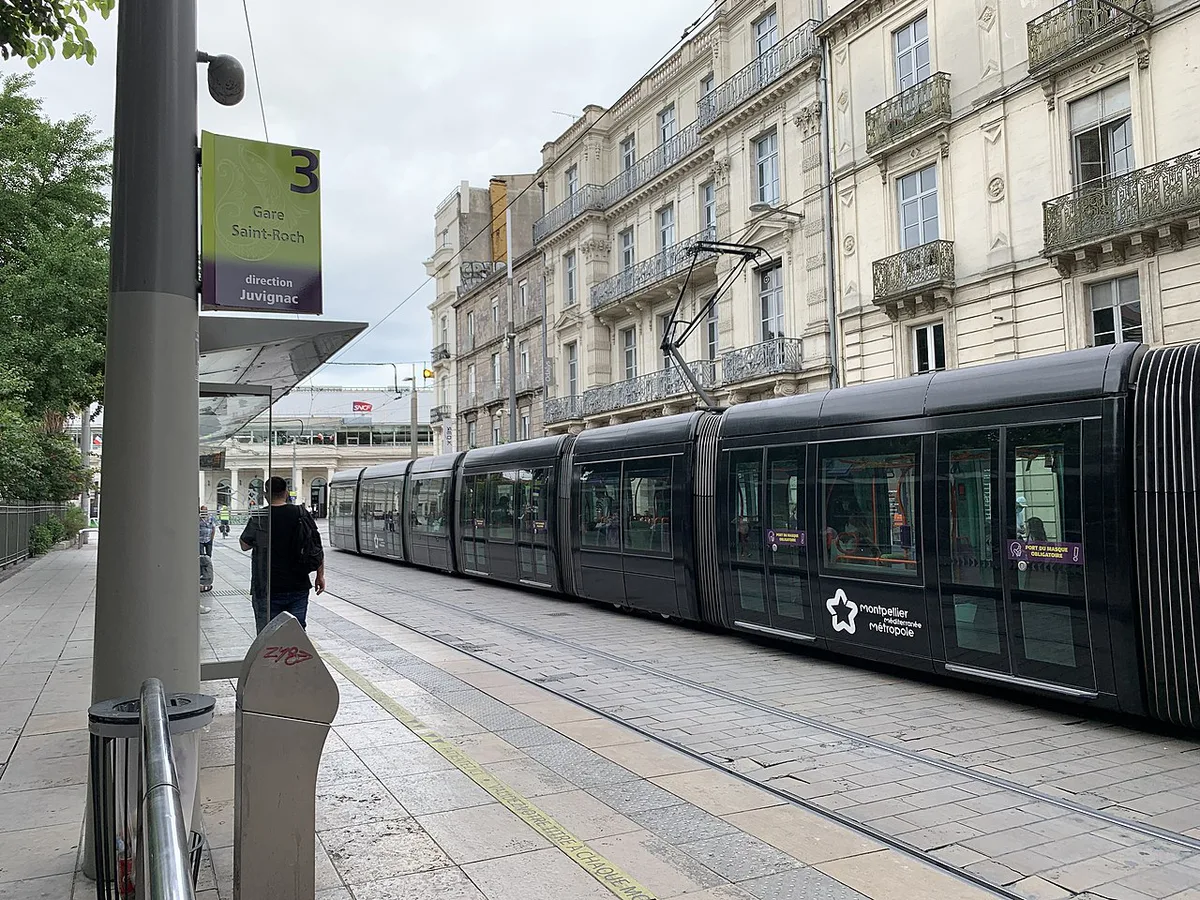
Safety on the Montpellier Tramway
The tramway is the backbone of transit here, and TAM trams are safe and constant across all four lines, running on dedicated tracks that link the center to outer districts. Riders generally describe the trams themselves as well-monitored public spaces rather than risk zones. The one line worth flagging for visitors is Line 1, which extends toward Mosson at its far end; there is little practical reason for tourists to ride it all the way out, since the attractions, hotels, and dining that draw most trips cluster closer to the center.
Where you do need extra awareness is at the network's busiest interchanges. The Comédie and Gare Saint-Roch stops function as the system's central transfer points, funneling riders between tram lines, regional trains, and bus connections. That concentration of foot traffic is exactly why this interchange is the pickpocket concentration point on the network: dense crowds, distracted travelers checking connections, and constant boarding and alighting create the classic conditions pickpockets look for. Corum sees similar but lighter crowding around event nights. Treat any moment of platform congestion at these hubs as a cue to keep bags zipped and phones out of back pockets.
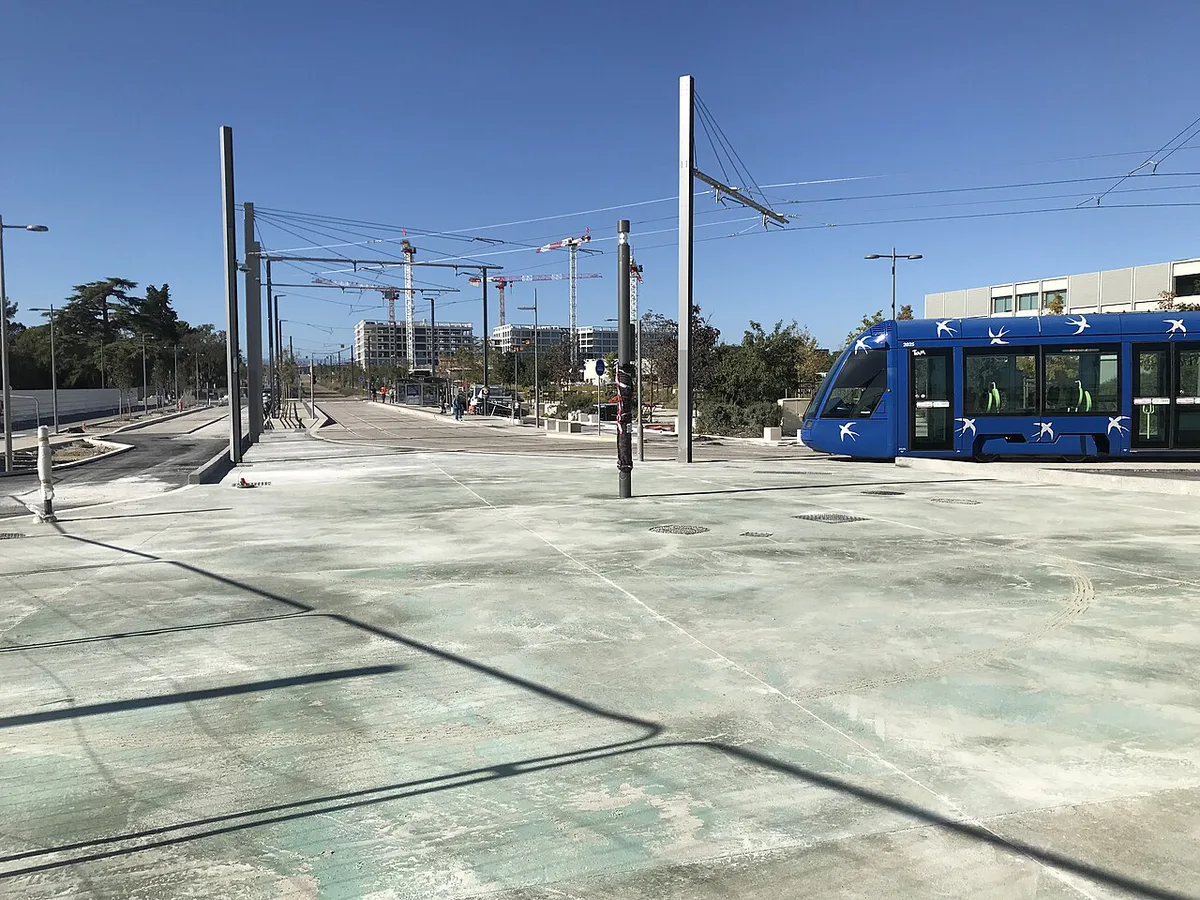
Night Travel and the Amigo Bus
Once regular tram service winds down for the night, the Amigo bus network becomes the main way to reach nightlife districts and outer suburbs safely. L'Amigo is TAM's dedicated late-night bus service, designed specifically for students and travelers heading home from bars and clubs after tram frequency tapers off. Because it is purpose-built for the after-dark crowd, it tends to be a more predictable option than trying to walk long distances across the city late at night.
If you are waiting at a tram or bus stop after midnight, stand in a lit, populated area near the platform rather than at the far end of an empty stop, and use a real-time tracking app so you are not waiting longer than necessary in an isolated spot. For a deeper look at after-dark precautions across the city, see Montpellier safety at night.
Common Risks: Pickpockets and Scams on Transit
Distraction techniques are the most commonly reported tactic on crowded trams, particularly around the Comédie/Gare Saint-Roch interchange during peak boarding times. A typical setup involves one person asking for directions, spare change, or help with a map while an accomplice works a bag or pocket in the crush of the crowd. Keep valuables in a front pocket or a bag worn across the body, and treat sudden, close physical contact on a packed tram as a reason to check your belongings rather than dismiss it.
A related risk involves strangers near ticket kiosks offering to help validate a ticket or explain the machine, sometimes as a lead-in to a request for money or a distraction for theft. TAM ticket machines are straightforward enough that unsolicited help is rarely necessary; if someone is persistent about assisting you at a kiosk, it is reasonable to decline and move to another machine. These and other common approaches used on travelers are covered in more depth in common Montpellier tourist scams, which is worth reading alongside this guide.
Practical Logistics for a Secure Trip
Carrying fewer physical valuables is one of the simplest safety upgrades available on this network. The M'Ticket app lets you buy and store tickets digitally, which means less time fumbling with cash or a physical wallet at a kiosk in a crowded interchange, and one less item that can be lost or lifted.
M'Ticket eliminates fumbling at ticket kiosks, where unsolicited helpers often distract travelers for theft or scams. This single app removes a key vulnerability and reduces fine risk simultaneously.
Financial safety is part of transit safety here. TAM's contrôleurs, the network's ticket inspectors, carry out checks regularly on trams and buses, and riding without a validated ticket can result in fines of €50 or more. Contrôleurs typically work in pairs and wear identifiable TAM uniforms or badges; they are not police officers, but they do have the authority to issue fines on the spot, and they can be firm about it. Always tap or scan your ticket at the start of every journey, even if you validated one earlier that day, since transfers between lines sometimes require a fresh validation depending on ticket type.
On the physical safety side, trams are fitted with security cameras and emergency call buttons connecting riders directly to TAM's control center, a standard feature across the fleet. If you ever feel unsafe on board, the emergency button is the fastest way to alert staff, and stepping toward the driver's cabin at the next stop is a reasonable fallback if you need in-person help.
Neighborhoods and Transit Connectivity
Transit safety also depends on where a line is taking you. Central stops around the Centre Historique and Comédie sit in well-trafficked, well-lit parts of the city, and riders moving between them rarely report problems beyond routine crowd awareness. Mosson, at the far end of Line 1, has a different profile: it is a residential district with less tourist infrastructure, and it is generally listed among the parts of the city visitors are advised to approach with more caution after dark. That does not mean the tram ride itself is unsafe, but there is little reason for a typical visitor itinerary to end there.
For a fuller neighborhood-by-neighborhood breakdown, check areas to avoid in Montpellier before planning routes that extend past the center.
Solo Travelers and Extra Precautions on Transit
Solo travelers, and solo women in particular, generally find the Montpellier tram network manageable with a few extra habits layered on top of the general advice above. Choosing tram cars with more passengers over an empty one, sitting near the driver's end on buses, and sharing a live location with someone while riding late-night Amigo services are all straightforward ways to add a margin of safety without changing your plans. Avoiding the far end of quiet platforms while waiting, and using the TAM app to time arrivals so you are not standing around unnecessarily, both reduce exposure during low-traffic hours.
Paradoxically, solo travelers gain safety in crowded trams at busy hubs like Comédie: dense passengers mean more witnesses and reduced isolation, offsetting the higher pickpocket concentration in those same areas.
For a fuller set of solo-specific strategies, see solo female travel safety.
Tram vs Vélomagg vs Walking: Which Is Safest After Dark?
Choosing how to get home after dark often comes down to a trade-off between speed, visibility, and effort. The table below compares Montpellier's tram network, the Vélomagg bike-share system, and walking across the factors that matter most for a late-night trip; treat it as a starting point for a given route rather than an absolute ranking, since a specific street or distance can tip the balance.
| Mode | Best For | Key Safety Consideration |
|---|---|---|
| Tram / Amigo bus | Longer trips across districts, especially after midnight | Well-lit and monitored, but interchanges like Comédie/Gare Saint-Roch get crowded at peak times |
| Vélomagg (bike-share) | Short-to-medium trips on well-lit main roads | Faster than walking and avoids crowded platforms, but exposes you to traffic and requires route awareness after dark |
| Walking | Short distances within the well-trafficked center | Fine on busy, lit streets; in our editorial assessment, less advisable on quiet back streets late at night |
Mistakes to Avoid on Montpellier Transit
A handful of avoidable habits account for most of the transit problems visitors run into. Keep these in mind every time you board:
- Keeping a phone or wallet in a back pocket on a crowded tram, especially near Comédie or Gare Saint-Roch
- Riding Line 1 all the way to Mosson without a specific reason to be there after dark
- Skipping ticket validation and risking a €50+ fine from a contrôleur
- Engaging at length with aggressive panhandlers or unsolicited "helpers" at ticket kiosks
- Standing at the far, empty end of a platform late at night instead of near other waiting passengers
- Ignoring the M'Ticket app and real-time tracking, which reduces unnecessary waiting at isolated stops
Line-by-Line Tram Safety Notes
For most visitor routes, the practical safety difference between Montpellier tram lines is less about the vehicle and more about the stops where you board, transfer, or leave the system. Line 1 is the one to plan most carefully because it connects major central stops such as Gare Saint-Roch and Comédie with Mosson at the western end and Odysseum at the eastern end. The central section is useful and busy; the Mosson end is less relevant for typical sightseeing, especially late.
Line 2 is mainly useful for cross-city trips between areas such as Saint-Jean-de-Védas, the center, and Jacou, with normal crowd awareness around central transfers. Line 3 can be practical for reaching Port Marianne, Lattes, and the Pérols direction, including connections toward beaches, but late returns can mean quieter platforms outside the core. Line 4 circles the historic center and is usually the easiest line for short central hops, with the same pickpocket caution around busy interchange stops.
Frequently Asked Questions
Is it safe to ride the Montpellier tram at night?
Yes, generally. The tram network runs with security cameras and stays fairly busy on central routes into the evening, and the Amigo bus service picks up nightlife and student traffic once regular tram frequency winds down. The main precaution is where you wait: stand in a lit, populated part of the platform rather than an empty stretch, and avoid riding Line 1 out to Mosson late at night without a specific reason to be there.
What is the biggest safety risk on Montpellier public transport?
Pickpocketing in crowded conditions is the most commonly reported issue, particularly around the Comédie and Gare Saint-Roch interchange, where tram lines, trains, and buses all converge. Distraction tactics, such as someone asking for directions while an accomplice works a bag, are the typical method. Standard precautions, like a bag worn across the body and valuables in a front pocket, address most of the risk.
How much is the fine for not validating a ticket in Montpellier?
Contrôleurs, TAM's ticket inspectors, carry out regular checks and can issue fines of €50 or more for an unvalidated or invalid ticket. Validating through the M'Ticket app or at a platform machine at the start of every journey is the simplest way to avoid an unwanted encounter.
What is the Amigo bus in Montpellier?
L'Amigo is TAM's late-night bus service aimed at students and travelers heading home from nightlife areas and outer suburbs after regular tram service tapers off. It is generally a more predictable option than a long walk across the city late at night.
Are solo female travelers safe using Montpellier's tram and bus network?
Most solo travelers, including women traveling alone, find the network manageable with routine precautions: favor tram cars with more passengers, avoid waiting at the empty end of a platform late at night, and use the TAM app to minimize wait times at quieter stops. The solo female travel safety guide for the city covers additional scenarios beyond transit if you want more detail.


