
Genoa Tourist Scams: What to Watch For in 2026
Last updated April 2026, this guide breaks down the specific Genoa tourist scams worth knowing before a visit, from bracelet hustlers near Piazza de Ferrari to inflated cruise-day taxi fares. Compared with Rome or Naples, Genoa sees relatively few organized scam operations, but its layered geography, a working port, two major train stations, and the tangled caruggi of the old town, creates a handful of predictable pressure points for visitors. The advice below pairs each scam with the exact zone where it tends to happen and a straightforward way to sidestep it.
Common Genoa Tourist Scams to Know Before You Go
Genoa's scam landscape looks nothing like Rome's Colosseum-adjacent hustles or Naples' more assertive street trade. In an editorial assessment based on how the city is laid out, most attempted scams cluster around a small number of predictable spots rather than spreading citywide, which makes Genoa comparatively low-risk once travelers know where to be more alert. That baseline matters: Genoa's overall safety picture is generally reassuring, and scams here are more a matter of nuisance and lost cash than serious danger. Even so, four zones account for the bulk of tourist-targeted incidents: Piazza de Ferrari and its surrounding cafe terraces, Stazione Principe and the corridor leading to Stazione Brignole, the covered Sottoripa arcades along the old port, and the queueing areas outside the Porto Antico aquarium. Cruise-day visitors face a slightly different mix than longer-stay travelers: most of a day-tripper's exposure sits right at the Porto Antico waterfront, in the aquarium queues and the taxi rank serving the cruise terminal, while travelers staying several nights are more likely to run into the caruggi's navigational scams simply by spending more evenings wandering the old town after the day-trip crowds clear out. Knowing these patterns before arrival does more to prevent a bad afternoon than any single piece of gear or app.
- Piazza de Ferrari and its cafe terraces
- Stazione Principe and the Principe-Brignole corridor
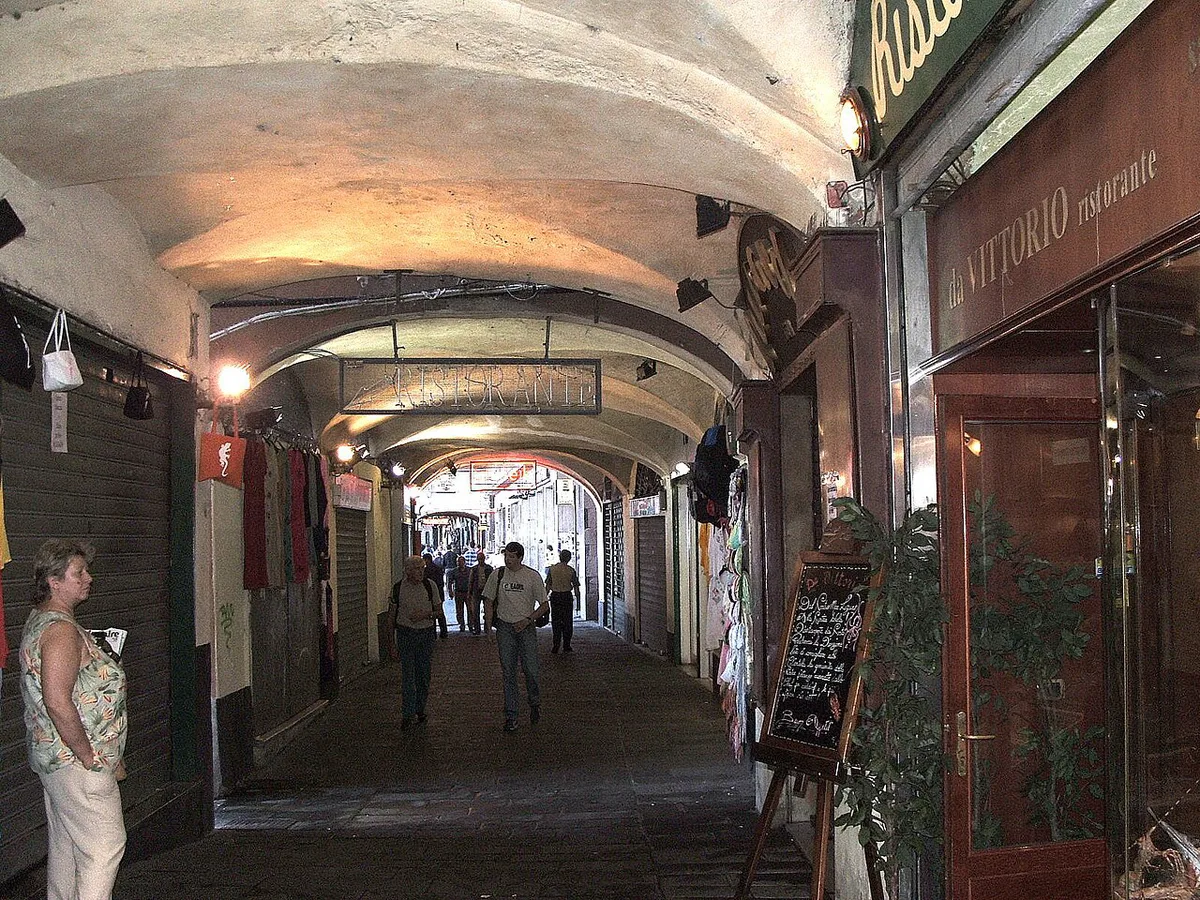
- The Sottoripa arcades near the old port
- Porto Antico aquarium queueing areas
Transit and Arrival Scams: From the Airport to Stazione Principe
Arrival points concentrate a disproportionate share of Genoa tourist scams simply because new arrivals are distracted, laden with luggage, and unfamiliar with the geography. At Stazione Principe, unofficial "porters" sometimes appear on the platform or forecourt offering to carry bags to a taxi or the exit, then demand an aggressive cash tip once the bags are in hand; there is no official porter service to expect, so any unsolicited offer of help with luggage is worth a polite but firm decline. Taxis present a related trap: Genoa taxis do not run on a fixed flat rate between the airport and the city center, so travelers should insist the meter is running from pickup and treat any driver quoting a flat "airport special" fare with suspicion. Cruise-day taxi overcharging follows the same logic: drivers waiting near the Porto Antico terminal sometimes quote inflated flat fares to day-trippers on a tight schedule, so the meter-first rule applies at the cruise dock just as much as at the airport. Volabus, the AMT-operated shuttle between the airport and the city center, is a straightforward alternative that sidesteps the fixed-rate ambiguity around taxi negotiations altogether. Public transport pickpocketing is the other consistent pattern, concentrated on the routes that run the Principe-Brignole axis, including the 20 and 35 bus lines, where crowding at the doors is used to work pockets and bags during boarding. Standard precautions apply on Genoa's buses and metro: keep bags zipped and worn to the front, and treat sudden crowding near doors as a cue to check belongings rather than something incidental.
- Decline unsolicited luggage help at Stazione Principe
- Insist on the meter for any taxi ride
- Use Volabus as an AMT-operated airport alternative
- Watch bags closely on the 20 and 35 bus routes
Street and Social Scams Around Piazza de Ferrari
Piazza de Ferrari, the fountain-centered square that functions as Genoa's civic heart, sees the highest concentration of social scams aimed at tourists. The most common is a forced-gift routine sometimes called the friendship bracelet or rose scam: a vendor ties a bracelet onto a wrist or presses a flower into a hand before any price is discussed, then demands payment once the item has physically changed hands. The fix is procedural rather than confrontational: keep hands and wrists out of reach, and never accept an item offered without a stated price, especially near the Aquarium entrance, where the same tactic recurs in the ticket queues. A rarer but still-reported variant is the bird-poop distraction scam near major monuments, where a substance is discreetly dropped on a shoulder or bag, a "helpful" stranger points it out and offers to clean it, and an accomplice lifts a wallet or phone during the distraction. A separate trick worth knowing: unofficial "guides" near the Cathedral or well-known Palazzi sometimes claim the site is closed for the day and try to redirect visitors toward a shop or alternative attraction that pays them a commission, so checking posted hours directly at the entrance settles this in seconds and costs nothing.
Genoa's social and navigational scams share a common prevention: declining unwanted engagement. Keeping hands tucked away stops the friendship bracelet routine at Piazza de Ferrari, while politely declining unsolicited directions in the caruggi prevents redirection to commission shops.
- Friendship bracelet or rose forced-gift routine
- Bird-poop distraction near major monuments
- Closed-attraction redirect toward a commission shop
Navigating the Caruggi Without Getting Steered Off Course
Genoa's centro storico is one of the largest and best-preserved medieval old towns in Europe, and its caruggi, the narrow, covered, frequently unsigned alleys that make up the district, behave nothing like the wide boulevards travelers navigate in Rome or Florence. That disorientation is the actual vulnerability, not any inherent danger in the alleys themselves: a wrong turn can put a visitor in a quiet, poorly lit stretch within a block or two of a busy shopping street, and it is in exactly those transition zones that opportunistic scams and petty theft cluster. The most reported version is a "helpful stranger" who offers unsolicited directions, then either walks alongside toward a secluded corner before demanding payment for the help, or steers a visitor toward a specific shop or restaurant paying a referral fee. Politely declining unsolicited direction-giving and consulting a phone instead sidesteps the entire pattern. For a fuller sense of which specific streets and hours carry more caution, cross-reference old town areas to skip and how the caruggi change after dark, since alleys that feel merely atmospheric at midday can warrant more attention once the shops shutter.
- Decline unsolicited directions offered in the alleys
- Keep an offline map open before entering the caruggi
- Notice the transition from busy street to quiet alley
Dining and Shopping Red Flags: Coperto vs. Real Scams
Dining scams in Genoa are less about outright fraud and more about tourists misreading a legitimate Italian restaurant custom. The coperto is a legal, standard cover charge, typically listed on the menu or posted at the entrance, that covers bread, table service, and setup, and it is not a scam even when it comes as a surprise to first-time visitors to Italy. The actual red flag is the absence of any printed price list at all: in the Sottoripa arcades especially, some informal spots present no menu, quote prices verbally, then pad the final bill once the meal is finished. Ask for a Menù Prezzo Fisso or any printed list before ordering, and treat a flat refusal to produce one as a reason to walk to the next place instead of arguing after the fact. Tour guiding is the other area worth screening: Genoa has licensed Ligurian guides recognized through the regional tourism board, and Visit Genoa's official channels list certified operators for the historic center and museums, while unlicensed street operators offering a spontaneous "quick tour" of the Cathedral or Palazzi for cash are the ones worth avoiding. This applies with extra weight to evening dining and bar-hopping in the caruggi, where the same navigational disorientation covered above compounds the risk; the guidance for women traveling through Genoa alone is a useful reference point even for groups deciding where to eat after dark.
- Ask for a Menù Prezzo Fisso before ordering
- Treat a missing printed menu as a warning sign
- Verify guides through Visit Genoa's certified list
Practical Defense: Emergency Numbers, Reporting, and Tech Tips
A short practical checklist covers most of what is needed if a Genoa tourist scam does happen, or if something more serious occurs. For any general emergency, 112 reaches unified emergency services across Italy; for a scam or theft specifically worth a police report, 113 connects to the Polizia di Stato. Reports can be filed in person at the Questura on Via di Corte Lambruschini, the relevant station for the city center and old town, and it is worth asking for a written copy of the report for insurance purposes. On the prevention side, the single most effective habit is loading an offline map, through Google Maps or Maps.me, before heading into the caruggi, since the entire "helpful stranger" pattern in the old town depends on visitors having no other way to reorient themselves. Keeping a photo of a passport and hotel address saved offline, and carrying only the cash needed for the day rather than a full wallet, rounds out the basics without requiring any special gear or subscription.
Prevention works at three points: insist taxi meters run from airport or cruise dock, request printed menus in informal restaurants before ordering, and load offline maps before entering caruggi alleys, since each blocking habit stops a predictable scam pattern.
- 112 for general emergencies
- 113 for police and scam reports
- Questura on Via di Corte Lambruschini for filing reports
- Offline maps loaded before entering the old town
Stazione Principe vs. Brignole: Different Arrival Risks
Genoa’s two main rail stations create different scam situations, so do not treat them as interchangeable. Stazione Principe, above Piazza Acquaverde and close to Via Balbi, the cruise port, and the edge of the old town, is the place to be most alert for unsolicited luggage help, confusing taxi pitches, and pickpockets watching newly arrived travelers with bags. If you are walking from Principe toward Porto Antico or the caruggi, set your route before leaving the station rather than accepting directions from someone waiting outside.
Brignole, near Piazza Verdi and the Via XX Settembre shopping corridor, feels more like a commuter hub, but crowded buses, the metro, and station underpasses still create pickpocket opportunities. On AMT routes such as the 1 and 18, and on the metro between busy central stops, keep bags zipped in front of you and avoid standing with a phone loose by the doors. The practical rule is simple: Principe requires more caution on arrival; Brignole requires more caution in crowds.
Frequently Asked Questions
Is Genoa safer than Milan or Rome when it comes to tourist scams?
Genoa sees far fewer organized, professional scam operations than Rome or Naples, and its risk is concentrated in a handful of named zones, Piazza de Ferrari, Stazione Principe, the Sottoripa arcades, and the Porto Antico aquarium queues, rather than spread across the whole city. That makes it comparatively easier to manage: knowing those spots covers most of the practical risk.
What should you do if a bracelet seller near Piazza de Ferrari won't leave you alone?
Keep hands and wrists tucked away so nothing can physically be tied on, say a firm no without stopping to negotiate, and keep walking at a steady pace toward a crowded shop or cafe. Once an item has been placed in a hand or on a wrist, the vendor will treat it as sold, so preventing contact matters more than arguing about payment afterward.
Are the narrow Caruggi alleys actual scam zones or just atmospheric?
The alleys themselves are simply how Genoa's medieval old town is built, and most of the centro storico is ordinary, lived-in city rather than a danger zone. The genuine vulnerability is disorientation: a wrong turn can lead somewhere quieter within a block, and that is where the small number of navigational scams and petty theft cluster, not in the caruggi generally.
What is the difference between a coperto and a Genoa restaurant scam?
The coperto is a legal, standard per-person cover charge that most Italian restaurants list on the menu or post at the door; it is not evidence of overcharging. The actual warning sign is a restaurant that refuses to show any printed menu or price list before the meal and pads the bill afterward, a pattern most associated with informal spots in the Sottoripa arcades.
How can you tell a licensed Genoa tour guide from a scammer?
Licensed Ligurian guides are recognized through the regional tourism board, and Visit Genoa's official channels list certified operators for the historic center and major museums. An unlicensed operator approaching near the Cathedral or a well-known Palazzo with a same-day, cash-only quick tour, especially one claiming the site is unexpectedly closed, is the pattern to decline.


