Corfu Areas to Avoid
Last updated June 2026. Searching for Corfu areas to avoid usually turns up vague warnings, but the honest answer is that Corfu has no genuinely dangerous districts — what it has is a handful of places that suit the wrong traveler at the wrong time. Matching your travel style to the right coast matters more than fearing a 'bad neighborhood,' and this guide breaks down exactly which spots to skip depending on whether the priority is quiet sleep, easy parking, or an authentic village feel.
Is Corfu Actually Safe? Setting the Baseline
Before ranking any area as one to avoid, it helps to frame the island correctly: Corfu is one of the more relaxed destinations in the Mediterranean for visitors, and violent crime against tourists is rare. For the full picture on general safety context, see general Corfu safety context, and for data-backed detail on how the island compares regionally, check data-backed Corfu crime figures. With that baseline established, 'areas to avoid' on Corfu is really a shorthand for vibe mismatch and logistical friction rather than danger.
Safety-First: Kavos After Midnight
If there is one place on the island where the higher-incident-rate label genuinely applies, it is Kavos in the deep south, and specifically its late-night strip. Kavos is a purpose-built party resort: a single dense strip of clubs, bars, and cheap-shot promotions that runs loud from around midnight into the early hours through July and August. The risk profile here is less about violent crime and more about alcohol-fuelled rowdiness, occasional fights outside clubs, and apartment or bag theft when doors are left unlocked or drinks are left unattended. Families, couples, and quiet-seekers should treat peak-season Kavos after midnight as a place to actively avoid staying near, even if a daytime beach visit is fine. For specific after-dark guidance that applies directly to this strip, see specific after-dark safety guidance, and solo travelers in particular should read solo traveler safety advice before booking accommodation near the strip itself.
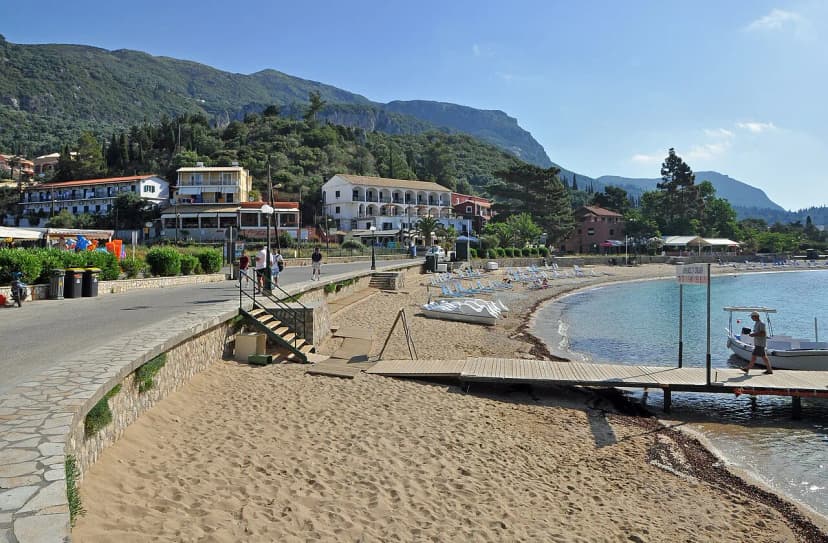
Kavos beach is safe for daytime visits; the after-midnight party strip presents genuine risks from fights and theft around bars. Families can stop by day but should base elsewhere to avoid peak-season nightlife—a practical compromise preserving beach access without overnight exposure.
Vibe-Check: Corfu Areas to Avoid for Families and Couples
Beyond Kavos, several resorts are not unsafe so much as mismatched to certain trip goals. Ipsos and Sidari, both popular package-holiday bases, lean heavily into a British-pub vibe — full English breakfasts, imported lager, live-sport screens — that can feel like a disappointment to travelers chasing 'authentic Greece.' Sidari in particular gets crowded and youth-skewed around its bar strip in peak summer, which makes it a reasonable one to avoid for couples wanting a quieter dinner scene, though its Canal d'Amour coastline remains a legitimate daytime draw. Families who want lively-but-tame beaches and couples who want low-key tavernas are usually better served by researching calmer neighborhood alternatives before locking in a base.
Logistical Red Zones: Corfu Town Parking and Cruise Crowds
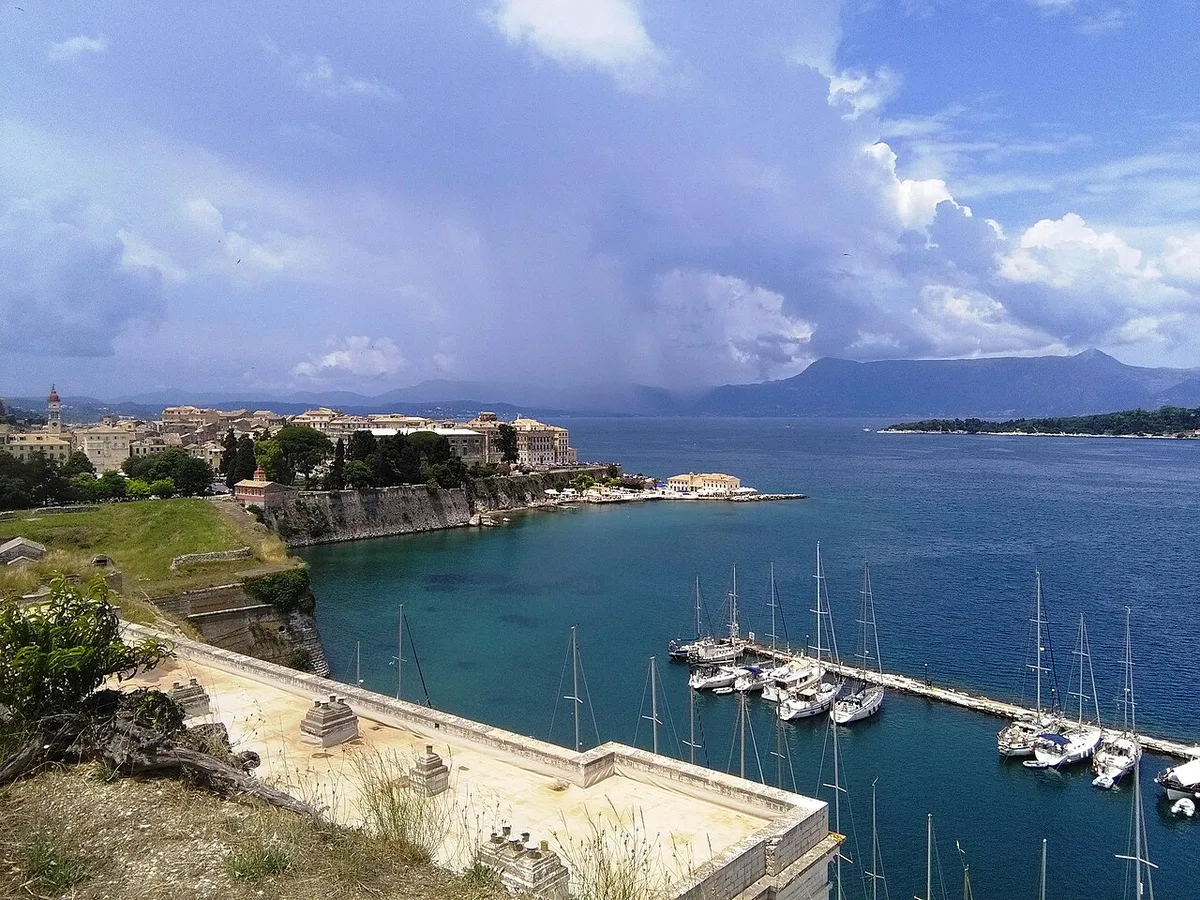
Corfu Town itself is not an area to avoid staying in — its Old Town is a genuine highlight — but driving into and parking within it is a logistical trap worth avoiding, especially for nervous or first-time drivers on the island. Narrow one-way lanes, limited on-street parking, and a historic core built for foot traffic long before cars existed combine to make self-driving into the center more stressful than it is worth; visitors are better off parking on the outskirts and walking in, or skipping a rental car for town days entirely. The other logistical pattern to plan around is the cruise-ship crowd surge: on days when ships dock, the Old Town's main lanes and the Liston can fill shoulder-to-shoulder by mid-morning, easing off again by late afternoon once passengers reboard. High-traffic zones like the Old Fortress approach and the main shopping lanes are also where opportunistic scams tend to cluster, so it is worth reviewing common tourist trap warnings before wandering through the busiest lanes. For getting around without a car, understanding the bus versus taxi logistics makes the town far less of a headache.
Remote Mountain Villages: Beautiful but Bus-Limited
Corfu's interior mountain villages — the kind of stone-built hamlets that look ideal in photos — are genuinely worth a day trip, but they are an area to avoid basing a stay in in without a rental car. The island's Green Bus network handles the long-distance routes between Corfu Town and larger towns across the island, while the Blue Bus network covers local and suburban routes closer to town; neither is designed for frequent service into small mountain villages, so schedules there can run to only a few departures a day, if any on Sundays. Anyone without private transport who books a remote hillside villa risks being stranded for dinner options or reliant on expensive taxis back down to the coast. Reviewing bus network coverage details before booking accommodation in the interior avoids this trap entirely.
Choosing remote villages or hillside villas to escape crowds risks creating dependency on expensive taxis or tours. Staying in busier hubs with regular buses and walkable amenities may cost less overall once transport expenses are factored into the trip budget.
Seasonal Avoidance: How the List Changes Through the Year
Which Corfu areas to avoid shifts noticeably with the calendar. In peak July and August, Kavos's party strip, Sidari's bar zone, and Corfu Town's cruise-crowd mid-mornings are all at their most intense, and mountain village bus frequency also drops as some routes trim to summer-holiday schedules. In shoulder season (May, June, September, October), Kavos largely quiets down as many clubs reduce hours or close, cruise crowds in Corfu Town thin out, and the same interior villages that felt inaccessible in August become a genuinely pleasant, uncrowded drive. Travelers who want to visit Kavos or Sidari without the peak-season intensity, or who want Corfu Town without cruise-day crowding, should lean toward shoulder-season dates.
Corfu Areas to Avoid: Quick-Reference Table
Use this table as a fast decision guide when comparing where to base a stay against what each area actually delivers.
| Area | Primary Reason to Avoid | Better Alternative |
|---|---|---|
| Kavos (peak-season strip, after midnight) | Loud all-night nightlife, occasional fights, apartment/bag theft risk | Quieter south-coast bases outside the main strip, or visit Kavos by day only |
| Sidari (bar strip) / Ipsos | British-pub vibe, crowded youth-skewed nightlife, feels less 'authentic Greece' | Calmer north/northeast villages via calmer neighborhood alternatives |
| Corfu Town center (driving/parking, cruise-ship mornings) | Narrow lanes, scarce parking, mid-morning cruise crowd surges | Park on the outskirts and walk in, or visit town in the afternoon |
| Remote mountain villages (without a car) | Green/Blue Bus routes run infrequently, risk of being stranded | Day-trip by rental car rather than basing a multi-night stay there |
Cost vs Access: When Avoiding the Hubs Backfires
One overlooked downside of avoiding Corfu’s busier bases is that the quieter choice can become more expensive and less flexible once transport is factored in. A hillside villa above Paleokastritsa, Lakones, Pelekas, or Agios Gordios may look calmer than Corfu Town or Dassia, but without a rental car you may end up needing taxis for beach runs, supermarket stops, dinners, and airport transfers. The same trade-off applies on the northeast coast around Nissaki, Kalami, Agni, and smaller coves between Kassiopi and Barbati: the setting is scenic and peaceful, but evening bus options are limited compared with larger resort corridors.
For visitors who do not want to drive, a practical compromise is to stay somewhere with regular bus links, walkable restaurants, and easy access to day trips, then visit the more remote villages or coves by rental car, boat trip, or organized excursion. Avoiding noise should not mean accidentally booking somewhere that makes every meal or beach day dependent on a paid transfer.
For trip-planning details, see US State Department Greece travel advisory.
Frequently Asked Questions
Is Kavos dangerous or just loud?
Mostly loud rather than dangerous. Kavos's peak-season strip is genuinely rowdy after midnight, and that noise comes with a real (if modest) uptick in fights and opportunistic theft around bars and unlocked apartments, but it is not comparable to a high-crime destination. Travelers who avoid the strip after dark, or who visit by day and stay elsewhere, sidestep the issue almost entirely.
Which parts of Corfu Town are too crowded?
The Old Town's main lanes, the Liston promenade, and the approach to the Old Fortress get the most crowded, particularly on mid-mornings when cruise ships have docked. Crowds ease by late afternoon, making that a better window for exploring the same streets.
Are there any no-go zones in Corfu?
No. Corfu has no genuine no-go zones — there are only 'annoyance' zones, like Kavos's party strip after midnight, Corfu Town's parking chaos, or bar-heavy stretches of Sidari, that are worth avoiding for specific trip styles rather than out of any real danger.
Do families need to avoid Kavos entirely?
Not entirely. Kavos's beach and daytime areas are fine for a stop, but families are better off basing their stay elsewhere and treating the after-dark party strip as an area to skip rather than an all-day exclusion.
Can visitors reach remote mountain villages without a car?
It is difficult. The Green Bus network covers long-distance routes and the Blue Bus network covers local suburban routes, but neither runs frequent service into small interior villages, so a rental car or organized tour is the more reliable option for those trips.