Safest Neighborhoods in Marseille: Where to Stay and Visit
Last updated April 2026, this guide breaks down the safest neighborhoods in Marseille so you can match a stay to your itinerary, budget, and comfort level with walking after dark. Start with the broader Marseille safety picture for context on the city as a whole before narrowing down to a specific arrondissement. In short, the coastal and southern arrondissements around the 6th, 7th, 8th, and 9th consistently draw the calmest reviews from residents and repeat visitors, while a handful of streets near the historic core and the transit hubs call for a bit more street-smarts.
Marseille Safety Overview: The North-South Divide
Marseille's reputation often outruns its reality: national headlines about the city tend to focus on a narrow slice of it, while the 16 arrondissements that spiral outward from the Vieux-Port in a shape locals nickname the escargot cover a much wider range of everyday experience. As a rule of thumb, the southern arrondissements, the 6th, 7th, 8th, and 9th, are the traditionally calmer and more affluent side of the city, built around the coastline, the Prado parks, and the approach to the Calanques, while the northern districts from the 13th through the 16th see the bulk of the crime coverage cited in national reporting. French national statistics (Insee) consistently place the 7th and 8th among the more affluent parts of the city, which tracks with their reputation as the calmest bases for visitors. For a fuller street-by-street picture of which specific quarters warrant extra caution, the areas to avoid in Marseille guide breaks the northern divide down block by block, and the local crime rate data page puts the statistical side of that split in context so a decision does not rest on reputation alone.
The north-south reputation divide misses important nuance in the center: the 1st and 2nd arrondissements sit south of the problematic northern districts yet bring distinct safety challenges—petty crime in crowded zones, late-night activity—requiring different precautions than Endoume or Prado despite their safer arrondissement status.
The Safest Neighborhoods in Marseille: Detailed Profiles
Within the generally safer southern half of the city, a handful of neighborhoods stand out for tourists, families, and solo travelers alike. Each carries its own trade-off between quiet and convenience, so weigh the profiles below against the itinerary before booking a stay.
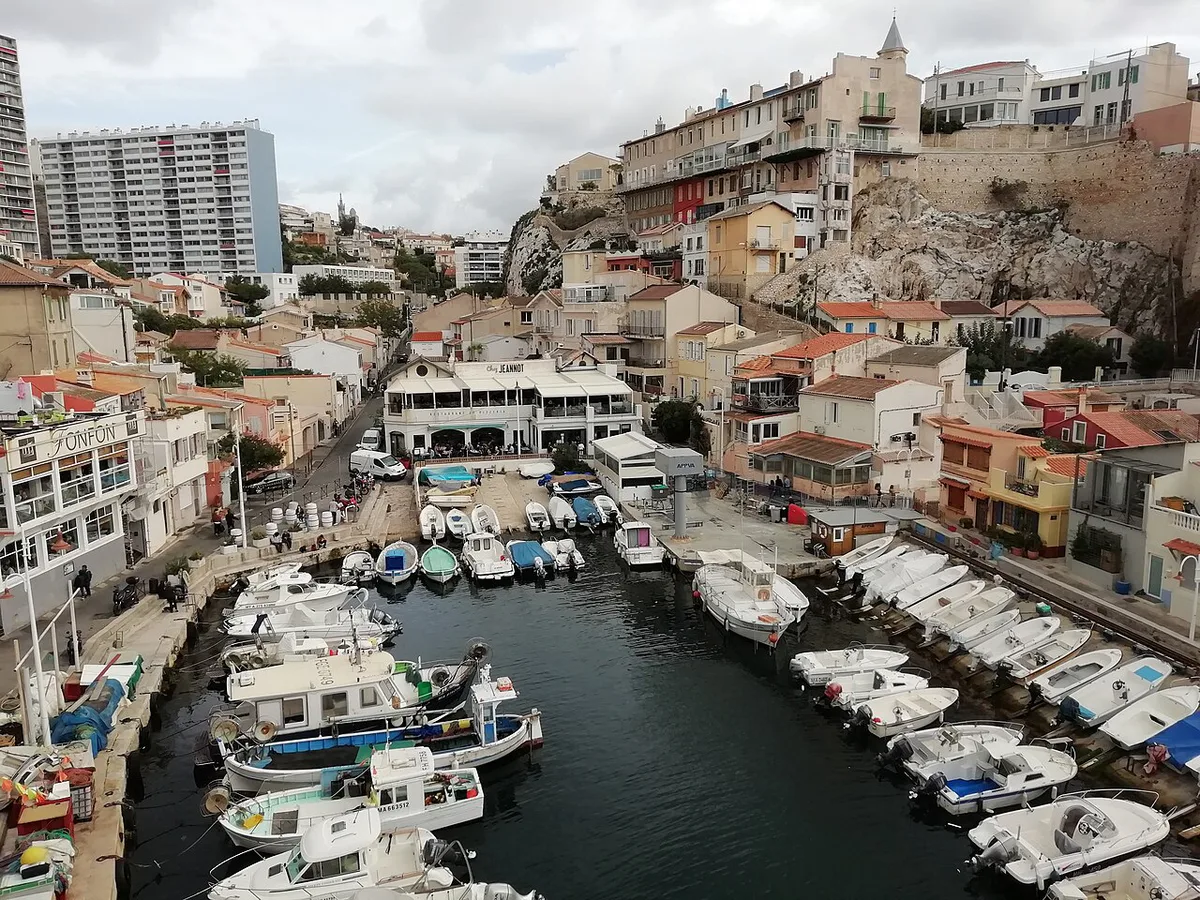
- 7th Arrondissement, Endoume and Le Pharo: This coastal, residential stretch along La Corniche is one of the most consistently recommended bases for a secure stay, with low foot traffic after dark and a village-like feel around its small squares and fishing coves. It suits travelers who want a quiet seafront base and do not mind a short bus or tram ride into the center; for a broader look at how well-lit and populated this side of town stays after sunset, see the guide to walking safely at night.
- 8th Arrondissement, Prado and Périer: Marseille's most upscale residential district, built around the Prado parks and beaches, is a common recommendation for families thanks to its wide streets, lower density, and easy beach access. The trade-off is distance: plan on roughly a 30-minute commute to reach the Vieux-Port and the main sightseeing corridor, which can eat into a short trip.
- 6th Arrondissement, Castellane and Vauban: A bourgeois-bohemian pocket that keeps a residential, lived-in feel while staying close enough to walk into the center in well under half an hour. Its central Metro and bus connections make it one of the more practical safe bases for travelers without a car, including those researching solo female travel safety before choosing where to stay.
- 9th Arrondissement, Mazargues: The furthest south of the commonly recommended districts, Mazargues functions as a gateway to the Calanques National Park and stays quiet and low-key. It is a solid pick when the Calanques are the priority and downtown nightlife is not, though it means a longer ride back into the center each evening.
- 2nd Arrondissement, Le Panier and Joliette: Marseille's oldest quarter, Le Panier, is a daytime-friendly maze of tourist-oriented lanes and steps that is generally fine to explore on foot, though the crowded stretch nearest the Vieux-Port is a known spot for pickpocketing; the common tourist scams guide covers what to watch for there. Nearby Joliette's renewed docks area has added modern housing, offices, and waterfront promenades as part of the wider Euroméditerranée redevelopment, giving this single arrondissement two distinct faces.
- 1st Arrondissement, Vieux-Port and Opéra: The most central base for sightseeing, this district puts the Old Port, the main shopping streets, and the Opéra quarter within walking distance of nearly everything. It is generally safe by day, but the nightlife strips around Cours Julien and the Opéra see some late-night noise and low-level hustle, so it rewards a bit more awareness once the bars close.

Neighborhood Safety Comparison Table
The table below lines up the same neighborhoods side by side for a quick cross-reference against a booking map. The safety level reflects our editorial assessment based on the patterns described above rather than an official ranking, since no single agency publishes a neighborhood-by-neighborhood safety score for Marseille.
| Neighborhood | Arrondissement | Safety Level (Editorial Assessment) | Best For | Journey to Vieux-Port |
|---|---|---|---|---|
| Endoume / Le Pharo | 7th | Very safe | Couples, quiet seafront stays | Short tram or bus ride |
| Prado / Périer | 8th | Very safe | Families, longer stays | About 30 minutes |
| Castellane / Vauban | 6th | Safe | Solo travelers, walkers | Walkable or one Metro stop |
| Mazargues | 9th | Safe | Calanques access | Longer transit ride |
| Le Panier / Joliette | 2nd | Safe by day, more caution at night | History, daytime sightseeing | Walkable |
| Vieux-Port / Opéra | 1st | Safe with late-night hustle | Central sightseeing, nightlife | Central, on foot |
Logistics: Navigating Marseille Safely
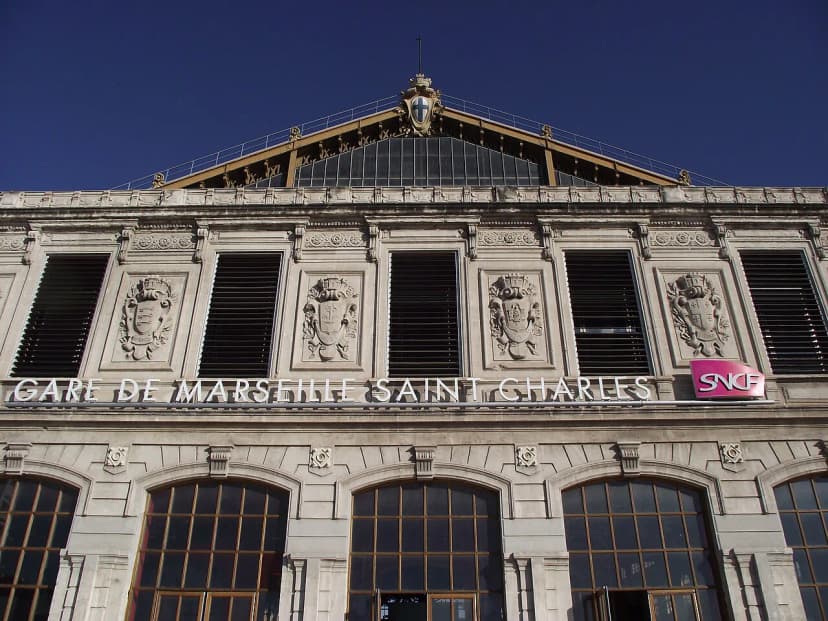
Getting around safely matters as much as picking the right neighborhood. Marseille's Metro, tramway, and bus network are all operated by the RTM (Régie des Transports Métropolitains), and sticking to these well-used lines rather than cutting through side streets is generally the lower-risk option after dark. For route-by-route and time-of-day guidance, the public transport safety guide is worth reading before a trip. On foot, the safest after-dark routes in the neighborhoods above tend to be the ones that stay lit and populated, main avenues like La Canebière or the Corniche, rather than the quieter side streets that branch off them. When a route looks isolated, poorly lit, or simply unfamiliar, particularly around Saint-Charles station late at night, a short taxi or ride-share trip is the more sensible choice over walking or waiting alone for a bus or tram.
Which Safe Neighborhood Is Right for You?
Choosing among these safe neighborhoods comes down to three trade-offs. Cost versus safety: the Prado and Périer area in the 8th arrondissement is generally the most expensive of the group, while the 6th and 7th offer a broadly similar safety profile at a more moderate price point. Access versus quiet: a roughly 30-minute commute from the 8th can consume a meaningful share of a short 2-day sightseeing trip, so travelers on a tight schedule often do better basing themselves in the 1st, 2nd, or 6th, even if that means slightly more nighttime activity outside the door. Atmosphere is the final factor: Endoume in the 7th keeps a village feel with independent shops and a slower pace, while the 6th arrondissement feels more like a proper city neighborhood, denser, better connected, and closer to the restaurants and Metro lines that make a short stay easier to manage.
Common Safety Mistakes to Avoid in Marseille
A few recurring mistakes trip up visitors who otherwise pick a sensible base in one of the neighborhoods above.
- Misreading proximity to Saint-Charles station as a safety signal. The station sits near the border of the 1st and 3rd arrondissements, and while it is convenient for arrivals, the surrounding blocks do not automatically share the same safety profile as the neighborhoods profiled above, so it pays to check the specific street rather than the station's location on a map.
- Over-relying on public transport in quieter, more isolated stretches late at night, when waiting alone for a bus or tram can feel more exposed than a short taxi ride, even in an otherwise safe arrondissement.
- Treating an entire arrondissement as uniformly safe. Even within generally safe districts like the 1st or 2nd, specific streets and squares, especially around nightlife clusters, warrant more caution than the neighborhood's overall reputation suggests.
- Confusing petty theft with violent crime. Violent crime against tourists is rare across the neighborhoods covered here, but crowded, generally safe spots like the Vieux-Port and Le Panier see far more pickpocketing and scam attempts, so bag awareness matters more there than in quieter residential districts.
Final Thoughts: Balancing Security and Experience
None of the neighborhoods profiled above require choosing between safety and a good trip. The 6th, 7th, 8th, and 9th arrondissements all offer a genuinely secure base, and even the more central, livelier options in the 1st and 2nd are safe by day and manageable at night with ordinary precautions. Match the trade-offs, cost, commute time, and atmosphere, to the itinerary, lean on the RTM network and well-lit main streets after dark, and the choice of where to stay becomes a matter of preference rather than risk.
Guard bags carefully in crowded zones like the Vieux-Port and Le Panier, where pickpockets concentrate. Violent crime is rare across all profiled neighborhoods; focus bag awareness on busy tourist spots rather than quieter residential areas like Endoume, Prado, and Castellane.
Central Areas to Treat Differently on Booking Maps
When comparing hotels, do not treat every central address near the Vieux-Port as equivalent. A room by the Opéra side of the port or around Rue Paradis usually feels different from one advertised as “near Saint-Charles,” “Noailles,” “Belsunce,” or “Porte d’Aix,” even though all can look conveniently central on a booking map. These areas are useful for transport, shopping, and daytime market visits, but they have heavier foot traffic, more street disorder, and more late-night caution points than Endoume, Vauban, Périer, or Prado.
This does not mean you must avoid the center. It means checking the exact street and arrival time. If you are landing late by train, a taxi from Marseille-Saint-Charles to a calmer base in the 6th or 7th can be more comfortable than walking with luggage through unfamiliar blocks. For sightseeing-focused stays, favor addresses west and south of La Canebière or closer to Castellane, rather than choosing purely by distance to the station.
Frequently Asked Questions
What is the safest arrondissement in Marseille?
The 7th arrondissement (Endoume and Le Pharo) and the 8th arrondissement (Prado and Périer) are the two most consistently recommended for overall safety, thanks to their residential character and coastal or park-side settings. The 6th and 9th arrondissements are close behind.
Is Le Panier safe at night?
Le Panier, in the 2nd arrondissement, is generally fine to explore during the day, but its narrow lanes and the crowded stretch nearest the Vieux-Port see more petty theft and hustle after dark. Sticking to main routes and staying alert is a better approach than avoiding the area outright.
Should you stay in the 8th arrondissement if you are only visiting for a couple of days?
It depends on the priority. The 8th arrondissement is one of the most upscale and secure parts of the city, but the roughly 30-minute commute to the Vieux-Port and the main sights can use up a meaningful chunk of a short 2-day trip, so a more central safe option like the 6th arrondissement is often more practical for brief visits.
Is public transport safe in Marseille?
Yes, in general. The Metro, tramway, and bus lines run by RTM are the standard way to move between the safer southern arrondissements and the center. As with most cities, staying alert in quieter stretches late at night and preferring a taxi or ride-share over waiting alone for a bus in isolated spots is a sensible precaution.
Which neighborhood in Marseille is best for solo female travelers?
The 6th arrondissement (Castellane and Vauban) and the 7th arrondissement (Endoume) are frequently recommended for their residential feel, good transit connections, and lower foot traffic concerns after dark. Reviewing dedicated guidance on solo female travel safety before choosing a base is a useful extra step.