Is Strasbourg Safe at Night? A 2026 Guide to Neighborhoods, Trams, and Scams
Last updated June 2026, this guide answers the question every visitor asks before booking a late dinner or wandering back from the Christmas market: is Strasbourg safe at night? The short answer is yes — Strasbourg is consistently ranked among France's safer large cities, and its compact historic center stays lit, populated, and patrolled well after the restaurants close. The details that matter are which streets you choose, how you get home once the trams stop, and how the mood shifts during the busiest nightlife hours and the December markets.
Quick Verdict: Is Strasbourg Safe at Night?
Strasbourg's compact size works in its favor after dark. The Grande Île, the UNESCO-listed historic core, sees steady foot traffic from restaurant-goers, students, and residents well into the evening, and police presence is visible around the main tourist landmarks. Compared with larger French cities such as Paris or Marseille, Strasbourg's tourist zones feel noticeably calmer at night, with petty theft rather than violent crime the primary concern. For the full breakdown of citywide risk factors, health resources, and seasonal considerations, see the overview on Strasbourg's overall safety picture. The practical dividing line is 01:30, when weekend tram service ends — after that, standard big-city precautions apply: stick to lit main streets, keep valuables secure, and plan your route home before you leave rather than after.
Plan nightlife logistics around tram cutoff times: 00:30 weekdays, 01:30 weekends. Walking stays safe within Grande Île and Petite France after service ends, but use Taxi Strasbourg app for quieter residential districts to avoid lengthy solo walks through low-traffic areas.
- Safe after dark: Grande Île, Petite France, Krutenau's main bar streets, Gare Centrale concourse
- Use extra caution: quiet side streets after 01:30, peripheral districts like Hautepierre and Elsau, unlicensed street taxis
Neighborhood Safety at Night: Where to Walk and What to Watch
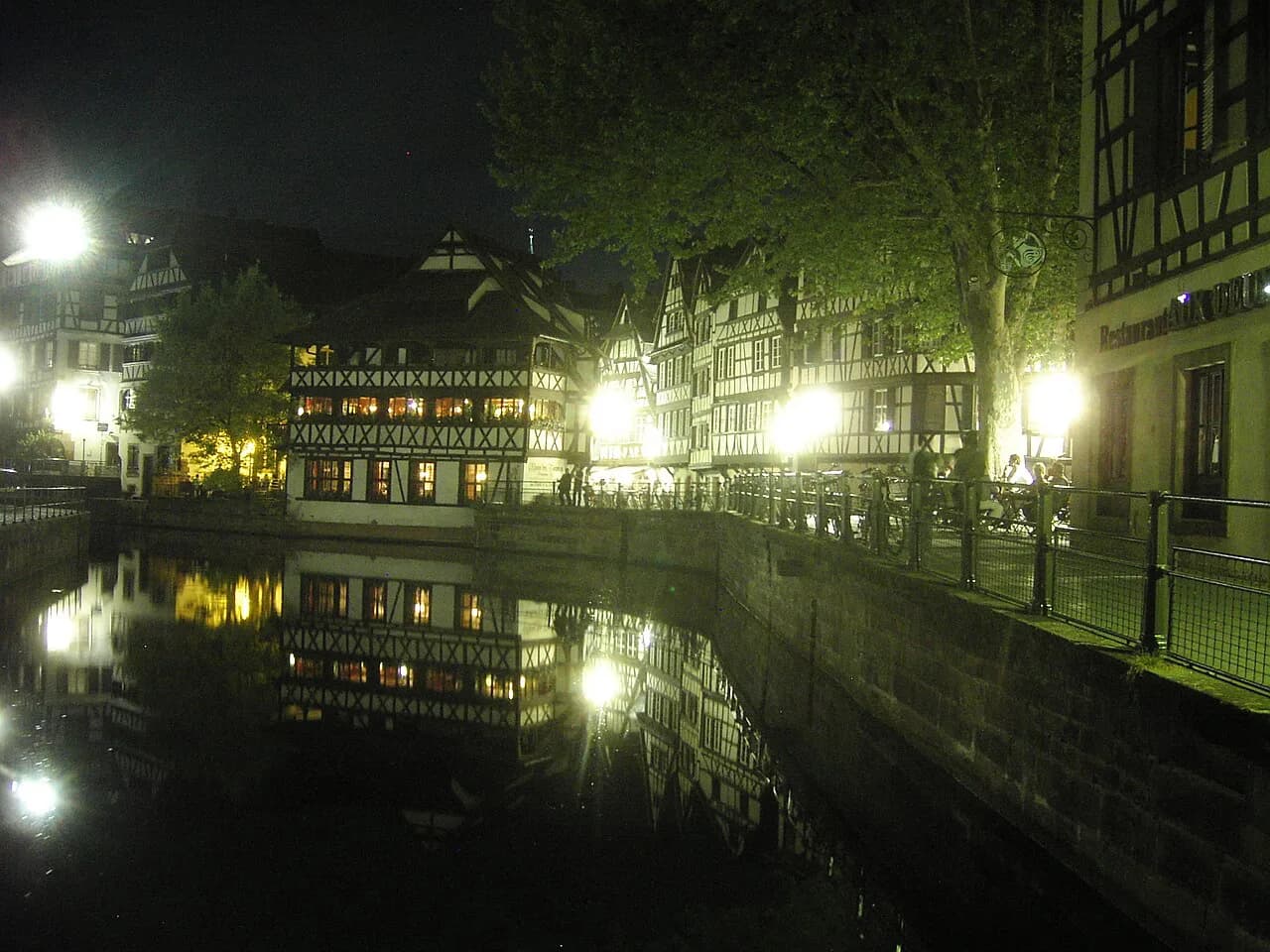
Grande Île and Petite France: Strasbourg's half-timbered lanes in Petite France empty out early in the evening, but that quiet is atmospheric rather than risky — the narrow streets are well used by dinner crowds until the restaurants wind down, and the canals and footbridges stay visible from main thoroughfares. Once the crowds thin, the mood is more sleepy postcard than unsafe, though the riverfront stretch between the Covered Bridges and Rue du Bain-aux-Plantes is genuinely dark; if your walk runs that direction, favor the better-lit Rue des Moulins instead. The Cathedral square itself goes quiet once the surrounding restaurants close for the night, which is normal rather than a warning sign. Krutenau, the student quarter near Place d'Austerlitz, is Strasbourg's main nightlife hub, and the bar zones there stay comfortable and busy well into the night; trams serving this area and Gare Centrale run until around 00:30 on weekdays and 01:30 on weekends, covered in more detail below. The one thing to watch in Krutenau is alcohol-related disorder on weekends — rowdiness rather than crime, concentrated near Place Broglie and the busiest bar streets — and it's worth giving loud groups a wide berth rather than engaging. Gare Centrale, the main train station, is safe but calls for standard vigilance late at night, particularly around loitering and bag security in the concourse near the last trains and trams. Peripheral districts such as Hautepierre and Elsau sit well outside the areas most visitors ever pass through; they're not part of a typical tourist itinerary, but the same caution you'd use in any unfamiliar outer suburb after dark applies. For a fuller neighborhood-by-neighborhood breakdown, including which streets to skip entirely, see the guide to areas to avoid in Strasbourg.
- Grande Île & Petite France: well-lit main lanes, quiet but not risky after restaurants close
- Krutenau: lively and comfortable around bars near Place d'Austerlitz; watch weekend rowdiness near Place Broglie
- Gare Centrale: safe with standard vigilance for bags and loitering late at night
- Hautepierre & Elsau: peripheral, rarely visited by tourists, treat with outer-suburb caution
Nighttime Logistics: Trams, Taxis, and Cycling After Dark
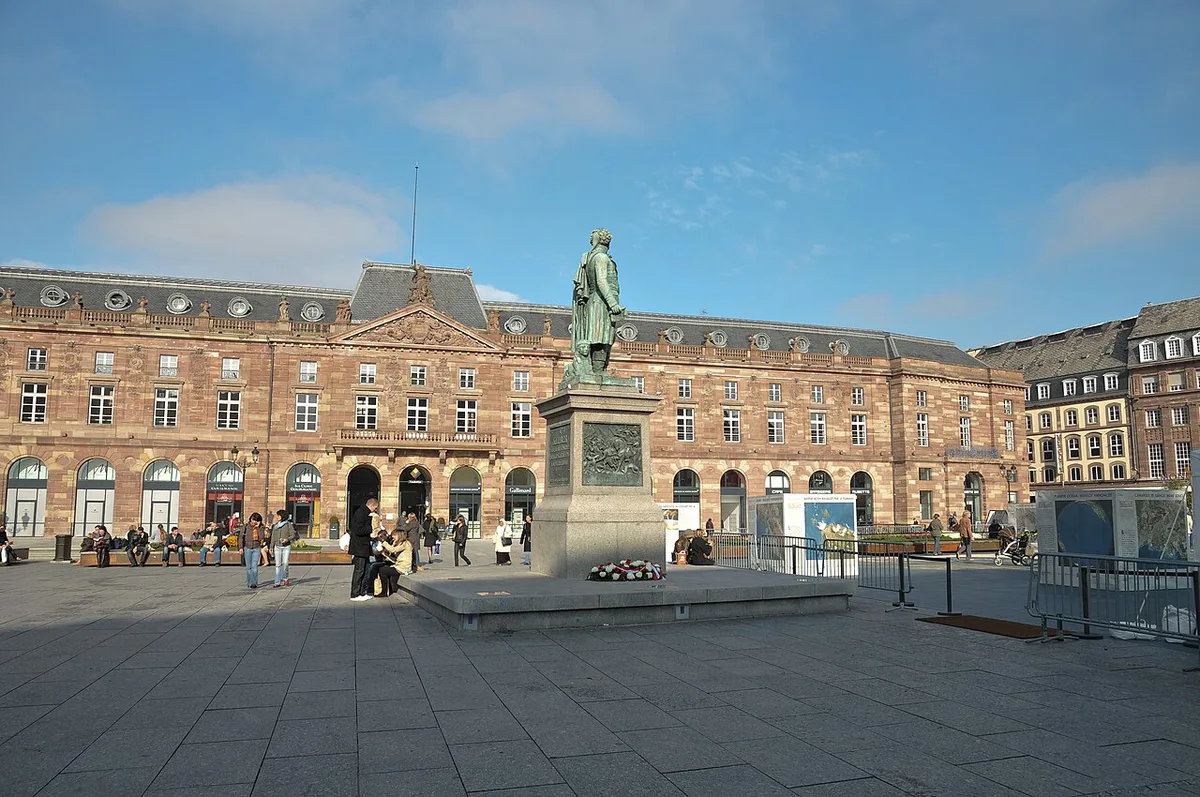
Strasbourg's tram network, particularly lines A and D, is the backbone of getting around at night, and service is reliable and well used right up until it stops — around 00:30 on weekdays and 01:30 on weekends. The real logistics question isn't whether the trams are safe, since staff and other passengers are present throughout the evening; it's what to do in the gap after service ends. That's where the Taxi Strasbourg app comes in: it's the local recommendation over hailing a car on the street, since licensed drivers are dispatched and trackable rather than flagged down blind. Budget a short wait during the immediate post-01:30 rush on weekends, when demand spikes as bars close. Walking is a reasonable option within the historic center even after tram service ends, since the Grande Île and Petite France stay populated by other pedestrians heading home. Once a route runs through quieter residential stretches — toward Neudorf, for instance, or other outer districts — switching to a taxi is the better call simply because those streets carry far less passing traffic than the tourist core. Cycling on the Vélhop bike-share system is workable at night, but the tram tracks embedded in the old town's cobbled streets are the main hazard: wheels can catch in the rails, especially at an angle or in wet weather, so cross them at a right angle and keep speed down through Grande Île and around Place Kléber. For a deeper look at how the tram, bus, and shuttle network holds up after dark, including ticket validation rules, see the dedicated guide to public transport safety in Strasbourg.
- Trams (lines A and D): run to roughly 00:30 weekdays, 01:30 weekends
- After the last tram: use the Taxi Strasbourg app rather than street hailing
- Vélhop cycling: cross tram tracks at a right angle to avoid catching a wheel
Common Risks and Scams to Avoid After Dark
Petty theft is the dominant risk in Strasbourg after dark, concentrated in the same crowded spots that draw thieves during the day: Place de la Cathédrale, the footbridges around Petite France, and the trams on lines A and D. A cross-body bag, a zipped phone pocket, and never leaving a bag unattended on a café chair cover most of the risk. Two scams show up repeatedly around the historic core. The friendship bracelet trick happens near the Cathedral, where someone ties a coloured string around a wrist and then demands payment, sometimes escalating if you refuse; keep hands free, say a firm no, and keep walking, since they rarely follow beyond ten metres. The fake petition scam targets tourists near Place Kléber and Place Broglie, where young people carrying clipboards pose as signature collectors for a cause and then pivot to asking for cash donations — declining outright, or saying you don't sign, ends the interaction quickly. There's also a more literal hazard worth flagging: trams move quietly through the pedestrianized streets of the old town, and it's easy to step onto the tracks without hearing one approach, especially with headphones in. Treat tram tracks like an active road at all times, day or night, and use marked pedestrian crossings even when the street looks empty. For a full rundown of scams to expect across the city, including restaurant add-on charges, see the guide to common tourist scams.
- Friendship bracelet scam: near the Cathedral; walk away, they rarely follow beyond ten metres
- Fake petition scam: near Place Kléber and Place Broglie; decline and keep moving
- Petty theft hotspots: Cathedral square, Petite France footbridges, tram lines A and D
- Silent trams: cross tracks at marked crossings only, remove headphones near the old town
Solo Female Travelers and Families at Night
Strasbourg is generally safe for women travelling alone, with the same well-lit streets and frequent police patrols that make the wider city comfortable after dark. Harassment is uncommon, though it can occur in busier nightlife pockets, so the same instincts that apply anywhere — trusting your read of a street, avoiding empty stretches, keeping a phone charged — apply here too. On late-night trams, choose a seat near the driver rather than an empty carriage further back, and favor well-populated, well-lit routes like those through Petite France over quieter residential walks toward outlying districts such as Neudorf. For itinerary-specific advice, safe-haven spots, and route planning, see the dedicated guide to solo female travel safety. Families navigating Strasbourg at night face a different set of considerations, most tied to crowd management rather than crime. Children under four travel free on all buses and trams, which helps with last-minute route changes if an evening runs long. Playgrounds around Place Gutenberg and along the Quai des Pêcheurs are fenced and well maintained, but riverbanks along the Ill have no barriers, so keep a close watch on toddlers near the water after dark when visibility drops. During the Christmas market season in particular, agree on a family meeting point in advance, since dense evening crowds around Place Kléber and the Cathedral make it easy to get separated.
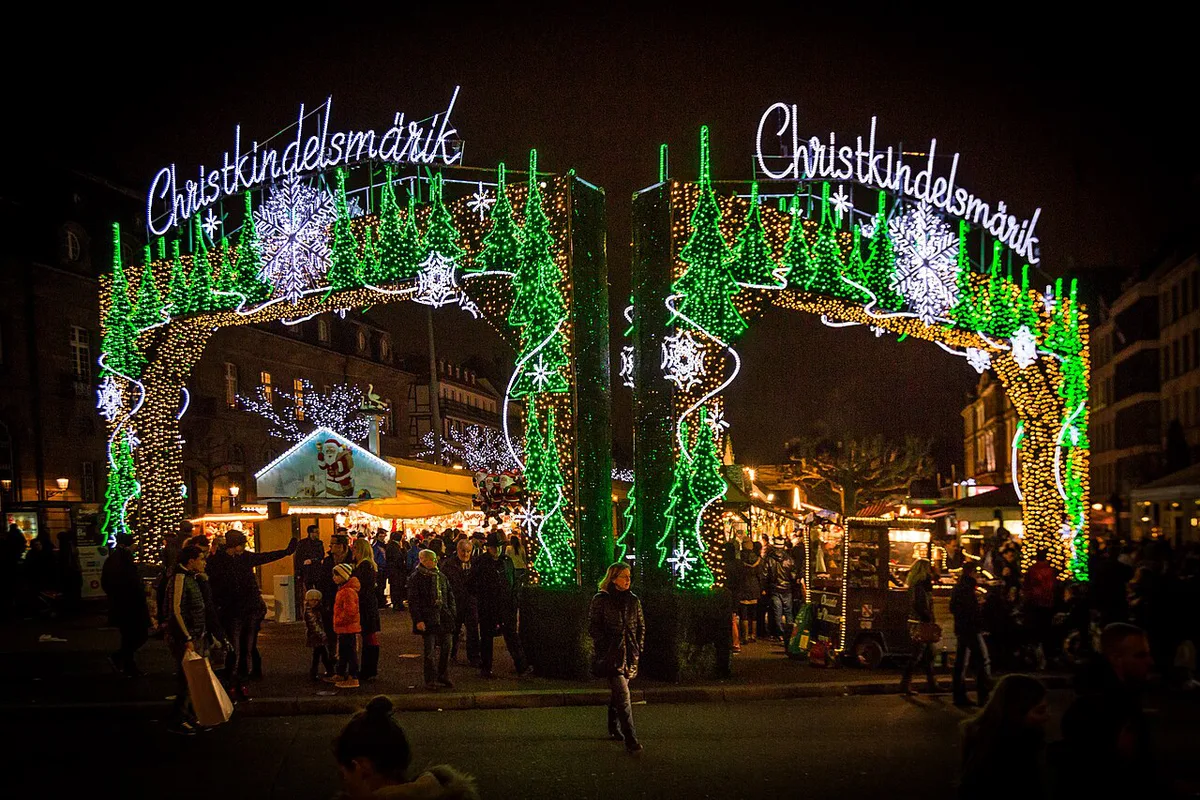
During December's Christmas markets, agree on family meeting points in advance, since dense crowds increase both pickpocketing risk and the chance of getting separated. Keep children close and use cross-body bags with zipped pockets—year-round precautions matter more during the season.
- Solo women: sit near the driver on late-night trams, avoid empty carriages
- Families: children under four ride free on buses and trams
- Riverbanks along the Ill have no barriers — supervise children closely after dark
The Christmas Market Variable: Nighttime Safety in December
Strasbourg's safety profile shifts during the Marché de Noël, which runs from late November through late December and draws dense evening crowds into the Cathedral square, Place Kléber, and the covered market stalls threading through the Grande Île. Pickpocketing risk rises accordingly, since crowded stalls and slow-moving foot traffic are exactly the conditions petty thieves look for — the same precautions that apply around the Cathedral year-round, such as cross-body bags, zipped pockets, and no bags left on chairs, matter even more here. Expect a heavier, more visible security presence during the markets, including barriers and cordons around the busiest squares, which is a normal part of the season rather than a sign of elevated danger. If traveling as a family or group, agree on a meeting point before heading into the market each evening, since phone signal can be unreliable in the densest stretches and it's easy to lose track of each other in the crowds.
Emergency Contacts and Resources
Save these before heading out for the evening. Dial 112 for the general European emergency number, which works from any phone including foreign mobiles and connects to English-speaking operators; 17 reaches police directly, 15 reaches SAMU for medical emergencies, and 18 reaches the fire service, which also handles vehicle accidents and river rescues on the Ill. For non-emergency theft reports or lost documents, the tourist police desk is in the Prefecture on Quai des Pêcheurs, open weekdays, reachable at 03 90 22 16 00. For medical care, Hôpital Civil on Place de l'Hôpital runs a 24/7 emergency department with multilingual staff, and green-cross pharmacies operate on a rotating overnight schedule, with the current on-duty pharmacy posted on every pharmacy door.
- 112 — general European emergency number, works from any phone
- 17 — Police
- 15 — SAMU (medical emergencies)
- 18 — Fire and rescue
- 03 90 22 16 00 — Tourist police, Prefecture, Quai des Pêcheurs (weekdays)
Frequently Asked Questions
Is it safe to walk in Petite France at night?
Yes. Petite France's lanes empty out early in the evening, but that's atmospheric rather than risky — the streets stay visible from main thoroughfares and see steady foot traffic until restaurants close. The one stretch to avoid is the riverfront between the Covered Bridges and Rue du Bain-aux-Plantes, which is poorly lit; take Rue des Moulins instead for better street lighting.
What time does the tram stop running in Strasbourg?
Trams, including lines A and D, run until around 00:30 on weekdays and 01:30 on weekends. After that, use the Taxi Strasbourg app rather than hailing a car on the street, since licensed drivers are dispatched and trackable.
Is Strasbourg safe for solo female travelers at night?
Generally, yes. Strasbourg has well-lit streets and frequent police patrols, and harassment is uncommon, though it can occur in busier nightlife areas. On late-night trams, sit near the driver rather than in an empty carriage, and favor well-lit, populated routes over quiet walks toward outlying districts.
What are the most common scams to watch for at night in Strasbourg?
The two recurring ones are the friendship bracelet scam near the Cathedral, where someone ties a string around a wrist and demands payment, and the fake petition scam near Place Kléber and Place Broglie, where clipboard-carrying groups ask for signatures and then cash. Decline firmly and keep walking in both cases.
Is Strasbourg safe at night during the Christmas markets?
Yes, though pickpocketing risk rises with the crowds between late November and late December. Expect a heavier, visible security presence with barriers around the busiest squares — a normal seasonal precaution rather than a sign of danger. Keep bags secured and agree on a meeting point if traveling with family.
How should you plan time and transport for a night out in Strasbourg?
Note the 00:30 weekday and 01:30 weekend tram cutoffs before you head out, and plan whether you'll walk within the well-populated historic center or switch to the Taxi Strasbourg app for quieter residential stretches. Building the return trip into your evening avoids scrambling for transport once bars close.


