Is Carcassonne Safe at Night? A Local Safety and Logistics Guide
Last updated June 2026: if you're asking is Carcassonne safe at night, the short answer for most travelers is yes, though the experience shifts noticeably depending on whether you're inside the illuminated walls of La Cité or wandering the quieter streets of Bastide Saint-Louis below. This guide breaks down what actually changes once the day-trip crowds leave, where standard urban caution still applies, and how to move between the two towns once the sun goes down. Expect practical detail on lighting, solo safety, nighttime transport, and the best time to catch the ramparts glowing rather than vague reassurances.
Quick Answer: Is Carcassonne Safe at Night?
For most visitors, Carcassonne is safe at night, and the medieval Cité in particular has a reputation as one of the more reassuring places in France to explore after dark. Violent crime is rare in this part of the Aude department, in the Occitanie region, and the primary concern to plan around is petty theft, such as pickpocketing in tourist-dense pockets, rather than anything more serious. What changes dramatically after sunset is the atmosphere: the crowds that pack the ramparts, gift shops, and viewpoints of this UNESCO World Heritage site during the day thin out considerably once day-trippers head back to their coaches and hotels, leaving La Cité to settle into a quieter, more atmospheric version of itself by evening. That shift in feel, more than any change in underlying risk, is what most visitors notice first, and it is the reason a well-planned evening in Carcassonne can end up being one of the calmer parts of a trip through the region rather than something to plan around avoiding. For a broader look at how Carcassonne compares on general safety factors beyond the after-dark question specifically, the overall Carcassonne safety guide covers daytime risk factors and citywide context in more depth.
Safety by Neighborhood: La Cité vs Bastide Saint-Louis
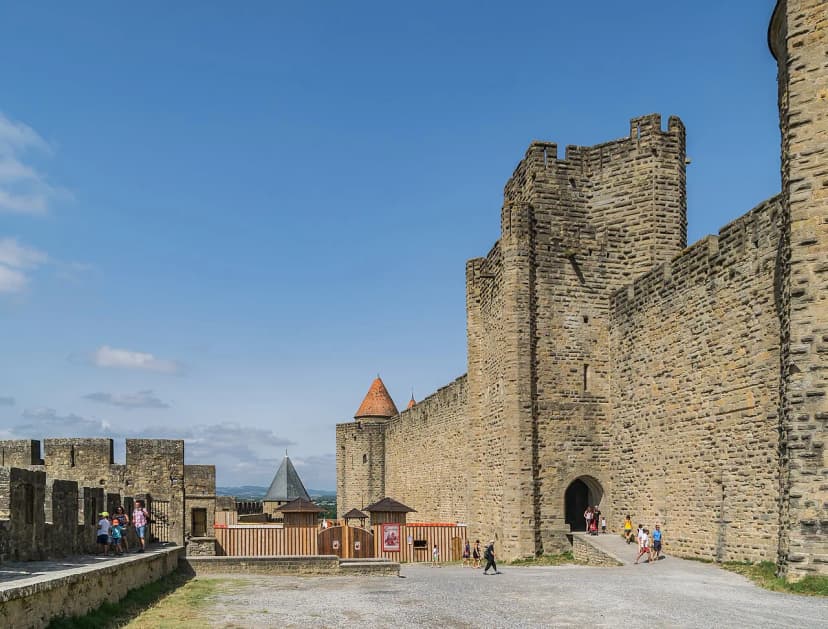
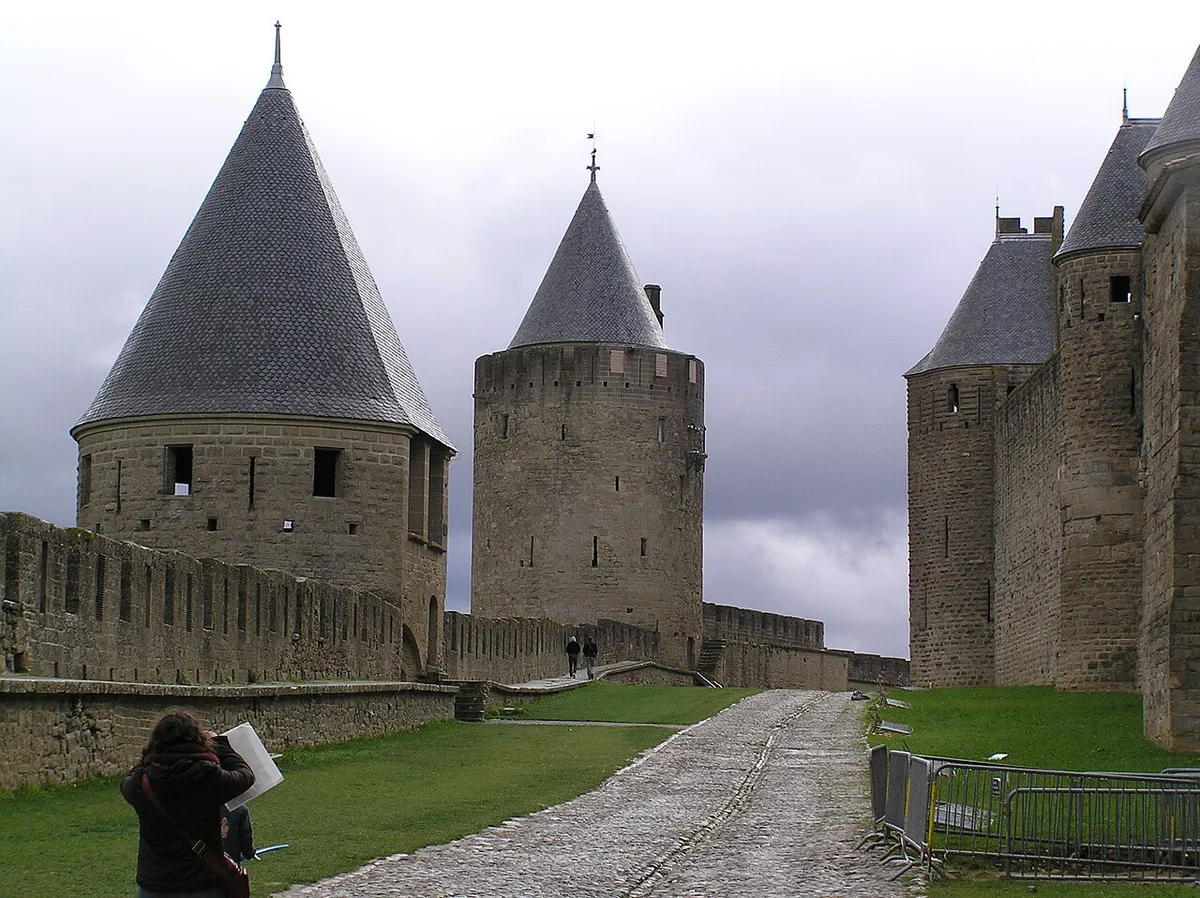
La Cité, the fortified hilltop citadel most visitors picture when they think of Carcassonne, functions almost like a safe bubble after dark. Its narrow lanes are lined with hotels, restaurants, and residences, and the fortress walls are lit at night, casting a golden glow with dramatic shadows around gates such as Porte Narbonnaise. The compact, contained layout also means it's difficult to wander far from a lit main path even by taking a wrong turn, which is part of why the citadel keeps its safe-bubble reputation after the day-trip crowds thin out. Bastide Saint-Louis, the lower town across the river, is more residential and spread out, and it calls for the same everyday urban awareness recommended in most French towns at night. Place Carnot, the main square, keeps a steady stream of bar and restaurant life going into the evening, which keeps that pocket of the Bastide well-populated and comparatively easygoing; the Canal du Midi nearby is more of a daytime cycling and walking route and isn't a focus of the nighttime safety picture the way the station area is. The area that deserves more attention is around Gare de Carcassonne, the train station, along with some of the darker lanes in the lower town further from the main squares; these stretch quieter and less overlooked once shops close, so it's worth sticking to main roads and better-lit routes if walking through late. For a fuller neighborhood-by-neighborhood breakdown of where to exercise more caution, see the guide to areas to avoid in Carcassonne. The Pont Vieux, the old bridge connecting the Bastide to the base of La Cité across the Aude river, serves as the main pedestrian link between the two halves of the city and is generally considered a reasonable route after dark for travelers moving between dinner in the lower town and a hotel inside or below the walls, though it is still worth treating it like any other pedestrian crossing and staying alert rather than distracted.
La Cité's compact layout, lit paths, and staffed hotels create a 'safe bubble' for solo nighttime exploration that Bastide Saint-Louis does not replicate. Solo travelers navigate the medieval streets with minimal reported harassment, but the lower town's darker, less overlooked lanes demand greater caution.

Solo Travel and Solo Female Safety at Night
Traveling solo in Carcassonne after dark is broadly manageable, and many visitors navigate the narrow medieval streets of La Cité alone without incident, particularly along the main routes near the ramparts and gates where other guests and staff are typically still around. Reports of harassment or catcalling are minimal compared to larger French cities, though, as with solo travel anywhere, sticking to well-lit, populated streets and avoiding the quieter lower-town lanes late at night is the more cautious approach. Basic habits go a long way toward keeping an evening walk stress-free, especially for anyone navigating alone.
- Share your evening plans or route with someone before heading out.
- Keep to well-lit, populated streets near the ramparts and main squares.
- Treat an unusually empty street as a cue to double back toward a main square.
- Keep a charged phone on hand for the walk back to your accommodation.
Nighttime Logistics: Walking, Buses, and Taxis Between La Cité and the Bastide
Getting between La Cité and Bastide Saint-Louis after dark comes down to three main options, and each carries a different trade-off between cost, convenience, and reliability as the evening wears on. Walking is entirely feasible for travelers comfortable with a sustained uphill return route in comfortable footwear, especially along the main lit approaches near the citadel gates, though the appeal fades after a full day of sightseeing or much past 10 PM, when fewer people are on the streets to make the walk feel as easygoing. Local buses are generally reported to run less frequently in the evening than during the day, including in the hours after 8 PM, so travelers planning to rely on public transport after dark should confirm the current timetable locally rather than assume daytime frequency carries into the night. Taxis and rideshare options tend to be the most dependable choice for late returns, particularly around the train station or for anyone carrying luggage, and are worth arranging in advance during peak season, when demand from evening diners and returning day-trippers can outpace supply.
| Option | Feasibility After Dark | Best For |
|---|---|---|
| Walking | Manageable on main lit routes; steady uphill stretch back up to La Cité | Confident walkers sticking to well-populated streets |
| Local bus | Reduced evening frequency versus daytime; confirm the current schedule locally | Budget-conscious travelers planning ahead |
| Taxi / rideshare | Generally the most reliable option after 10 PM | Station transfers, luggage, or late-night returns |
Nighttime Photography and the Case for a 10 PM Visit
Carcassonne after dark is also one of the more rewarding times for photography, and it's a large part of why some travelers deliberately plan an evening visit rather than treating the citadel as a daytime-only stop. The fortress walls are illuminated at night, and lights positioned around the ramparts and entrances cast the stone in a golden glow with dramatic shadows, an effect photographers have reported is still striking around 10:15 PM during the summer months, once the sky has fully darkened but the lighting is still active. The Pont Vieux offers reliable visibility for wide shots of the illuminated walls across the river, and the area outside the main entrances near Porte Narbonnaise gives an unobstructed angle on the fortress silhouette without needing to enter the citadel itself. Beyond the photography angle, 10 PM functions as something of a turning point for the visitor experience generally: by that hour, the crowds that make daytime visits feel overwhelming in high season have largely thinned out, leaving La Cité's streets and viewpoints noticeably stiller and easier to enjoy at a slower pace than the busy daytime version of the same walk.
The 10 PM timing optimizes photography—fortress lights remain active and crowds have thinned substantially—but simultaneously creates the evening's quietest streets. This peak moment for photography coincides with reduced ambient foot traffic, trading photogenic solitude against fewer people nearby for reassurance or directions.
Common Nighttime Scams and Areas to Exercise Caution
Pickpocketing remains the most consistent risk to plan around in Carcassonne, and it doesn't fully disappear once the sun goes down, particularly in pockets where evening diners and remaining tourists cluster tightly, such as restaurant terraces around Place Carnot or busy entrances into La Cité. Standard precautions cut most of the risk, and they take little effort to build into an evening routine. For a full rundown of the specific scams reported around Carcassonne and how to avoid them, see the guide to common Carcassonne tourist scams.
- Keep bags zipped and worn in front of you in any crowd.
- Avoid flashing phones or cameras while distracted in busy pockets.
- Be cautious of unsolicited help or overly friendly strangers near ATMs or ticket queues.
- Stick to well-lit, populated routes rather than shortcuts through quieter lanes.
Is a Night Visit to Carcassonne Worth It? Weighing the Pros and Cons
Deciding whether to build an evening into a Carcassonne itinerary comes down to weighing a handful of clear trade-offs. On the upside, nighttime visits offer some of the best photography conditions of the day, noticeably cooler temperatures than the summer heat, and a version of La Cité largely free of the crowds that define the daytime experience in high season. On the downside, dining options inside the walls thin out later in the evening compared to daytime, and there are simply fewer people around should a traveler need directions or assistance, which matters more for anyone navigating alone in the quieter lower-town lanes.
- Pros: some of the best photography conditions of the day, with the ramparts lit and crowds thinned out.
- Pros: noticeably cooler temperatures than the summer daytime heat.
- Pros: a quieter, more atmospheric version of La Cité largely free of daytime crowds.
- Cons: fewer dining options open later in the evening compared to daytime.
- Cons: fewer people around if you need directions or assistance, especially in the lower town.
Can You Walk the Ramparts at Night?
One common misunderstanding is that “the ramparts” and “La Cité” are the same nighttime experience. They are not. The medieval streets inside the fortified city, the approaches around Porte Narbonnaise and Porte d’Aude, and the viewpoints outside the walls can still be part of an evening walk, but the ticketed Château Comtal and ramparts route should be treated as a daytime or early-evening monument visit, not a late-night stroll.
Official visiting hours normally place last admission well before dinner: in the warmer season the castle and ramparts close in the early evening, and in the colder season they close even earlier. That matters for safety planning because the most dramatic night views are usually from outside the paid circuit, not from walking along the walls themselves. For after-dark photos, use the Pont Vieux, the lower slopes below La Cité, or the lit gate areas, then return via main paths rather than trying to find a closed or poorly lit wall access point.
Frequently Asked Questions
Is La Cité safe to walk around at night on your own?
Yes, in our editorial assessment, La Cité is one of the more comfortable places in Carcassonne to explore alone after dark, since its compact layout keeps you close to lit paths, staffed hotels, and other guests even once the day-trip crowds have left. Sticking to the main routes near the ramparts and gates rather than any unlit side passage is the simplest way to keep it that way.
What time do the ramparts lights come on in Carcassonne, and how late do they stay lit?
The exact seasonal lighting schedule varies and is best confirmed locally, but the illuminated walls have been reported still glowing around 10:15 PM during the summer months, so planning an evening walk or photo stop from roughly 10 PM onward tends to work well in that season.
Is the area around Carcassonne train station safe at night?
The Gare de Carcassonne area calls for more standard urban awareness than La Cité does, especially later in the evening when fewer people are around. Sticking to main, well-lit roads and arranging a taxi for late arrivals or departures is the more cautious approach.
Should you walk or take a taxi between La Cité and Bastide Saint-Louis at night?
Walking is feasible for travelers comfortable with the uphill return route on the main lit paths, but a taxi is generally the more reliable option after 10 PM, particularly for late dinners, luggage, or anyone who would rather not navigate quieter lower-town streets in the dark.
Is Carcassonne safe for solo female travelers after dark?
Broadly, yes: reports of harassment are minimal compared to larger French cities, and many solo travelers walk La Cité's main routes without incident. The same precautions recommended for solo travel anywhere still apply, particularly around the station and darker lower-town lanes.
How much time should I plan for an evening visit to Carcassonne?
A couple of hours after dinner is generally enough to walk the main routes of La Cité, take in the illuminated walls from outside, and cross back over the Pont Vieux before things get too late, though photographers may want longer to catch the lighting around the 10 PM mark.