Is Arles Safe for Solo Female Travellers?
Last updated July 2026: if you're weighing up is Arles safe for solo female travellers, the short answer is reassuring — this compact Provençal town in the Bouches-du-Rhône department ranks among the more comfortable French bases for women travelling alone. Arles's walkable old town, unhurried pace, and small-town feel make it a gentler introduction to solo travel in France than larger hubs like Marseille or Montpellier, though the usual urban precautions still apply once the sun goes down. What follows breaks the verdict down street by street, from where to base yourself to how the city changes during Feria weekends.
The Verdict: Is Arles Safe for Solo Female Travellers?
In our editorial assessment, Arles sits toward the safer end of the spectrum for a solo woman travelling through Provence. The historic centre is small enough to cross on foot in a short walk, the pace is unhurried, and the presence of other travellers around the UNESCO World Heritage-listed Roman Arena and Place de la République keeps the old town lived-in rather than deserted after dinner. Arles does not carry the reputation for street crime that follows Marseille, and it is generally quieter and easier to read after dark than larger regional cities such as Montpellier. For a full breakdown of how Arles compares across every safety category, see the full Arles safety guide. None of this removes the need for standard precautions — Arles is safe by French urban standards, not risk-free, and the sections below cover exactly where to be more careful.
- Small, walkable historic centre with a genuine village feel
- Lower profile for street crime than Marseille
- Quieter evenings than Montpellier, with a compact dining core
- Standard urban precautions still apply, especially after dark
Crime in Arles: What Solo Travellers Should Actually Worry About
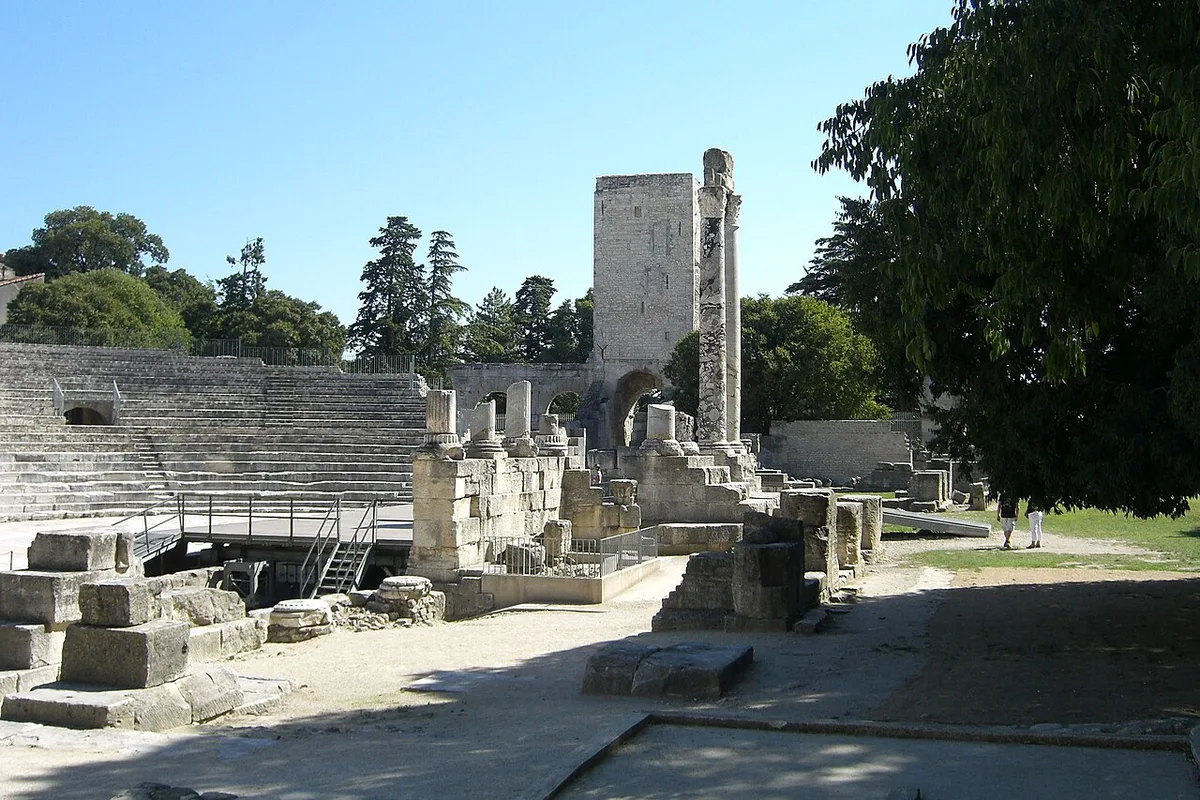
The practical risk profile in Arles leans almost entirely toward petty crime rather than violent crime. Bag-snatching, pickpocketing in queues, and opportunistic theft from café tables are the incidents solo women are most likely to encounter, concentrated around crowded tourist points such as the Roman Arena, the Alyscamps, and the market stalls along Boulevard des Lices on market days. Violent crime against tourists is rare enough that it should not shape day-to-day decision-making, though it remains sensible to keep valuables out of sight, use a bag that zips closed, and avoid setting a phone or camera down unattended at a café table. The section on scams further down covers the specific tricks worth recognising in more detail.
Safe Neighborhoods vs Areas to Avoid for Solo Women
Where you base yourself in Arles does more for solo safety than almost any other decision. The Centre-Ville, inside and just around the ring formed by the old town's boulevards, is the obvious choice: it is walkable, well-trodden by other visitors, and close to the Roman Arena, Place du Forum, and the main restaurant streets. Outlying residential estates such as Griffeuille and Barriol sit apart from the tourist core, are not on the standard visitor route, and are best treated as places to skip rather than explore, particularly after dark. A full breakdown of specific streets and zones is available in the areas to avoid in Arles guide. Use the table below as a quick reference for landmarks solo travellers ask about most.
| Area / Landmark | Solo Walker Guidance |
|---|---|
| Centre-Ville and Roman Arena area | Comfortable for solo walkers, day and early evening |
| Place du Forum and main dining streets | Comfortable and busy with diners into the evening |
| Rhône riverbank and quays | Fine by day; treat as a daytime walk only, not an evening stroll |
| Griffeuille and Barriol (outer estates) | Use caution; outside the typical visitor route, best avoided after dark |
| Gare d'Arles walking route | Generally fine in daylight and early evening; stick to main lit streets late at night |
Walking in Arles Alone: Day vs Night Safety
By day, Arles rewards walking alone: the historic centre's narrow, stone-paved lanes are busy with visitors, shopkeepers, and outdoor café tables from mid-morning onward. After dark, the same lanes empty out earlier than you might expect for a French town of this profile, and lighting on the oldest, narrowest streets is dimmer than on the main boulevards. Stick to the main lanes around the Roman Arena, Place du Forum, and Rue de la République after sunset, where restaurants and bars keep a natural flow of people, and treat the quieter side alleys and the riverside quays as daytime routes rather than evening shortcuts. A dedicated breakdown of what changes after sunset, including which streets stay lively and which go quiet, is covered in the Arles safety at night guide.
Public Transport and Taxis: Getting Around Arles Safely
Arles's train station, Gare d'Arles, sits a walk of roughly 10 to 15 minutes from the historic centre, and that stretch is one of the most common questions solo women planning a trip ask about. The route runs along well-lit, principal streets rather than back alleys, and is comfortable in daylight and the early evening; travelling later at night, especially with luggage or on a first visit, is a reasonable moment to book a taxi rather than walk. Within the city, the local Envia bus network covers routes that are impractical to walk, and drivers and fellow passengers make buses a low-risk way to move around beyond the compact centre. For the full picture on train station logistics, bus frequency, and taxi options, see the Arles public transport safety guide.
- Gare d'Arles to Centre-Ville: roughly 10 to 15 minutes on foot via main streets
- Envia local buses cover routes outside easy walking distance
- Book a taxi for late-night arrivals or the return trip with luggage
Common Scams and Handling Unwanted Attention
Solo travellers in Arles are more likely to run into overpriced informal offers, distraction theft near ATMs, or a fast-talking approach near the Roman Arena than any serious threat. A detailed rundown of the specific scams to recognise, and how to shut them down politely but firmly, is covered in the Arles tourist scams guide. Unwanted attention such as catcalling does happen, as in most of France, but solo women visiting Arles generally describe it as infrequent and low-intensity compared with larger cities; a firm response and continuing to walk without engaging further closes most encounters quickly. If a situation feels persistent, stepping into a café, shop, or the tourism office is a fast way to reset it.
Seasonal Safety: Ferias, Festivals, and Quiet Winters
Safety in Arles shifts with the calendar more than many first-time visitors expect. The Feria d'Arles, held around Easter and again in September, fills the streets with bullfighting fans, live music, and heavy drinking that runs late into the night — genuinely festive, but a period where solo women should stick to well-populated streets, keep a firmer grip on belongings in the crowds, and expect taxis to be in higher demand. Summer also brings the Rencontres d'Arles photography festival season, adding daytime crowds around galleries and exhibition venues without materially changing night safety. Winter, by contrast, is Arles at its quietest: fewer visitors, earlier-closing restaurants, and streets that empty out sooner, which is worth planning around if walking back to accommodation solo after dinner.
Feria's heavier crowds concentrate in the same petty-crime hotspots—Roman Arena, Boulevard des Lices, Alyscamps—rather than creating new risk zones. Festival weekends amplify bag-snatching and pickpocketing at familiar locations rather than changing where vigilance matters most.
Solo Dining and Nightlife in Arles
Dining alone in Arles is unremarkable in the best sense — solo tables are common at restaurants around Place du Forum, Rue du Docteur Fanton, and the Boulevard des Lices dining strip, and staff are used to solo diners rather than treating a single reservation as unusual. For evenings out, sticking to bars and restaurants within the main dining streets keeps you within an easy, well-lit walk of your accommodation, which matters more in Arles's compact centre than in a bigger city where nightlife spreads across multiple districts. During Feria weekends, expect a livelier, louder version of the same streets rather than a different part of town — the trade-off is more about crowd density and alcohol than location. Booking a room inside the historic centre, close to that dining core, is the simplest way to keep evening logistics short and simple.
Centre-Ville's restaurant cluster and compact size mean accommodation, dining, and well-lit walking routes stay within 10–15 minutes, reducing evening exposure compared to cities where nightlife spreads across districts. Location choice directly shapes evening safety logistics.
Emergency Information and Practical Resources
For general emergencies in France, dial 112 from any phone, toll-free, or use 15 for medical emergencies and 17 to reach the police directly. The Police Nationale operates under the French Ministry of the Interior and is the relevant contact for reporting theft or harassment while in Arles. The Arles Tourisme office, the city's official tourism bureau, is a practical safe haven for maps, transport schedules, and local guidance if a solo traveller needs a reset point during the day. Keep the address and phone number of your accommodation saved offline, and share your daily plans with someone outside Arles if travelling entirely solo, particularly around Feria weekends when streets are busiest.
- 112 — general emergencies (toll-free, all phones)
- 15 — medical emergencies
- 17 — police
- Arles Tourisme office — maps, transport info, and a safe daytime reset point
Daytime Safe Havens and Help Points in Central Arles
If you feel uncomfortable, need directions, or simply want to pause somewhere public, the most useful daytime reset point is the Arles Tourisme office on Boulevard des Lices, just outside the historic centre’s main walking loop. It is a better landmark to aim for than a quiet side street because it sits near regular foot traffic, cafés, bus stops, and the market area.
Other practical safe havens are the busy restaurant edges of Place du Forum, the shops and cafés around Rue de la République, and the open area near Place de la République and the Hôtel de Ville. These are central, easy to describe if calling a taxi, and close to the main visitor routes between the Roman Arena, the Théâtre Antique, and the old town. If you are arriving alone and feel disoriented, reset in one of these public spots before continuing to your hotel.
Frequently Asked Questions
Is Arles safer than Marseille for solo female travellers?
In general terms, yes. Arles is a much smaller, quieter town than Marseille, without the reputation for street crime that shapes some of Marseille's outer districts, and its compact old town is easy to navigate on foot. That said, both destinations call for the same baseline precautions — Arles is comfortable rather than risk-free.
What are the best neighborhoods for a woman traveling alone in Arles?
The Centre-Ville, around the Roman Arena, Place du Forum, and the main dining streets, is the most comfortable and convenient base. It keeps accommodation, restaurants, and sights within a short, well-populated walk, which matters most for evening logistics.
Is it safe to walk from the Arles train station to the city center at night?
The walk from Gare d'Arles to the historic centre takes roughly 10 to 15 minutes along main streets and is generally fine in daylight and the early evening. Later at night, especially with luggage or on a first visit, booking a taxi is the more comfortable choice.
Are there specific scams solo tourists should watch for in Arles?
The main risks are petty ones: distraction theft near ATMs, overpriced informal offers near busy sights like the Roman Arena, and pickpocketing in queues or markets. None of these are unique to solo travellers, but staying alert in crowds is worthwhile.
What should I do if I feel unsafe in Arles?
Head for a lit, populated street or step into a café, shop, or the Arles Tourisme office to reset the situation. For anything urgent, dial 112 for general emergencies or 17 to reach the police directly.
Does Feria season change safety for solo women in Arles?
It changes the atmosphere more than the underlying risk. The Feria periods around Easter and September bring bigger, later, more alcohol-fuelled crowds, so sticking to well-populated streets and planning a taxi for the later hours is sensible during those specific weekends.