Carcassonne Areas to Avoid: What Travelers Should Know in 2026
Last updated July 2026, this guide breaks down the Carcassonne areas to avoid so a visit to the medieval Cité and the Bastide Saint-Louis stays smooth from arrival through nightfall. Carcassonne is not a dangerous destination by regional standards, but like most French towns it has a handful of pockets - an underused train-station approach, a couple of peripheral residential districts, and some quiet Bastide side streets - that reward a bit of extra awareness once the sun goes down. The sections below separate genuine safety considerations from simple tourist-trap avoidance and point toward calmer, better-lit alternatives for walking and staying.
Is Carcassonne Safe? The 2026 Snapshot
Carcassonne remains one of the more reassuring stops on a Languedoc itinerary in 2026. The medieval Cité runs on tourism, which means a visible presence of stewards, gate staff, and municipal police through opening hours, and local sentiment among residents and shopkeepers in the Bastide Saint-Louis continues to describe the town as calm compared with larger regional hubs like Toulouse or Montpellier. That said, safe and spotless are not the same thing: like almost any historic French town with a rail link, Carcassonne has a short list of areas that locals treat with more caution than the walled Cité itself, especially after dark. None of this amounts to genuine danger for a typical visitor who sticks to well-lit, populated streets, but knowing where those caution zones sit in advance saves both worry and wrong turns. For a fuller breakdown of how safety varies across the whole destination, the overall Carcassonne safety guide is a useful companion to this one.
All caution zones—the late-evening train station, shuttered Bastide side streets, remote peripheral areas—share one factor: thin foot traffic and limited visible oversight. Police presence and natural surveillance concentrate wherever locals and tourists move freely through the town.
Carcassonne Areas to Avoid: The Short List
Three places come up again and again when local residents and longtime visitors are asked where they would rather not linger after dark: the peripheral districts around La Conte and Ozanam, the immediate surroundings of the Gare de Carcassonne once evening trains have emptied out, and a handful of shuttered, poorly lit streets in the lower Bastide. None of these are places a typical itinerary would visit on purpose, but each sits close enough to a hotel, a car park, or a rail connection that visitors occasionally end up there by accident, particularly when hunting for a lower nightly rate.
- La Conte and Ozanam - peripheral residential districts with limited tourist amenities and occasional social tension after dark.
- Gare de Carcassonne surrounds - fine by day, quieter and less overseen once the evening's last arrivals have cleared out.
- Select lower-Bastide side streets - shuttered storefronts and thin foot traffic after shop-closing hours reduce natural surveillance.
La Conte, Ozanam, and the Peripheral Districts
La Conte and Ozanam sit outside the historic core, in the kind of postwar residential zoning found on the edges of many mid-sized French towns. They are not tourist areas by design - there is little reason for a visitor to walk through either neighborhood - but their lower rents occasionally show up in short-term rental listings that undercut Bastide- or Cité-adjacent prices, which is how travelers can end up there without quite meaning to. Local guidance is consistent rather than alarmist: these districts see more social tension after dark than the tourist core, and they are generally avoided by Carcassonne residents themselves once evening sets in, less because of any single incident than a broader pattern of limited lighting, fewer amenities, and thinner foot traffic. Anyone booking accommodation outside the immediate center - which can be worth doing for value - should cross-check the exact address against a map rather than relying on a listing photo, and solo travelers in particular may want to review the dedicated solo female travel safety guidance before committing to a peripheral stay.
The Train Station Approach After Dark
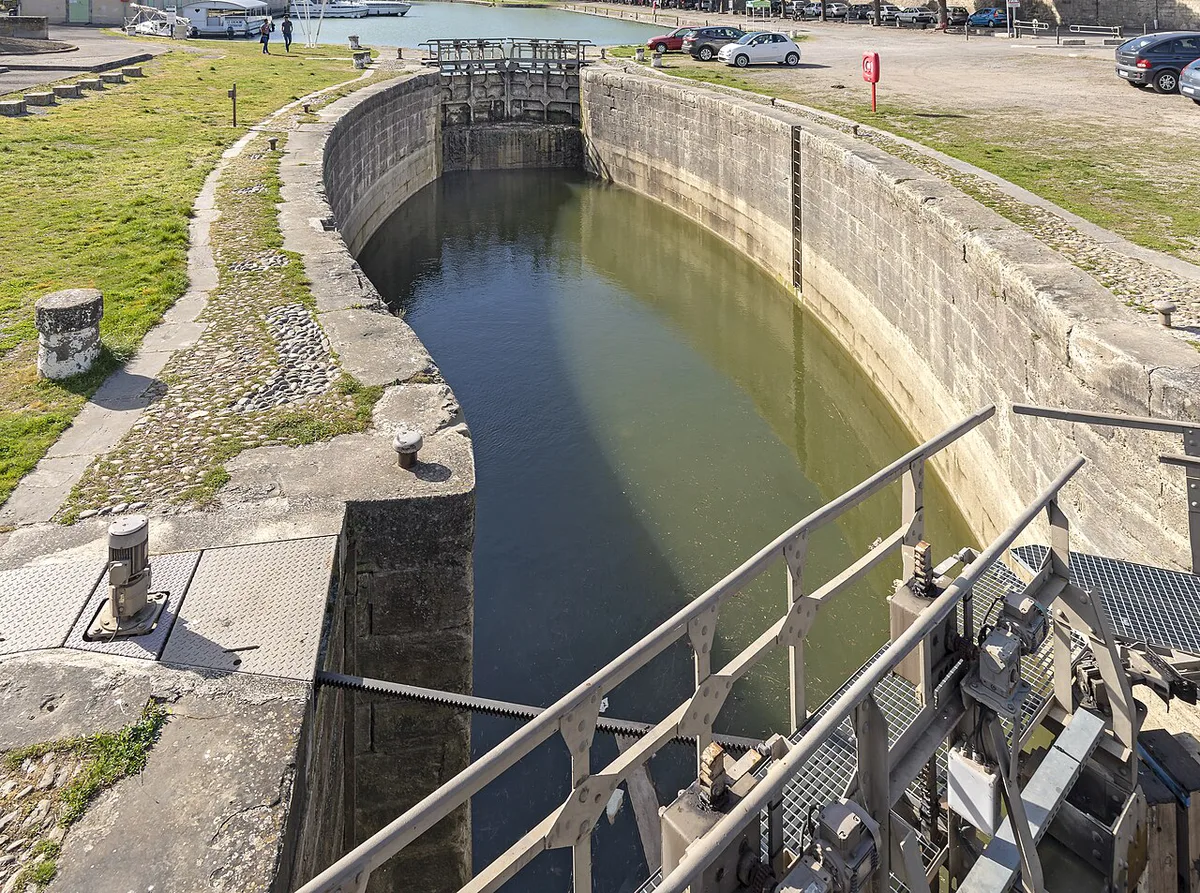
The Gare de Carcassonne is a legitimate, well-used SNCF stop on the Bordeaux-Toulouse-Narbonne axis, and by day the walk from the station forecourt across the Canal du Midi toward the Bastide is straightforward and busy with commuters, students, and tourists rolling suitcases toward their hotels. The character changes once the day's last regional trains have arrived and the crowds thin out: the canal crossing and the streets immediately around the station lose their daytime bustle, shopfronts are shuttered, and lighting is functional rather than generous. This is less a crime hotspot than a ghost-town-after-6pm problem - a stretch that feels emptier than it is simply because no one else is around - but it is exactly the kind of transition zone where a confident, direct walk toward a lit, populated street beats lingering to check a phone or a map. Travelers arriving on a late train are generally better off heading straight into the Bastide's main commercial streets rather than pausing near the station, and the dedicated Carcassonne after dark guide covers this stretch, along with the walk up to the Cité, in more depth.
Quiet Corners of the Lower Bastide
Bastide Saint-Louis is the working heart of modern Carcassonne, built on a grid plan around Place Carnot, and for most of the day it is as safe and pleasant as any regional French town center - market stalls, cafés, and a steady stream of locals and visitors alike. The caution applies narrowly to a handful of side streets away from that central grid, particularly toward the edges of the Bastide, where shopfronts close early and there is little reason for foot traffic once the shutters come down. The visual cues are easy to read once a visitor knows to look for them: more graffiti than on the main shopping streets, metal shutters pulled down well before dinner time, and stretches of pavement with no one else in sight. None of this is unique to Carcassonne - most French towns of similar size have an empty-by-evening commercial fringe - but sticking to the lit, populated streets radiating from Place Carnot rather than cutting through back lanes is the simplest way to stay within the town's genuinely lively zones after dark.
Tourist Traps Worth Sidestepping
Inside the Cité walls, the more persistent risk to a visitor's evening is a disappointing meal rather than a safety incident. The area immediately around the main gate is dense with restaurants offering a fixed-price medieval menu, and quality varies enormously from one address to the next; a useful rule of thumb is to walk a few streets further from the entrance, check a posted menu for specifics rather than vague photos of cassoulet, and treat any restaurant with a tout stationed outside as a signal to keep walking. This overlaps with the broader pattern covered in the guide to common tourist scams, which goes into more detail on overpriced menus, inflated parking charges, and other non-safety pitfalls that cost money rather than put anyone at risk.
Peak-Hour Crowds at the Porte Narbonnaise
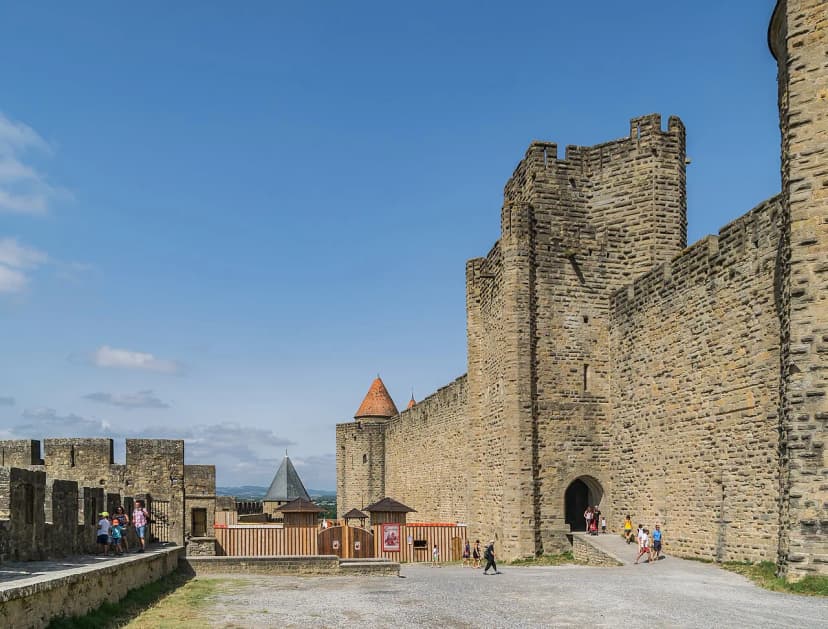
The Porte Narbonnaise, the Cité's main gate, becomes genuinely congested in the late morning and early afternoon once tour buses and day-trip groups converge on the entrance, and dense, slow-moving crowds are exactly the conditions pickpockets favor at any heavily touristed European site. Visiting in the first hour after opening, or in the couple of hours before day-trip crowds depart in the late afternoon, avoids both the crush and the pickpocketing risk that comes with it, with the side benefit of far more breathing room for photos along the ramparts. Standard precautions apply here as anywhere else with a dense tourist crowd: a bag worn to the front, valuables kept out of a back pocket, and the usual wariness around anyone creating a distraction near the gate.
Porte Narbonnaise peak crowds favor pickpockets, while late arrivals mean thinly lit, empty streets toward lodging. Visiting off-peak (first hour after opening or late afternoon) and heading straight to the Bastide's populated Place Carnot district eliminates both risks.
Where to Stay Instead: Safer, Livelier Bases
For visitors weighing where to base themselves, the choice generally comes down to staying inside the Cité walls, in the Bastide Saint-Louis, or in the Trivalle district that bridges the two across the Aude. Staying inside the Cité means paying a premium for atmosphere and near-total evening quiet once day-trippers leave, with high visibility from stewards and security through the evening. The Bastide offers better value and a livelier, more local evening scene around Place Carnot, with restaurants and foot traffic well into the evening. Trivalle, the riverside district linking the two, works well as a middle-ground option: it sits on a well-used pedestrian route with reasonable evening lighting and foot traffic, without the Cité's markup. Whichever base is chosen, the simplest safety filter is a well-lit, high-traffic street rather than a bargain address tucked into a quiet side lane, and cross-referencing an unfamiliar street name against the areas flagged earlier in this guide takes only a few minutes before booking.
| District | Cost | Evening Activity | Evening Atmosphere |
|---|---|---|---|
| Inside Cité walls | Premium | Quiet after day-trippers depart | High visibility from stewards and security |
| Bastide Saint-Louis | Better value | Livelier around Place Carnot | Restaurants and foot traffic well into evening |
| Trivalle | No Cité markup | Well-used pedestrian route | Reasonable evening lighting and foot traffic |
Getting Around Safely: Transport Notes
Within the historic core, the tourist road train and local bus routes are the two main options for covering the roughly 1.5-kilometer, uphill walk between the Bastide and the Cité without relying on a rental car, and both run on daytime schedules geared to visitor hours rather than late-night service. Renting a car opens up the wider Aude countryside, but the peripheral districts flagged earlier are not places to look for street parking or shortcuts late at night, and the Cité's own approach roads are pedestrian-first rather than built for casual driving. For a full breakdown of bus routes, taxi options, and rail connections, the public transport safety guide covers frequency, last-departure timing, and station-specific notes in more detail than fits here.
For trip-planning details, see US State Department France travel advisory.
Frequently Asked Questions
Is it safe to walk from the Bastide to the Cité at midnight?
Most of the walk is fine, but the last stretch has genuine downsides worth knowing about: the approach roads to the Cité are unlit in patches and largely empty once day-trippers have gone home for the night. Taking a well-lit, direct route along the main pedestrian streets, or a taxi for the final approach, is the more comfortable option late at night rather than cutting through quieter back lanes.
Are there no-go zones for rental cars in Carcassonne?
There are no areas that are strictly off-limits, but the peripheral districts such as La Conte and Ozanam are not places to plan on parking or wandering after dark while looking for a shortcut. The Cité's own approach is largely pedestrian, so a rental car is better suited to reaching the wider Aude countryside than to navigating the historic core itself.
What is the emergency number for police in Carcassonne?
As anywhere in France, dial 17 for police or the EU-wide 112 for any emergency requiring police, medical, or fire response. Both work from a mobile phone without a local SIM, and the Police Municipale also maintains a visible presence around the Cité and the Bastide's main squares during tourist hours.
Is it worth booking a hotel near La Conte or Ozanam to save money?
Saving on accommodation is rarely worth the trade-off here: cheaper peripheral rentals near these districts come with less evening foot traffic, dimmer lighting, and a longer, less pleasant walk back after dinner. Bastide Saint-Louis and the Trivalle district generally offer a better balance of value and evening walkability for a typical stay.
Which part of Carcassonne is best for first-time visitors?
For a first visit, Bastide Saint-Louis around Place Carnot or the Trivalle district bridging the river toward the Cité both offer a good mix of affordability, evening activity, and short walking distances to the main sights, without the trade-offs of staying inside the Cité walls or out toward the peripheral districts.