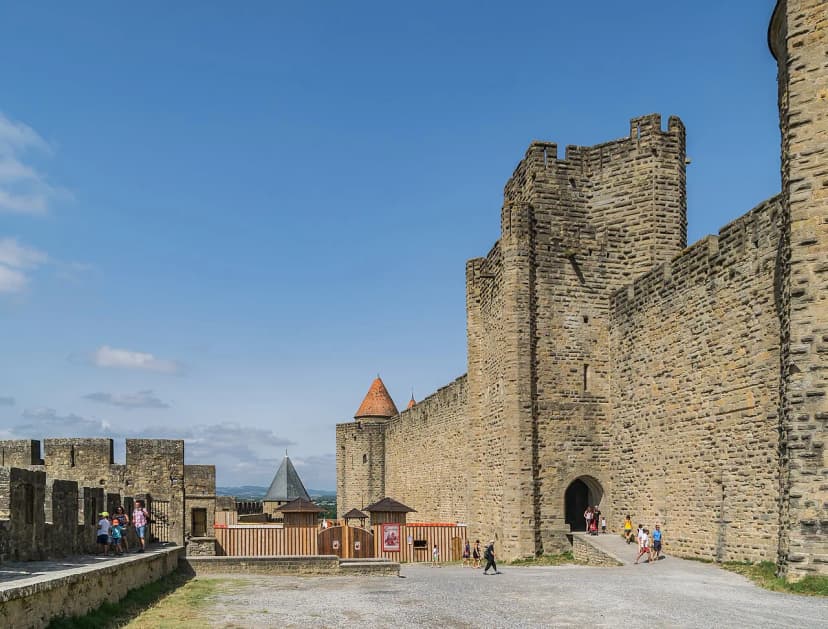
Carcassonne Tourist Scams: How to Tell Real Fraud From Tourist Traps
Last updated June 2026: Carcassonne draws far fewer alarm bells than Paris or Barcelona, but a handful of well-worn Carcassonne tourist scams still target the crowds funneling through the medieval Cité each summer. Most incidents fall into two very different buckets: outright fraud, such as unofficial guides and parking hustlers, and simple tourist traps, such as inflated cassoulet plates sold on the strength of a rampart view. This guide separates the two, flags where each risk clusters across the walled Cité and the lower Bastide Saint-Louis, and links out to broader safety context for planning around them.
Scams vs Tourist Traps: What's Actually Illegal in Carcassonne
Before cataloguing individual scams, it helps to separate outright fraud from ordinary friction. A scam involves deception or theft: a fake ticket seller, a pickpocket working a crowded lane, or an unauthorized parking guide who pockets a cash fee for directions to a spot that later attracts a fine. A tourist trap is legal and disclosed - it is just poor value, such as a terrace charging a premium for a rampart view or a stall marking up a plastic sword because it sits inside the walls. Prices inside the medieval Cité commonly run 30 to 50 percent higher than identical items a few minutes away in the Bastide Saint-Louis, a gap sometimes nicknamed the UNESCO Tax locally. That premium is largely a function of rent and foot traffic inside a UNESCO World Heritage Site rather than evidence of fraud on its own - the atmosphere of cobbled lanes, turrets, and stone ramparts can make an overpriced menu feel like part of the experience rather than a red flag, which is exactly the psychology that lets low-quality service go unquestioned. Keeping that distinction in mind changes how you react on the ground: haggling over an overpriced crêpe wastes energy better spent watching for pickpockets in a packed alley. For the fuller risk picture beyond scams and tourist traps, see this overview of overall safety in Carcassonne.
Common Carcassonne Tourist Scams to Watch For
The scams below involve actual deception rather than simple overcharging, and nearly all of them cluster around the Cité's main entrance points during peak-season crowding.
- Unofficial guide scam: Individuals stationed outside the Porte Narbonnaise offer exclusive or skip-the-line tours for cash. They are not affiliated with the Centre des Monuments Nationaux, and payment does not guarantee entry to the Château Comtal or any discount on official tickets.
- Parking assistants: Self-appointed helpers wave cars into spots they claim are free, sometimes expecting an unofficial tip in return. The spot can turn out to be a loading zone or a permit-only space, and the resulting fine arrives regardless of who directed you there.
- The bracelet or flower gesture: Someone offers a friendship bracelet or a flower as a gift near the main entrance gates, then demands payment or uses the moment as a distraction that makes a bag or pocket easier to pick. It shows up far less often in Carcassonne than in Paris, but the pattern is identical when it does occur.
- Antique or craft fraud: Stalls along the busiest lanes sell mass-produced imports labeled as local medieval crafts or antiques. Genuine regional artisan goods tend to carry a maker's name or workshop detail rather than a generic swords-and-shields display.

Tourist Traps Inside the Cité Walls
None of the following break any law, but each one separates visitors from more money than the experience is worth - and a couple can be avoided within a two-minute walk.
- The cassoulet trap: Restaurants on the Cité's main squares often serve mass-produced or canned cassoulet at premium prices to visitors who will not be back to complain. Look for a Label Rouge or Fait Maison marker on the menu or door, both official indicators that a dish is house-made from real ingredients rather than reheated from a can.
- The viewpoint upsell: Some cafés charge a steep premium for a table with a rampart view, when a comparable free vantage point sits roughly 20 meters away along the public walkway outside the walls.
- Overpriced private transfers: Drivers soliciting fares near the train station or the Cité entrance often charge well above the cost of the shuttle or a short walk. For current shuttle routes and general transport guidance, see this walkthrough of getting around Carcassonne safely.
Neighborhood Risk Profiles: La Cité, Bastide Saint-Louis, and Pont Vieux
Carcassonne's scam and safety risk is not evenly distributed - it tracks crowd density and lighting more than anything else, and the city's two-part layout, the walled Cité above and the Bastide Saint-Louis below, means the profile shifts noticeably by neighborhood.
Bastide Saint-Louis operates as a more local neighborhood with everyday shops where prices run 30 to 50 percent lower than comparable Cité offerings, making it a practical alternative when seeking better value without sacrificing safety.
- La Cité: The highest density of visitors also means the highest density of pickpockets, especially in the narrow lanes between the Porte Narbonnaise and the main squares during midday and early-evening peaks. Restaurant traps cluster here too, since foot traffic is constant. For a closer look at how risk shifts once the day-trip crowds thin out, see this rundown of nighttime safety inside the Cité.
- Bastide Saint-Louis: The lower town feels noticeably more local, with everyday shops and squares such as Place Carnot rather than souvenir stalls. Standard tourist-town precautions still apply here - watch for ATM shoulder-surfing, and keep an eye on phones left unattended on café terraces around Place Carnot, where opportunistic theft has been reported. For a fuller street-by-street breakdown, see this guide to neighborhoods that warrant extra caution.
- Pont Vieux: This bridge connecting the Bastide Saint-Louis to the Cité is a favorite spot for distraction-based pickpocketing, since visitors stop mid-span to photograph the ramparts and stay absorbed in the view for several minutes at a time.
Practical Prevention: Tickets, Transport, and Reporting
A short prevention routine closes off most of the scams described above before they ever start.
- Buy tickets officially: For 2026 visits, book Château Comtal and ramparts tickets directly through the Centre des Monuments Nationaux rather than from anyone approaching you outside the gates. Walking the exterior of the ramparts remains free; only the interior of the Château Comtal requires a paid ticket.
- Know where to report an incident: The Police Municipale and Gendarmerie both operate in Carcassonne, and reporting a theft or fraud attempt promptly helps if a card dispute or insurance claim follows.
- Plan for low-light stretches: Some of the Cité's connecting alleys are dim after dark, and the Pont Vieux crossing gets quiet once day-trip crowds clear out. Solo travelers, particularly women navigating those alleys, may want a specific route and timing plan - see this dedicated solo female travel safety guide.
Decision Checklist: Is It a Scam or Just Expensive?
When something feels off mid-visit, this quick test helps separate a scam from an expensive but legitimate choice.
The atmospheric pull of cobbled lanes and ramparts can normalize inflated pricing psychologically. Restaurant markers such as Label Rouge or Fait Maison serve as objective breaks on that psychology—they indicate genuine quality over ambiance-based overcharging.
| Situation | Verdict |
|---|---|
| Someone demands cash to hold a parking spot or guarantee Cité entry | Scam - officials never require off-site cash payments |
| A menu lists a rampart-view surcharge in writing | Tourist trap - legal, just poor value |
| A stallholder cannot explain who made a souvenir sold as local craft | Likely fraud - treat it as mass-produced |
| A restaurant displays a Label Rouge, Fait Maison, or Maître Restaurateur marker | Legitimate - a real quality signal, not a scam indicator |
What Is Free at the Cité and What Actually Needs a Ticket
One of the easiest ways to spot a fake ticket approach is knowing what no one can charge you for. Entry through the Porte Narbonnaise or Porte d’Aude into the medieval Cité itself is free: you can walk the lanes, browse around Place Marcou, see the exterior walls, and visit public viewpoints without buying a city-entry pass. The same applies to the classic approach from the Bastide Saint-Louis over the Pont Vieux and up toward the walls.
The paid monument is the Château Comtal and its official rampart circuit, managed by the Centre des Monuments Nationaux. Ticket checks belong at the monument entrance, not beside a car park, bridge, café terrace, or outer gate. Treat anyone selling “Cité entry,” “wall access,” or “skip-the-line castle tickets” for cash outside the official route as a scam risk, especially around the Porte Narbonnaise where first-time visitors often arrive disoriented.
Frequently Asked Questions
Are there pickpockets in the Cité of Carcassonne?
Yes. Pickpocketing clusters around the busiest lanes and entrance points, particularly near the Porte Narbonnaise during peak midday and early-evening hours in high season. Keep bags zipped and in front of you, and stay alert during any bracelet, flower, or petition-style approach, since these are sometimes paired with a pickpocketing attempt.
Is it safe to walk from the lower town to the Cité at night?
The Pont Vieux crossing between the Bastide Saint-Louis and the Cité is generally quiet rather than dangerous, but foot traffic and lighting both drop once day-trip crowds clear out. Stick to the main lit route, travel with a companion where possible, and check the nighttime safety guide linked above for more specific timing advice.
How do you know if a restaurant in Carcassonne is a tourist trap?
Check the door or menu for a Maître Restaurateur title, a Label Rouge mark, or a Fait Maison symbol - all are official indicators of house-made cooking rather than reheated, mass-produced plates. A restaurant on the Cité's main squares with none of these markers and a cassoulet priced well above the Bastide average is worth skipping.
What should you do if you get scammed in Carcassonne?
Stop engaging immediately and move to a busier, well-lit area. Report the incident to the Police Municipale or Gendarmerie so there is an official record, and if a card was used, contact the issuing bank the same day to dispute the charge or block further use.
Do prices really vary that much between the Cité and the Bastide?
Yes - similar food, drinks, and souvenirs commonly run 30 to 50 percent higher inside the Cité's walls than in the Bastide Saint-Louis a short walk away, largely reflecting the cost of operating inside a UNESCO World Heritage Site rather than deliberate overcharging.