Piraeus Public Transport Safety: A 2026 Guide to Metro, Bus, Tram, and Rail
Last updated July 2026, and the short answer for anyone weighing Piraeus public transport safety against a taxi transfer is that the network is safe to ride but demands real vigilance around ticket machines, boarding crushes, and the ferry-to-station walk. Piraeus is Greece's busiest passenger port, and the crowds funneling between quay, Metro entrance, and bus stand are exactly where opportunistic theft happens, not violent crime. This guide breaks Piraeus public transport safety down mode by mode, so travelers arriving with luggage know which line, bus, or tram to trust and which corridors call for extra caution.
Is Piraeus Public Transport Safe? The Bottom Line
In our editorial assessment, Piraeus public transport safety is solid during daylight and early evening hours across the Metro, the X96 bus, the T7 tram, and the Proastiakos suburban rail, with the main risk being petty theft rather than physical danger. Vigilance should rise after dark and during the crush of a ferry unload, when pickpockets work crowded platforms and doorways. For a broader read on how the port town compares to central Athens, see Is Piraeus Safe? 2026 Guide for Ferry Travelers and Cruise Passengers, which covers the port town beyond transit specifically.
- Daytime travel on the Metro, tram, and buses: generally safe, standard city-transit caution applies
- Evening travel (roughly until midnight): still safe on main lines, keep bags zipped and in view
- Late night or pre-dawn ferry connections: safe but requires extra alertness at the station and its immediate surroundings
Mode-by-Mode Piraeus Transport Safety Analysis
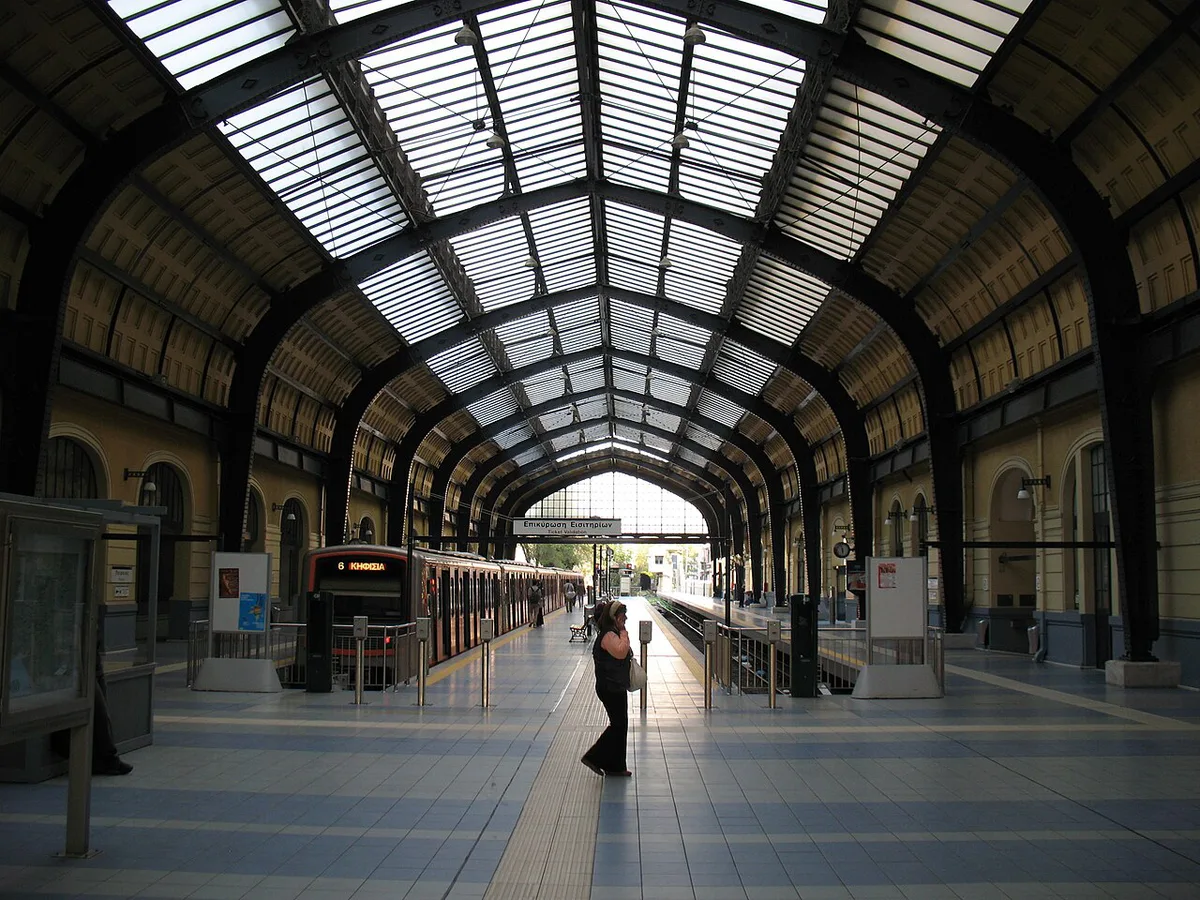
Piraeus sits at the convergence point of Metro Line 1, Metro Line 3, the X96 airport bus, the T7 tram, and the Proastiakos suburban railway, and each mode carries a different safety profile. Understanding which line serves which route helps travelers choose the option that matches their comfort level, especially when hauling suitcases straight off a ferry.
- Metro Line 1 (Green Line): The older ISAP line runs the Piraeus-Monastiraki-Omonia corridor, which is the single most-cited pickpocketing stretch in the network because of frequent stops and dense standing crowds; keep bags in front of the body on this route
- Metro Line 3 (Blue Line): The newer line offers a faster, more direct run with fewer intermediate stops in busy shopping districts, trading a slightly longer walk from the ferry quay to the platform for a calmer ride
- X96 Airport Express Bus: Operates 24/7 between Piraeus port and Athens International Airport, useful for early or late arrivals, though luggage racks are not attended, so keep valuables on the body rather than in a rack bag during stops
- T7 Tram: Runs the coastal route from Piraeus toward Glyfada at a slower pace with frequent stops, generally lower theft risk than the Metro corridor but less practical for large suitcases given narrower doors and standing room
- Proastiakos Suburban Railway: Serves longer-distance connections from Piraeus toward Corinth and Kiato, well suited to travelers heading beyond central Athens with checked luggage in a less crowded carriage setting
Pickpocketing, Scams, and the Luggage Distraction
Petty theft is the dominant risk factor in Piraeus public transport safety, and it concentrates at two friction points: ticket machines, where a distracted traveler counting change is an easy target, and the boarding crush, where the doors closing on a crowded Line 1 carriage create cover for a quick grab. A common tactic pairs one person creating a bump or a fumbled question with a second lifting a phone or wallet from an open bag pocket during the confusion. For a fuller rundown of tactics specific to the port area, see Piraeus Tourist Scams: Common Frauds & Port Safety Guide.
- Keep wallets and phones in a front pocket or a bag worn across the body, not in an outer or back pocket
- Be extra alert at ticket machines when digital-detox travelers are counting cash or cards in the open
- Watch for the luggage distraction: thieves target travelers visibly struggling with heavy suitcases on stairs or during boarding, since attention is split between the bag and balance
- Zip main compartments before entering a crowded carriage, and keep a hand on the bag during the doors-closing moment on Line 1
Piraeus Metro Station Surroundings and Areas to Approach with Caution
The blocks immediately outside the Piraeus Metro station and the walk from the ferry quay to the entrance can feel gritty after dark, with dim lighting and a rougher streetscape than central Athens, but this reads as urban wear rather than active danger for most travelers exercising normal caution. Sticking to well-lit, populated routes between the ferry terminal and the station entrance is the simplest mitigation. For a street-level breakdown of which pockets of Piraeus warrant more caution, see Piraeus Areas to Avoid: A Practical 2026 Guide for Ferry Travelers.
Strike Impact on Piraeus Transport Safety
Athens transit strikes, known locally as apergia, are a recurring feature of the network and directly affect Piraeus public transport safety by concentrating riders onto whichever services keep running, turning an already busy Metro Line 1 carriage into standing-room-only crush conditions. That overcrowding is when pickpocketing risk rises most sharply, so travelers should build in extra buffer time and, where a strike is confirmed, lean toward the X96 bus or a taxi rather than fighting through an overloaded platform with luggage.
Night Travel and Solo Female Safety on Piraeus Transit
Late-night and pre-dawn ferry arrivals are common at Piraeus given how many overnight routes to the islands dock in the early hours, and waiting for transit at that hour is manageable but calls for sharper awareness of surroundings than a midday trip would. Choosing a carriage or bus seat near the driver or conductor, and staying in well-lit, populated waiting areas rather than isolated corners of the station, are the most reliable mitigations. Solo female travelers in particular benefit from selecting a middle carriage on the Metro rather than an empty end car late at night. For fuller after-dark guidance and solo-travel specifics, see Is Piraeus Safe at Night? Safety Guide for Ferry Travelers and Is Piraeus Safe for Solo Female Travelers? (Local Safety Guide).
For late ferry arrivals with luggage, the 24/7 X96 bus avoids Line 1's dense crowds and luggage-distraction theft risk, while Proastiakos suits checked luggage in less-crowded carriages, both reducing the vigilance burden required for safe transit.
Practical Logistics: Tickets, Apps, and Emergency Contacts
Beyond crime risk, Piraeus public transport safety also has a legal-compliance dimension: riding without a validated ticket exposes travelers to on-the-spot fines that can dwarf the cost of the fare itself, so validating at the machine before boarding is worth the extra minute. The OASA Telematics app gives real-time arrival tracking for Metro, bus, and tram services, which is useful for minimizing wait time on quieter, less-crowded platforms. In an emergency, dial 100 for police or 112 for the general European emergency line, both of which connect from any Greek mobile or landline.
- Validate every ticket at the platform or onboard machine immediately after purchase to avoid fines
- Use the OASA Telematics app for real-time Metro, bus, and tram arrival tracking to minimize platform waiting time
- Police emergency line: 100
- General EU emergency line: 112
Cost vs Safety: Metro Ticket Versus Taxi Transfer
A single Metro ticket from Piraeus costs around €1.20, compared with roughly €25 to €40 for a taxi or a pre-booked service like Welcome Pickups between the port and central Athens. For most travelers arriving in daylight with manageable luggage, the Metro's cost advantage comfortably outweighs the marginal safety edge of a private transfer, since the main transit risk is petty theft rather than danger, and that risk is well managed with a bag worn across the body. The calculus shifts for very early or very late ferry arrivals, or for anyone carrying multiple heavy bags alone, where the extra cost of a taxi buys meaningfully more convenience and peace of mind.
Though daytime metro costs €1.20, late arrivals with luggage coincide with peak theft risk and the demanding walk from ferry to station. The €25–40 taxi premium often justifies peace of mind when leaving after dark, especially with multiple bags to manage.
| Option | Approx. Cost (2026) | Best For |
|---|---|---|
| Metro Line 1 or Line 3 | €1.20 per ticket | Daytime travel, budget-conscious travelers comfortable with crowds |
| X96 Airport Express Bus | Fixed fare, check current OASA pricing | 24/7 airport connections, especially outside Metro operating hours |
| Taxi or Welcome Pickups transfer | €25-€40 | Early/late ferry arrivals, heavy luggage, solo travelers prioritizing convenience |
Port-to-Station Transfer Points Where Pickpockets Watch for Luggage
The riskiest moments in Piraeus are often not inside the train or bus, but during the short transfer between the ferry gates and the transport stops. Travelers walking from the central passenger port around Gates E5, E6, and E7 toward Piraeus Metro and railway station usually pass ticket kiosks, taxi lines, bus stops, pedestrian crossings, and groups waiting with luggage along Akti Kallimassioti. That mix of bags, phones, boarding passes, and uncertainty creates ideal conditions for distraction theft.
Keep your route simple: move directly from the quay to the marked Metro, suburban rail, tram, or X96 stop rather than stopping midway to reorganize bags. If someone offers unsolicited help with tickets, directions, or luggage, step aside before opening your wallet or phone. When arriving from farther gates such as E1 or E2, use the port shuttle or an official taxi if the walk would leave you dragging bags through quieter stretches late at night.
Frequently Asked Questions
Is the Metro from Piraeus to Athens safe at night?
Yes, the Metro remains a viable option after dark, though vigilance should rise compared with daytime travel. Choosing a middle carriage with other passengers present, keeping bags zipped and in view, and avoiding empty end cars are the main mitigations for a safe late-night ride between Piraeus and central Athens.
Can travelers take large suitcases on the Piraeus tram?
The T7 tram can accommodate luggage, but its narrower doors and standing-room layout make it less practical than the Metro or a taxi for travelers with multiple large suitcases. The tram suits lighter loads or travelers connecting onward along the coastal Piraeus-to-Glyfada route.
Are there lockers at Piraeus station for bags?
Travelers should check directly with the ferry terminal or station operator for current luggage storage options, since availability can change. In general, keeping valuables on the body rather than relying on unattended storage is the more reliable safety practice while transiting through Piraeus.
What should travelers do if a wallet is stolen on the bus?
Report the theft to the police immediately, either at a nearby station or by calling 100, and also note the bus route and approximate time for the report. Canceling cards and reporting a lost passport to the nearest consulate should follow as soon as possible after filing the police report.
Is the Blue Line safer than the Green Line at Piraeus?
Metro Line 3, the Blue Line, generally offers a calmer ride with fewer stops in dense, crowded districts compared with Line 1, the Green Line, which runs the frequently cited Piraeus-Monastiraki-Omonia corridor. Line 3 requires a slightly longer walk from the ferry quay to reach the platform, a reasonable trade-off for travelers prioritizing a lower-crowd experience.