Granada Areas to Avoid: A Practical Safety Guide for Travelers
Last updated May 2026, this guide breaks down the short list of Granada areas to avoid so travelers can focus on the Alhambra, the Albaicín, and Sacromonte instead of worrying about wrong turns. Granada is a compact, walkable city, and most of it, including neighborhoods some visitors assume look rough because of graffiti, is safe with ordinary city sense. The genuine caution zones are narrower and more specific than forum threads suggest, and knowing them in advance is the difference between an atmospheric night walk and a genuinely disorienting one.
Quick Answer: Is Granada Safe for Travelers?
Yes, Granada is safe for the overwhelming majority of travelers, and the areas worth avoiding are a short, specific list rather than a citywide worry. The historic core, meaning Centro, Plaza Nueva, the Realejo, and the lower Albaicín, sees heavy foot traffic day and night and is where the majority of hotels, restaurants, and sights sit. First-time visitors, families, solo travelers, and digital nomads basing themselves in this zone are unlikely to encounter anything more serious than a pickpocket attempt in a crowded lane. The main exceptions are the northern periphery of the city and a handful of after-dark navigation choices in the hills above the Albaicín and around Sacromonte, both covered in detail below. For the fuller picture on how Granada's overall safety holds up and what factors matter most for a visit, see the overall Granada safety guide, which pairs well with the neighborhood-level detail here.
Granada Areas to Avoid: Distrito Norte (Almanjáyar and Cartuja)
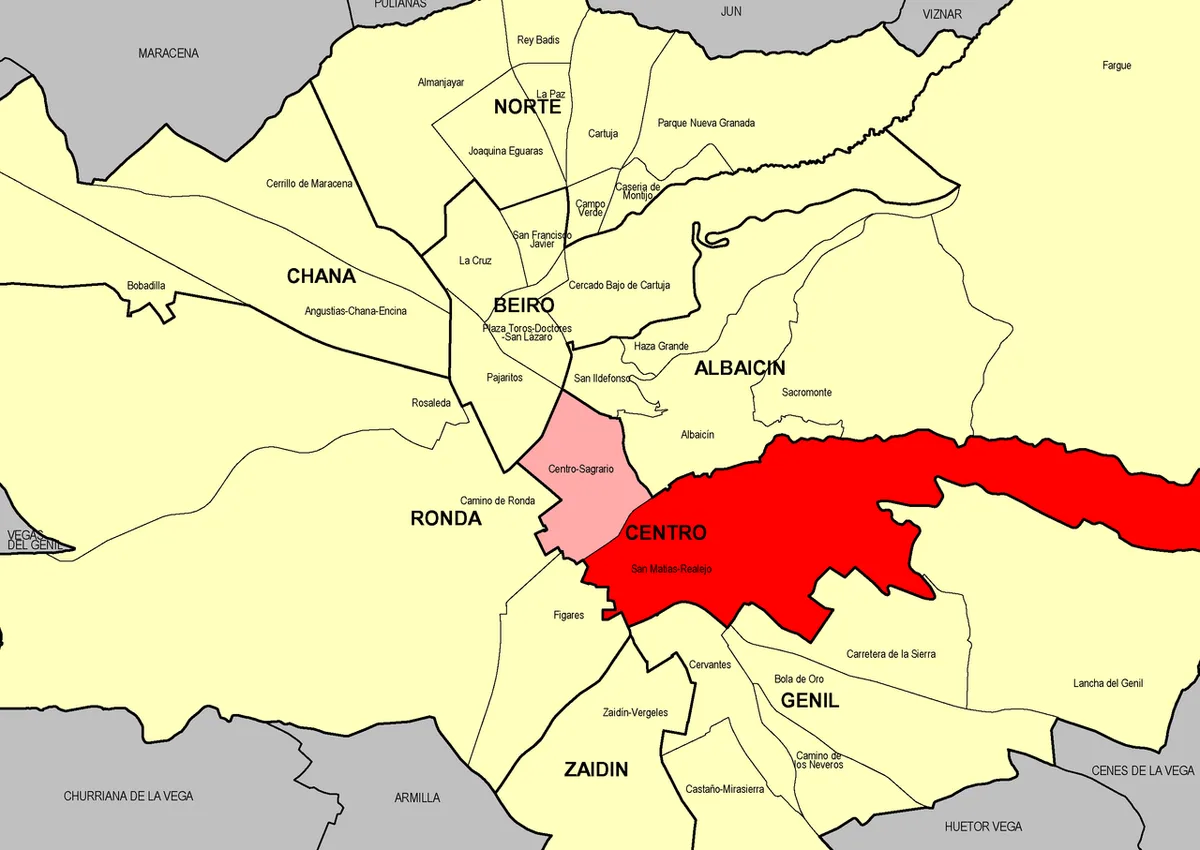
If there is one clear answer to which Granada areas to avoid, it is Distrito Norte, particularly the Almanjáyar and Cartuja districts north of the historic center. These are residential neighborhoods that sit well outside anywhere travelers have practical reason to visit: there are no major sights, hotel clusters, or restaurant strips pulling tourism in that direction, and nothing on a typical Alhambra-and-tapas itinerary routes through them. Locally, Almanjáyar in particular carries a reputation for higher crime rates than the rest of the city, a reputation echoed consistently enough across resident and traveler discussion to treat as a reliable signal rather than outdated hearsay. The simplest, most useful guidance is not to memorize specific street names here but to recognize a pattern: a Granada trip built around the Alhambra, the cathedral, the Albaicín, the Realejo, and Sacromonte's flamenco caves never actually requires a detour into Distrito Norte. If an itinerary, a rental listing, or a bus route puts a visitor in this part of the city with no clear tourist purpose, that alone is worth double-checking before booking.
- Almanjáyar: residential, higher local crime reputation, no tourist infrastructure
- Cartuja: mostly university and residential, worth visiting only for the Cartuja monastery itself, not for wandering the surrounding blocks
- Neither district sits on the walking route between the Alhambra, the Albaicín, and the city center
The Albaicín and Sacromonte: Gritty Look, Different Real Risk
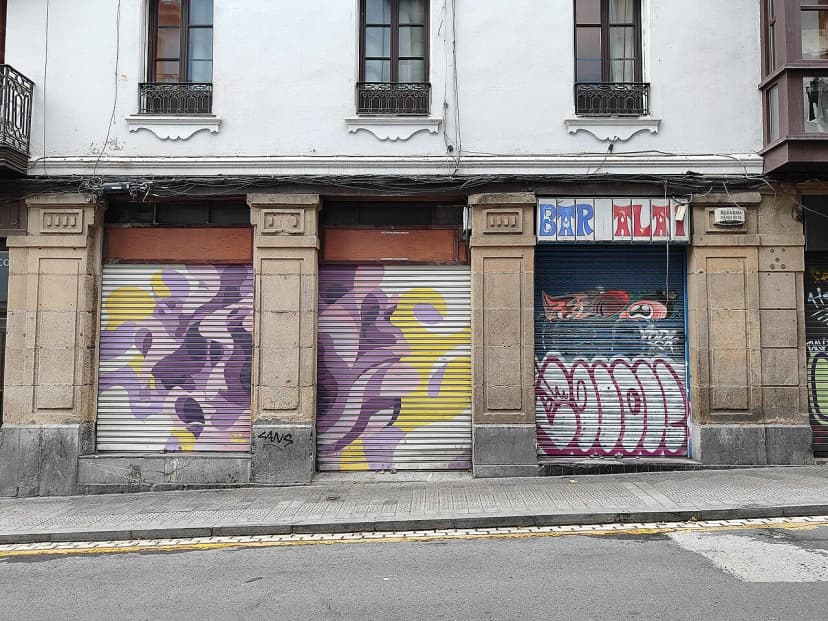
The Albaicín and Sacromonte cause more confusion than any other part of Granada, because their look and their actual risk level are two different things. Steep whitewashed lanes, faded paint, and graffiti-covered walls are part of these neighborhoods' character, not evidence that they are unsafe; the same is true of the graffiti found around the Realejo, which reads as street art culturally significant to the neighborhood rather than a danger signal. The real issue in the Albaicín and Sacromonte is topographical: Granada is a hilly city, and a shortcut that looks reasonable on a map can lead off the main routes into a dim, disorienting alley within a couple of turns, especially once the tapas bars and viewpoint crowds thin out. Locals give straightforward advice for this: stick to the well-known thoroughfares such as Paseo de los Tristes and the main Albaicín viewpoint routes after dark rather than improvising through the upper lanes. The same logic applies to Sacromonte's cave-house paths, which are atmospheric during a flamenco evening but genuinely dark and easy to lose your bearings on once the sun goes down; keep to the main road in and out of the cave district rather than wandering the hillside on the way back. For a deeper breakdown of exactly which routes and hours matter most after sunset, see the Granada safety at night guide.
Central Convenience vs. Peripheral Safety: A Quick Comparison
The trade-off most travelers actually face is not safe neighborhood versus dangerous neighborhood; it is central convenience versus how comfortable a walk home feels late at night. The table below summarizes how the neighborhoods travelers ask about most compare on safety, tourist interest, and nighttime accessibility.
Central areas gain safety from crowds and lighting but lose it to pickpockets and scams. Peripheral neighborhoods like Sacromonte and upper Albaicín look rougher but pose different concerns: topographical risks, not crime. Visual character misleads neighborhood evaluation.
| Neighborhood | Safety Level | Tourist Interest | Recommendation |
|---|---|---|---|
| Centro / Plaza Nueva | High | High | Safe, but watch for pickpockets in crowds |
| Albaicín | Moderate | High | Safe by day; use main paths and viewpoints at night |
| Realejo | High | High | Safe; graffiti is artistic, not a danger sign |
| Sacromonte | Moderate | High | Stick to main roads for flamenco shows and the walk back |
| Almanjáyar / Distrito Norte | Low | Low | Avoid; residential area with a higher local crime reputation |
Logistics: Navigating Granada Safely After Dark
Granada's after-dark logistics are more about picking the right route than avoiding an entire side of the city. Official, clearly marked taxis and the Transportes Rober night bus network, known locally as the Búho service, are the two reliable ways to cover longer distances once the historic core's cobbled lanes have quieted down. Within downtown, wide, well-lit routes, including Gran Vía, Calle Reyes Católicos, and Paseo de los Tristes along the Darro river, stay busy well into the evening and are a safer default than cutting through unfamiliar side streets to save a few minutes. Travelers returning from a flamenco show in Sacromonte or a late dinner in the upper Albaicín are better served taking a taxi or the night bus directly to their accommodation rather than walking the full route on unfamiliar hillside lanes. For the specifics on which routes and operators serve the city after hours, and how to confirm a taxi is legitimate, the public transport safety guide goes into more depth, and the Granada safety at night guide pairs well with it when planning an evening out.
Granada Tourist Scams to Watch Out For
The area around the cathedral and Plaza Bib-Rambla is safe in the conventional sense, well-lit, busy, and heavily trafficked, but it is also where Granada's most persistent tourist scam plays out. Women offering sprigs of rosemary or palm readings, sometimes referred to locally as the rose ladies, will press a gift into a visitor's hand and then demand payment once it has been accepted; the simplest response is to keep hands in pockets, decline eye contact, and keep walking rather than engage at all. Pickpocketing is the other real risk in this stretch and around Plaza Nueva and Calle Elvira, both of which draw dense crowds through the evening as bars and restaurants fill up. Bags worn across the body, phones kept out of back pockets, and general awareness in queues or crowded terraces go a long way toward avoiding both issues entirely. For the fuller rundown of these and other common scams around the city, see the common Granada tourist scams guide, and travelers planning a solo trip may also want the solo female travel safety guide for context specific to navigating these interactions alone.
- Rose or rosemary sellers near the cathedral and Bib-Rambla: decline firmly, do not accept the item
- Pickpockets around Plaza Nueva and Calle Elvira: cross-body bags, phones out of back pockets
- Crowded evening terraces: keep bags visible and closed rather than hung on chair backs
Mistakes to Avoid When Choosing Accommodation
Choosing where to stay causes more real trouble than any single street in the Albaicín. The clearest mistake is booking a budget listing in the far north of the city without realizing that Distrito Norte's lower prices reflect its distance from the sights and its different social context, not a hidden bargain in an otherwise ordinary residential area. A related trap is an isolated rental tucked into the pine forest above the Alhambra or high on the Sacromonte hillside; appealing for the view, but a long, poorly lit walk back after dinner or a late flamenco show. If a rental car is part of the trip, avoid leaving anything visible inside it when parking near the Alhambra forest viewpoints or the upper Sacromonte lookouts, both of which see break-ins targeting tourist vehicles left overnight. Sticking to Centro, the Realejo, or the lower Albaicín keeps accommodation within a genuinely walkable, well-lit radius of the Alhambra, the cathedral, and the main tapas streets, which removes most of the after-dark navigation questions this guide covers.
Sacromonte rentals and hillside views appeal to travelers, but nighttime exits require logistics. Returning from a flamenco show or late dinner is safer by taxi or the Búho night bus to your accommodation than by walking unfamiliar hillside paths.
For trip-planning details, see US State Department Spain travel advisory.
Frequently Asked Questions
What is the most dangerous area in Granada?
Distrito Norte, and specifically the Almanjáyar and Cartuja neighborhoods north of the historic center, has the strongest local reputation for higher crime than the rest of the city. It sits well outside any typical tourist itinerary, so the practical advice is simply to skip it rather than pass through it.
Is the Albaicín safe to walk at night?
The Albaicín is safe on its main routes and viewpoints, but its upper lanes can be dark and disorienting after dusk. Stick to well-known thoroughfares like Paseo de los Tristes rather than improvising a shortcut, especially once the evening crowds thin out.
Are the rose sellers near Granada's cathedral dangerous?
They are a scam rather than a safety threat. Women near the cathedral and Plaza Bib-Rambla press a rosemary sprig or a palm reading on visitors and then ask for payment once it is accepted. Declining firmly and keeping hands in pockets avoids the interaction entirely.
Is graffiti in Realejo or the Albaicín a warning sign?
No. Graffiti and street art are part of the visual character of Realejo and parts of the Albaicín and do not correlate with the areas' actual safety, which is generally high. The real caution point is topographical, meaning steep, unlit shortcuts, not the wall art itself.
Is it safe to attend a flamenco show in Sacromonte?
Yes, as long as travelers stick to the main road in and out of the cave district rather than wandering the hillside afterward. A taxi or the Transportes Rober night bus back to the historic center is the simplest way to end the evening safely.