Is Ghent Safe at Night? A Complete Nighttime Safety and Logistics Guide
Last updated May 2026, this guide answers the question most visitors ask before booking a stay in Belgium's student capital: is Ghent safe at night? The short answer is yes for the historic center and its busy squares, though safety varies block by block once you move away from Korenmarkt, Vrijdagmarkt, and the Overpoort strip. This guide breaks down which neighborhoods to trust after dark, how to get around safely once the buses and trams slow down, and what solo travelers and festival-goers should know before heading out.
The Bottom Line: Is Ghent Safe at Night?
For most visitors, the answer is straightforward: Ghent is widely regarded as one of the calmer, more walkable university cities in Belgium after dark, especially compared with the busier nightlife districts of Brussels or Antwerp. The historic core, anchored by Korenmarkt and Vrijdagmarkt, stays lively and well-populated well past dinner, and the Overpoort student-bar strip keeps a steady flow of foot traffic that discourages the kind of isolated incidents travelers worry about most. Much of that reputation traces back to Ghent's Lichtplan, the city's award-winning lighting plan designed to keep pedestrian routes through the center bright, legible, and welcoming rather than just decorative. That said, safety in Ghent is not uniform: it shifts block by block once you move away from these lit, busy corridors, so it helps to understand Ghent's overall safety picture alongside the neighborhood-level detail below. One seasonal exception worth flagging is the annual Gentse Feesten (Ghent Festivities) each July, which temporarily floods normally quiet streets and squares with late-night crowds — often a plus for visibility and safety in numbers, but also a reminder to keep valuables close in denser festival zones.
- Stick to Lichtplan-lit main routes rather than unlit shortcuts
- Use two separate locks on any rental or borrowed bike
- Keep phones, wallets, and drinks in sight on busy bar streets like Overpoort
- Save the De Lijn app before heading out so night bus times are ready offline
- Let someone know your route home if you're walking back alone late
Safest Neighborhoods for Nighttime Walking and Stays
If you're choosing where to base yourself for evenings out, the historic center and Patershol give you the highest concentration of lit, populated streets after dark. Patershol in particular stays tourist-friendly and well-lit, with restaurants and bars keeping the narrow lanes active into the evening, which in our editorial assessment makes it one of the more reassuring quarters for a first-time visitor walking back to a hotel late. Korenmarkt and Vrijdagmarkt function as the city's social anchors — both stay busy and are considered safe well into the night simply because so many people are moving through them at any given hour. For a quieter, more residential feel, Sint-Anna and the Reep waterside stretch offer a low-traffic alternative if you'd rather not be in the thick of bar noise; they're better suited to travelers prioritizing calm over proximity to late-night food and drink. Weigh walkability against how close you want to be to last-call amenities: staying inside or right beside the historic core cuts down on the length of any late walk, which is generally the simplest way to reduce risk overall.
Overpoort's safety reputation relies on density—crowds deter isolated incidents but bring rowdy behavior and petty theft. Quieter areas like Rabot and Brugse Poort offer less foot traffic and warrant caution. Late-night safety hinges on active routes and lighting rather than on which neighborhood you choose.
- Patershol and the Historical Center: well-lit, tourist-heavy, restaurants and bars open late
- Korenmarkt and Vrijdagmarkt: busy, sociable squares that stay populated after dark
- Sint-Anna and Reep: quieter, residential streets, better for a calm overnight base
Areas to Exercise Caution After Dark
Not every part of Ghent carries the same after-dark profile, and it's worth being specific rather than treating the whole city as uniformly safe. Overpoortstraat, the main student-bar strip, stays busy and is broadly considered safe thanks to the sheer number of people out — but that same density brings alcohol-fueled rowdiness and opportunistic petty theft, especially unattended drinks and phones left on bar tables. The quieter residential streets around Rabot and Brugse Poort see far less foot traffic once evening sets in, and that lower visibility is the main reason they call for more caution after dark than the historic center or the main squares. Around Gent-Sint-Pieters station, the general late-night advice applies: stay in the lit, populated parts of the station area while you wait for onward transport rather than cutting through unfamiliar side streets to save time. Citadelpark is worth a daytime visit, but like most city parks it thins out and loses lighting coverage after midnight, so stick to the main paths if you're passing through rather than the interior. For a fuller breakdown of where to be more careful, see this guide to specific areas to avoid after dark in Ghent.
- Overpoortstraat: busy and generally safe, but watch for rowdy crowds and petty theft
- Rabot and Brugse Poort: quieter residential streets that warrant extra caution after dark
- Gent-Sint-Pieters station area: stick to lit, populated sections while waiting for transport
- Citadelpark: fine in daylight, best kept to main paths after midnight
Nighttime Transportation: Logistics and Safety
Walking and cycling remain the two ways most locals actually get around Ghent after dark, and both are viable for visitors who stay on the city's well-lit, Lichtplan-designated routes through the center. Cycling is genuinely the backbone of local transport, but bike theft is consistently the most common crime reported in the city, so always lock a rental or borrowed bike with two separate locks rather than relying on the single one it comes with. When walking or cycling isn't practical, De Lijn's night buses (Nachtbussen) extend service into the later hours on weekend nights, covering the main routes out from the center; check current 2026 timetables and pay through the De Lijn app before you head out, since stops and frequencies can shift. Official taxis and rideshare services such as Uber both operate in Ghent and are the more reliable door-to-door option once buses thin out for the night, particularly for a late return from Overpoort or the historic center. For the full picture on getting around safely after dark, see this public transport safety guide.
The Lichtplan lighting network isn't merely decorative—it directly shapes transportation choices. Following lit main routes (Veldstraat, Sint-Baafsplein, waterside streets) rather than cutting through unlit shortcuts reduces risk and makes walking and cycling viable late-night options. The infrastructure enables safer movement.
| Option | Best For | Cost | Editorial Safety Note |
|---|---|---|---|
| Walking | Short trips within the lit historic center | Free | Safest on Lichtplan-lit main routes; avoid unlit side streets |
| Cycling | Longer local trips, the way most residents move | Free with your own or rental bike | Double-lock against theft, Ghent's most common crime |
| De Lijn Night Buses (Nachtbussen) | Weekend late-night trips out from the center | Standard De Lijn fare via the app | Fixed stops and scheduled service reduce uncertainty |
| Taxi / Rideshare (Uber) | Door-to-door once buses slow down | Metered fare | Most reliable option for a late solo return |
Solo Female Travel Safety in Ghent
Solo female travelers generally rate Ghent as an easy city to navigate after dark, largely because the center stays populated and the compact layout means most nightlife, dining, and accommodation sit within easy walking distance of each other. The practical guidance is the same as anywhere: prioritize the lit, busier routes through Korenmarkt, Vrijdagmarkt, and the historic core over quieter shortcuts through residential streets, and lean on De Lijn night buses or a taxi rather than a long solo walk once things wind down for the night. Ghent's large student population means there's usually a visible crowd out even late on weekend nights, which can work in your favor, though the same density around Overpoort brings occasional catcalling or rowdy behavior that's worth simply walking away from rather than engaging with directly. Traveling with a companion for the walk home, sharing a live location, and keeping a charged phone are the same low-effort habits that make the biggest practical difference on any night out. A dedicated solo female travel guide for Ghent goes deeper on specific precautions and local norms.
Common Nighttime Nuisances and Mistakes to Avoid
Most of what goes wrong for travelers in Ghent at night is nuisance-level rather than dangerous, and knowing the pattern in advance helps you avoid it. Alcohol-related incidents cluster around student quarters like Overpoort, where the risk is more about rowdy crowds and lowered vigilance than targeted crime — keep drinks in sight and skip the unattended-bag-on-the-table habit common among tourists. Bike theft is the single most common crime in the city, and it happens to residents and visitors alike, so a flimsy single lock on a rental bike is the most avoidable mistake you can make before a night out. The other recurring error is cutting through unlit shortcuts to save a few minutes instead of following the Lichtplan-lit main routes, particularly around the quieter edges of Rabot and Brugse Poort — the time saved rarely outweighs walking somewhere less visible. During the Gentse Feesten in July, the usual quiet-versus-busy map shifts, with far larger late-night crowds moving through streets that are normally sleepy by 11 p.m., which is worth factoring in if a visit lines up with the festival window. It's also worth reading up on common tourist scams that target visitors in busy squares and near the station, since these are more about vigilance than about avoiding any particular neighborhood.
- Leaving drinks or phones unattended on busy bar streets
- Using only one lock on a rental or borrowed bike
- Taking an unlit shortcut instead of a Lichtplan-lit main route
- Underestimating how much busier the center gets during the July Gentse Feesten
Practical Resources and Emergency Contacts
Keep a short list of essentials handy before heading out for the evening. For police assistance, dial 101; for any general emergency — medical, fire, or police — dial 112, the number that works across Belgium and the wider EU. Non-emergency concerns, such as reporting a theft after the fact, can typically be handled at a local police station rather than through the emergency lines. On the logistics side, the De Lijn app is the most useful tool for checking real-time night bus (Nachtbus) departures as of 2026, and Google Maps remains the simplest way to confirm a route stays lit and direct rather than cutting through somewhere unfamiliar. Saving these numbers and apps before heading out, rather than searching for them in the moment, is one of the simplest ways to stay prepared for a night in Ghent.
- Police: 101
- General emergency (police, fire, medical): 112
- De Lijn app: night bus (Nachtbus) times and payment
- Google Maps: confirm you're on a lit, direct walking route
What Ghent Feels Like Around 2 AM
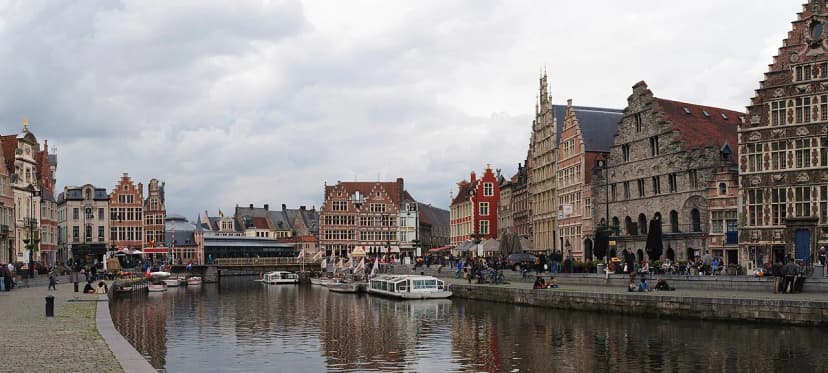
The after-midnight feel changes quickly by street, which matters more than the city’s overall safety reputation. Around Graslei, Korenlei, Sint-Michielsbrug, and Korenmarkt, you can still expect other pedestrians, lit facades, and short sightlines toward hotels, tram stops, and taxi pick-up points. It is usually a calmer, tourist-heavy atmosphere rather than a club district.
Overpoortstraat feels very different: louder, younger, and more alcohol-driven, with groups moving between student bars and fast-food stops. It is not an area most visitors need to avoid, but it is where phones on tables, open bags, and unattended drinks are most likely to become problems. Vrijdagmarkt sits between those two moods: lively near bars and restaurants, quieter on the surrounding lanes.
If you are walking back late, favor direct routes through Korenmarkt, Veldstraat, Sint-Baafsplein, or the main waterside streets instead of cutting through Citadelpark, empty residential blocks, or poorly lit shortcuts.
Frequently Asked Questions
Is it safe to walk alone in Ghent at night?
Walking alone through Ghent's historic center, Korenmarkt, and Vrijdagmarkt is generally considered safe thanks to steady foot traffic and the city's Lichtplan lighting routes. The advice changes once you move into quieter residential streets like those around Rabot or Brugse Poort, where lower visibility after dark means it's worth sticking to well-lit main roads or opting for a night bus or taxi instead.
Is Overpoortstraat safe at night?
Overpoortstraat, Ghent's main student-bar strip, stays busy and is broadly regarded as safe because of the sheer volume of people out. The main risks there are alcohol-related rowdiness and petty theft such as unattended phones or drinks, rather than serious crime, so ordinary bar-street vigilance is the right approach.
What is the safest area to stay in Ghent for nightlife access?
Patershol and the wider historical center offer the best balance of well-lit streets, tourist-friendly foot traffic, and proximity to restaurants and bars, making them a reliable base for evenings out. Sint-Anna and the Reep waterside are quieter alternatives if a calm night's sleep matters more than being steps from the action.
Are De Lijn night buses safe to use in Ghent?
De Lijn's Nachtbussen extend weekend service into the later hours and are a practical, supervised alternative to walking home late, especially from areas like Overpoort or the historic center. Check current 2026 routes and times on the De Lijn app before heading out, since night schedules run less frequently than daytime service.
Is Ghent safer than Brussels or Antwerp at night?
Ghent is generally regarded as a calmer, more walkable city after dark than the busier nightlife districts of Brussels or Antwerp, partly due to its compact center and the Lichtplan lighting network. This is a general reputation rather than a scored comparison, and ordinary precautions — sticking to lit routes, watching belongings in bar areas, and using transport rather than long solo walks late — apply in any of the three cities.