Lille Areas to Avoid: A Practical Guide for Travelers
Last updated May 2026, this guide maps out the Lille areas to avoid alongside the ones that only look edgier than they really are, so visitors can plan routes, hotels, and evening walks with a clearer sense of where caution actually pays off. Vieux Lille and Centre-Ville remain reliably comfortable for travelers well into the evening, while a smaller set of southern and peripheral districts calls for more attention, especially after dark. For the fuller citywide context behind these neighborhood-level calls, this spoke pairs with the general Lille safety overview before working through specific districts, transit stops, and common scams.
Lille Areas to Avoid: The Quick Answer
For most travelers, the short version is straightforward: Vieux Lille and Centre-Ville see heavy foot traffic, dense restaurant and hotel coverage, and a comfortable atmosphere that holds up well after sunset. The districts that warrant more caution sit further out from that core — Lille-Sud, Faubourg de Béthune, and the immediate surroundings of the Porte d'Arras and Porte de Douai metro stops once night falls. None of these areas are strictly off-limits to visitors, and none require canceling a trip or a hotel booking, but they carry a meaningfully different risk profile than the historic center, which is why they show up repeatedly in local safety discussions. It's worth noting that none of these classifications are static; neighborhoods like Wazemmes are actively gentrifying, and a caution flag today reflects current patterns rather than a permanent verdict on a district's character. The table below summarizes how four key districts compare on safety level, what each is best suited for, and the specific reason each earns a caution flag.
| Neighborhood | Safety Level | Best For | Reason to Be Cautious |
|---|---|---|---|
| Vieux Lille | Very high | Sightseeing, dining, first-time visitors | Higher prices and crowded weekends, not safety concerns |
| Wazemmes | Moderate | Markets, budget stays, local culture | Pickpocket risk and a distinctly edgier feel once the market crowds thin out at night |
| Lille-Sud | Low | Little tourist relevance | Frequently cited safety concerns and minimal reason for visitors to pass through |
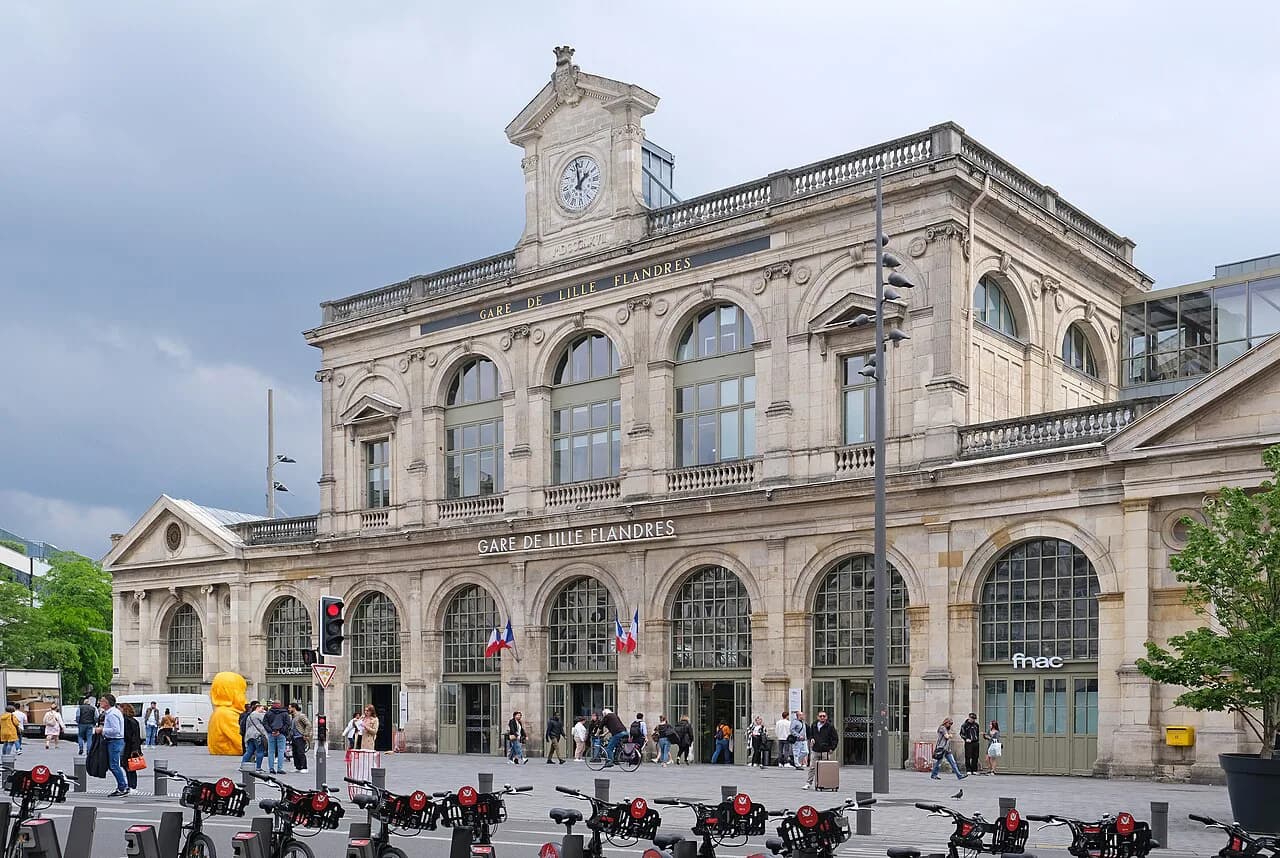
| Gare area (Flandres/Europe) | Moderate | Arrivals, departures, transit connections | Loitering and petty theft risk that increases late at night |
Neighborhoods Where Extra Caution Pays Off
Three areas account for most of the caution flags travelers hear about Lille, and each has a distinct reason for making the list:
- Lille-Sud: a residential and industrial district south of the center that is one of the neighborhoods most consistently cited in local safety discussions. It holds little of interest for sightseeing, so most itineraries have no real reason to route through it, particularly once evening sets in.
- Faubourg de Béthune: classified as a sensitive urban zone (ZUS) under French urban policy, this district is primarily residential and sits well outside the hotels, restaurants, and attractions travelers typically need, which is the main reason it rarely makes sense as a stop on a visitor's itinerary.
- Porte d'Arras and Porte de Douai: the metro-adjacent surroundings of these two stops, on the city's edge, see more reports of loitering and petty crime after dark than stations inside the historic center, so it is worth building in extra vigilance if an evening route passes through either one.
Wazemmes and the Train Stations: Where Nuance Matters
Wazemmes is the neighborhood most likely to get unfairly lumped in with a blanket 'areas to avoid' warning, and that reputation deserves more nuance than a flat caution flag. By day, and especially around its market, Wazemmes is one of Lille's most vibrant, multicultural quarters — a genuine highlight for travelers who want a livelier, more local district than the postcard streets of the historic center, and a longtime favorite base for students and budget-conscious visitors. Once the market bustle fades and evening sets in, though, the same streets can feel noticeably edgier, and it is worth treating Wazemmes as a moderate-caution area at night rather than as a no-go zone during the day. Gare Lille Flandres and Lille Europe, Lille's two mainline train stations, follow a pattern familiar from busy European transit hubs: pickpockets and loitering around the platforms and concourses are the main concerns, and the atmosphere around both stations shifts noticeably once the evening trains thin out, which is when keeping bags zipped and valuables close matters most.
Staying Safe on Lille's Metro and Tram Network
Lille's Ilévia network of metro and tram lines is the fastest way to move between the historic center and the outer districts, and for the large majority of trips it is a safe, heavily used system that carries commuters, students, and travelers alike throughout the day and evening. During daytime hours, the metro and tram network functions like any other major European system — frequent, well-monitored, and used by families and commuters without a second thought — and the caution points below are specifically an after-dark consideration rather than an all-day one. The exceptions worth knowing are the 'Porte' stations — Porte d'Arras, Porte de Douai, and Porte de Valenciennes — which sit closer to the caution-list neighborhoods covered above and see more reports of trouble after dark than stops inside Vieux Lille or Centre-Ville. Choosing a route that avoids changing trains at one of these three stops late at night, or simply staying alert on the platform if there is no alternative, covers most of the added risk. For a fuller line-by-line and time-of-day breakdown, this guide's dedicated getting around Lille safely page goes deeper into which stretches of the Ilévia network call for extra attention.
Where to Stay: Vieux Lille vs the Southern Districts
Choosing a base in Lille is largely a trade-off between cost and location. Vieux Lille and Centre-Ville command higher accommodation prices but put travelers within walking distance of the city's safest, most tourist-friendly streets, with a comfortable atmosphere that holds up well into the evening. Wazemmes offers noticeably lower prices and a more local, market-driven character, at the cost of needing more street smarts after dark, as covered above. Lille-Sud and Faubourg de Béthune, the two districts flagged most consistently for caution, rarely offer enough of a price advantage or tourist infrastructure to justify the added risk, so most visitors are better served choosing a base closer to the center or in Wazemmes instead. Neither option requires an elaborate decision process: travelers prioritizing convenience and peace of mind over cost should default to Vieux Lille or Centre-Ville, while those comfortable navigating a livelier, more local environment can lean toward Wazemmes without much added risk during the day.
- Vieux Lille / Centre-Ville: higher cost, the highest safety margin, best for first-time visitors and short stays.
- Wazemmes: lower cost, moderate safety margin, best for travelers who want a local feel and don't mind extra vigilance after dark.
- Lille-Sud / Faubourg de Béthune: lower cost but minimal tourist infrastructure, generally not recommended as a base for visitors.
Solo Female Travelers: Extra Precautions After Dark
Solo female travelers generally report feeling comfortable in Lille's central districts, though the caution points above apply with extra weight once the sun goes down. Sticking to the well-lit, busier streets of Vieux Lille and Centre-Ville, and being more selective about routes through Wazemmes, the Porte metro stops, or the areas around Gare Lille Flandres and Lille Europe after dark, covers most of the added risk. This guide's dedicated advice for solo female travelers page and its companion piece on evening safety in Lille both go deeper into specific streets, including Rue Masséna and Rue Royale, that stay lively and well-populated in the evening and make sensible anchors for a night out.
Vieux Lille and Centre-Ville feel safe for solo travelers after dark largely due to their heavy foot traffic and well-populated streets—a crowd-density principle that protects any solo visitor, regardless of gender.
Common Scams and Petty Crime to Watch For
Petty theft, not violent crime, is the risk most travelers actually encounter in Lille, and it clusters in a few predictable spots: crowded market stalls in Wazemmes, the platforms and concourses at Gare Lille Flandres and Lille Europe, and busy pedestrian streets in the center on weekend evenings. Keeping bags zipped and worn in front, avoiding phones left loosely on café tables, and staying alert to distraction techniques near ticket machines and market crowds covers most of the risk. None of these patterns are unique to Lille; they mirror what travelers encounter in most mid-sized European cities with active market districts and busy train stations, which is part of why a balanced, rather than alarmist, approach serves travelers best. For the fuller rundown of tactics reported around the city, see this guide's dedicated common scams targeting visitors page.
Final Checklist: Mistakes to Avoid in Lille
A short list of avoidable mistakes covers most of what separates a smooth trip from an uncomfortable one:
Lille-Sud and Faubourg de Béthune, Lille's most-cautioned districts, offer neither tourist attractions nor meaningful cost savings, making them nonessential to any itinerary regardless of when you'd visit.
- Don't wander into Lille-Sud or Faubourg de Béthune after dark without a specific reason to be there.
- Don't treat Wazemmes as strictly off-limits — visit its market by day, and simply raise the caution level once evening sets in.
- Don't linger around Porte d'Arras, Porte de Douai, or Porte de Valenciennes metro stops late at night if an alternative route is available.
- Don't leave bags unzipped or phones unattended around Gare Lille Flandres, Lille Europe, or crowded Wazemmes market stalls.
- Don't assume every part of Lille carries the same risk level — the historic center and the outskirts are genuinely different environments.
Nightlife Areas: Rue Masséna, Rue Solférino and Rue Royale
Lille’s nightlife risk is less about one “dangerous” bar street and more about timing, crowd density, and the route home. Rue Masséna and nearby Rue Solférino form the city’s main student nightlife strip, with bars, late food, and heavy foot traffic between the République Beaux-Arts and Wazemmes sides of town. The area is useful if you want a lively night out, but expect more drunk groups, noise, and opportunistic phone or bag theft late in the evening.
Rue Royale, in Vieux Lille, has a calmer feel, with restaurants, cocktail bars, and well-lit streets close to Grand Place and the central hotel zone. For visitors, it is usually the easier choice for an evening drink. If staying out late, keep to main streets such as Rue Nationale, Boulevard de la Liberté, and the routes back toward Rihour or Lille Flandres, rather than cutting through quieter side streets around Wazemmes or the southern metro stops.
For trip-planning details, see US State Department France travel advisory.
Frequently Asked Questions
What is the most dangerous area in Lille?
Local safety discussions most often flag Lille-Sud and Faubourg de Béthune as the districts warranting the most caution, largely because of their residential and industrial character and, in the case of Faubourg de Béthune, its classification as a sensitive urban zone. Neither holds much of interest for typical sightseeing, so most travelers have little reason to visit either after dark.
Is Wazemmes safe for tourists?
Yes, with some nuance. Wazemmes is a vibrant, multicultural market quarter that is genuinely worth visiting by day and is a longtime favorite base for students and budget-conscious travelers. Away from the market bustle late at night, though, the same streets feel noticeably edgier, so it is worth treating it as a moderate-caution area after dark rather than avoiding it outright.
Are Gare Lille Flandres and Lille Europe safe?
Both stations are generally safe but follow a pattern common to busy European transit hubs: pickpockets and loitering around the platforms and concourses are the main concerns, and the atmosphere shifts once the evening trains thin out. Keeping valuables zipped up and staying alert in busy concourse areas covers most of the risk.
Which metro stations call for more caution at night?
The 'Porte' stations, Porte d'Arras, Porte de Douai, and Porte de Valenciennes, see more reports of trouble after dark than stops inside Vieux Lille or Centre-Ville, largely because they sit closer to the caution-list neighborhoods covered in this guide. Building a route that avoids changing trains at these stops late at night is an easy way to reduce the risk.
Is it worth booking cheaper accommodation in Lille-Sud?
Generally not. Lille-Sud rarely offers enough of a price advantage or tourist infrastructure to offset the added caution it requires, and most visitors are better served staying in Vieux Lille, Centre-Ville, or Wazemmes instead.
Do travelers need to avoid Lille entirely at night?
No. The vast majority of Lille, including Vieux Lille, Centre-Ville, and the livelier stretches of Rue Masséna and Rue Royale, stays comfortable and well-populated after dark. The caution points in this guide apply to a specific, smaller set of districts and transit stops rather than to the city as a whole.


