Lille Public Transport Safety: A Complete Guide for Travelers
Last updated July 2026: Lille public transport safety is a common question for first-time visitors weighing the Ilévia network against walking or taxis around the city center. The short answer is reassuring — the metro, tram, and bus system is clean, well-monitored, and considered one of the safer urban transit networks in northern France, even as a €420 million modernization project reshapes stations and fleets through 2027. This guide breaks down which lines and stations deserve extra vigilance, how to avoid ticket-machine scams, and what solo and nighttime travelers should know before boarding.
Lille Public Transport Safety at a Glance
The Ilévia network operates two automated metro lines, two tram lines branded Mongy, and an extensive bus network across the Lille Métropole, and in our editorial assessment it holds up well against other major French transit systems. The two automated metro lines, tram cars, and city buses are generally clean and well-supervised, and the enclosed, driverless VAL metro platforms limit many of the safety issues seen on open, staffed systems elsewhere in France. Compared with sprawling networks like those in Paris or Marseille, Lille's system is compact enough that most visitors move between the center, the two main train stations, and outlying neighborhoods without needing to transfer more than once or twice. For the fuller picture beyond transit, read up on how safe Lille is overall before you land, since transit safety is only one part of trip planning, and pair that broader context with the route-specific advice below. A €420 million modernization project is underway through the end of 2027, bringing new trams, upgraded stations, and expanded cycling infrastructure that should improve both convenience and security over the next few years.
- Two automated (driverless) metro lines: Line 1 and Line 2
- Two Mongy tram lines: R (Lille–Roubaix) and T (Lille–Tourcoing)
- Extensive Ilévia bus network plus V'Lille bike-share
- Modernization project running from 01/01/2023 to 31/12/2027
Safety by Mode: Metro, Tram, and Bus
Lille's metro Line 1 and Line 2 run on VAL (Véhicule Automatique Léger) technology, among the earliest driverless metro systems built anywhere, and the enclosed platform design plus onboard emergency intercoms are practical safety features worth knowing about before you ride. Because there's no driver's cab taking up space, VAL trains are also easier to monitor from end to end, which helps explain why the two automated metro lines rate as one of the more secure ways to move around the city center. The Mongy tramway splits into two lines, R running toward Roubaix and T running toward Tourcoing, and both are used heavily by commuters and students, meaning coaches are rarely empty even outside peak hours. Buses fill in the gaps between metro and tram stops, though routes tend to run less frequently than the metro or tram after the evening peak, which is worth factoring into a night-time route plan. The V'Lille bike-share system complements the network as Lille's cycling infrastructure expands — the Lille-Tourcoing cycle route alone already sees more than 1,000 cyclists a day, a sign of how normalized cycling has become alongside transit.
- Metro Line 1 and Line 2 — automated VAL trains, enclosed platforms
- Tram R — Lille to Roubaix
- Tram T — Lille to Tourcoing
- Buses — fill gaps between metro and tram stops, thinner service late evening
- V'Lille bike-share — growing network of renovated cycle paths
Navigating Gare de Lille Flandres and Lille Europe Safely
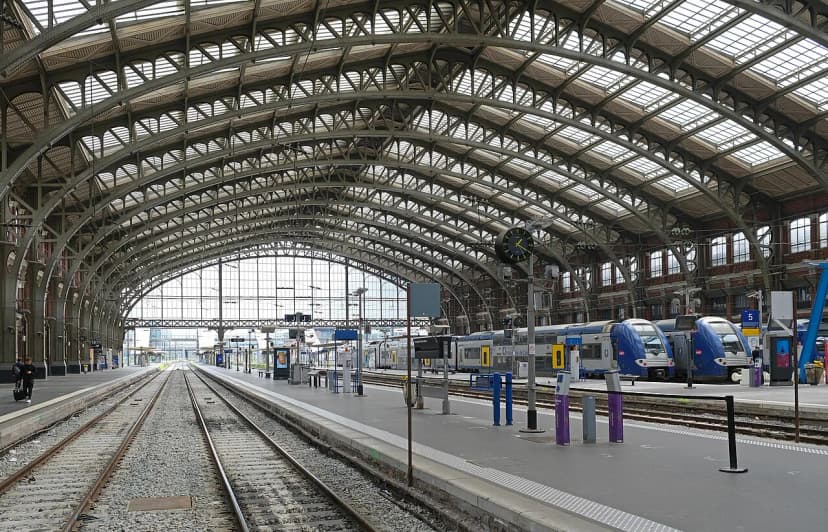
Lille functions as a major Eurostar and TGV hub, and Gare de Lille Flandres and Lille Europe are consequently the two busiest — and most closely watched for pickpocketing — points on the entire network. Treat both stations the way you would any large European rail terminal: keep bags zipped and in front of you, avoid setting luggage down unattended even for a moment, and stay alert during the crowded transfer between platforms and the metro or tram concourse. Because station-area construction tied to the network upgrade is ongoing through 2027, entrances, signage, or platform access at either station can shift with little notice, so building in a few extra minutes and following posted signage is worth it, particularly if you're catching a connecting Eurostar or TGV service. Beyond the two main stations, a handful of outer stops, including Wazemmes, Porte de Douai, and Porte d'Arras, come up often enough in local safety discussions that they're worth extra awareness, particularly after dark. For a fuller breakdown of which districts warrant extra caution, use that guide alongside this one when planning routes between your accommodation and the stations you'll pass through.
VAL platforms are enclosed and monitored, but Line 1 remains Lille's pickpocketing hotspot during rush hour, particularly at Gare de Lille Flandres and Europe. Modern infrastructure alone cannot prevent opportunistic theft in crowds—keep valuables front-facing.
Night Travel and Solo Female Safety on the Ilévia Network
Service frequency on the metro and tram naturally thins out after midnight, and the atmosphere on a late-week night car can feel noticeably different from a Friday or Saturday night run, when carriages fill with students and nightlife crowds rather than sitting near-empty. If you're navigating transit after dark, check the Ilévia app for current night-service frequency before you head out, since schedules on the modernization timeline can shift with construction work. Whether to walk a short stretch or wait for a tram or metro largely comes down to distance, lighting, and how late it is — the comparison below is a useful starting point, but local judgment on any given street still matters. Solo and first-time travelers should also read the dedicated guide to getting around Lille after dark, which covers the broader night-safety picture beyond transit alone, and the guide with advice for women traveling alone for additional route and timing considerations.
Service thins after midnight and construction continues through 2027, creating unpredictable late-night schedules. While the €420 million modernization promises better frequency by 2027, current solo night travelers must plan around present limitations, not future upgrades.
| Option | Late-Night Considerations |
|---|---|
| Walking (short, well-lit stretches) | Fine for short distances on main, well-lit streets in the center; use extra judgment on quieter side streets |
| Metro or tram (while running) | Sheltered from street-level exposure, but carriages are quieter late at night and service is less frequent |
| Taxi or rideshare | Door-to-door option many solo travelers prefer once transit frequency drops after midnight |
Common Scams and Petty Crime Prevention
The most consistent transit-related risk in Lille is pickpocketing on crowded Line 1 metro trains, particularly during rush hour when carriages are packed tightly enough that a bag or pocket can be worked without much notice. Keep valuables in a front pocket or a bag worn to the front of your body, and stay especially alert during the crush of boarding and alighting at Gare de Lille Flandres and Lille Europe. A second, more deliberate scam involves self-appointed "helpers" who hover around ticket machines offering to assist tourists — only trust staff wearing official Ilévia identification, and never hand your card, PIN, or cash to anyone who approaches you unprompted at a terminal. If someone in plain clothes claims to be a fare inspector or security officer, ask to see identification before complying, and report anything that feels off to visible station staff. For a broader rundown of tactics to watch for across the city, not just on transit, see the guide to typical scam tactics to know.
The 2025-2027 Modernization: What It Means for Riders
Lille's transit overhaul is backed by €420 million in funding, combining a €245 million loan from the European Investment Bank with a €31.5 million grant from the European Commission's Public Sector Loan Facility, part of the EU's Just Transition Mechanism. The project runs from January 2023 through December 2027, and the centerpiece is a fleet of 27 new high-capacity trams offering roughly 30% more seats and better accessibility for passengers with reduced mobility — upgrades intended to increase frequency, improve reliability, and support projected ridership growth toward 60,000 metro passengers a day by 2034. Cycling infrastructure is expanding in parallel: nearly 30 km of cycle paths have already been upgraded since 2023 out of a planned 200 km network-wide renovation, and new pedestrian-cycling bridges are being added as part of the same push toward car alternatives. Because construction and upgrade work continue through the end of 2027, expect occasional temporary station closures or rerouting on both metro and tram lines — check the Ilévia app before you travel rather than assuming a station or line is running its usual schedule. For a same-trip comparison of your options between two central points, the table below weighs safety and practicality across modes.
| Mode | Safety Profile | Best For |
|---|---|---|
| Metro (Line 1) | Enclosed, monitored VAL platforms; busiest during rush hour | Fastest way across the center during the day |
| Tram (R/T) | Well-used by commuters and students; rarely empty | Reaching Roubaix or Tourcoing |
| Taxi/rideshare | Door-to-door; useful once transit thins out late at night | Solo travelers after midnight |
| V'Lille bike-share | Safest on renovated cycle paths; less ideal after dark | Short daytime hops |
Practical Logistics and Emergency Contacts
Buy tickets through the official Ilévia app or at staffed kiosks and marked ticket machines inside stations — this is both the safest and most reliable way to pay, and it sidesteps the ticket-machine "helper" scam covered above. Carrying a validated ticket matters beyond convenience, since fare inspections happen across the network and riding without a validated ticket can result in an on-the-spot fine. A short list of French phrases can help if you need assistance: knowing how to ask for the police, describe a lost item, or call for help removes a layer of stress in an unfamiliar transit system. If you lose a personal item on the metro, tram, or bus, report it to station staff as soon as possible or check the Ilévia lost-and-found channel, and for theft or any crime, contact local police directly rather than waiting until you're back at your accommodation.
- Au secours ! — Help!
- Où est le commissariat le plus proche ? — Where is the nearest police station?
- J'ai perdu mon sac / mon téléphone. — I lost my bag / phone.
- Appelez la police, s'il vous plaît. — Call the police, please.
How to Recognize Official Ilévia Staff and Fare Inspectors
A useful safety check in Lille is knowing who is actually part of the Ilévia network before accepting help. At busy points such as Gare de Lille Flandres, Lille Europe, Rihour, and République Beaux-Arts, use ticket machines inside the station area or the Ilévia app, and be cautious if someone approaches you first near a terminal. Genuine staff or fare inspectors should be able to show official Ilévia identification; do not rely only on a confident tone, a clipboard, or someone standing close to the machines.
If a person offers to buy your ticket, asks to handle your bank card, or steers you toward an unmarked payment method, step away and find the staffed counter, a marked terminal, or visible transport personnel. During inspections on the metro, tram, or bus, keep your validated ticket or phone pass ready, but ask to see ID if the person is in plain clothes or the situation feels unclear.
Frequently Asked Questions
Is Lille's public transport safe for tourists?
Yes — in our editorial assessment, the Ilévia network's automated metro, Mongy trams, and buses are among the more secure ways to get around the city, especially compared with larger French hubs like Paris or Marseille. The main risk is pickpocketing in crowded areas, particularly Line 1 during rush hour and around Gare de Lille Flandres and Lille Europe, rather than any risk tied to the vehicles or infrastructure themselves.
What is VAL and why does it matter for metro safety?
VAL stands for Véhicule Automatique Léger, the driverless technology behind Lille's Line 1 and Line 2 metro trains, among the earliest automated metro systems built anywhere. Because the system runs without an onboard driver, platforms are enclosed and monitored end to end, and emergency intercoms let riders reach staff quickly if something goes wrong.
Which Lille transit stations should you be extra alert at?
Gare de Lille Flandres and Lille Europe see the most pickpocketing activity simply because they're the busiest — both function as major Eurostar and TGV hubs, so standard big-station bag awareness applies. A few outer stops, including Wazemmes, Porte de Douai, and Porte d'Arras, also come up often enough in local safety guidance to warrant extra attention, especially at night.
Is it safe to ride the Lille metro or tram alone at night?
Service does thin out after midnight, and a late-week night car feels noticeably quieter than a weekend one, but the network generally remains usable for solo travelers who stay alert and check current frequency on the Ilévia app before heading out. For route-specific and timing advice, pair this guide with the dedicated night-safety and solo-female-travel guides linked above.
Will the 2025-2027 modernization affect travel plans?
Possibly — the €420 million project funding 27 new trams and station upgrades runs through December 2027, so temporary closures or rerouting on the metro or tram network are possible at any given time. Check the Ilévia app shortly before you travel rather than assuming a line or station is running its normal schedule.