Lille Tourist Scams: A Guide to Staying Safe in the Capital of Flanders
Last updated June 2026, this guide walks through the Lille tourist scams that show up most often in local reports, from station-platform pickpockets to a distinctive car-key ruse rarely seen outside northern France. Lille draws a steady flow of Eurostar and TGV travelers through its two central stations, and that transit traffic — more than any citywide crime wave — is what creates most of the opportunistic theft and confidence tricks covered below. Read this alongside the broader overview on whether Lille is safe for tourists to get a full picture before you arrive.
Is Lille a High-Risk City for Tourist Scams?
Lille tourist scams tend to be low-key compared with the more aggressive street hustling reported around major landmarks in Paris or Brussels, and in our editorial assessment the city center is comfortable to explore on foot, day or night. Most incidents that visitors and residents describe locally cluster around a handful of predictable spots: the crush around the two main train stations, market-day crowds, and café terraces in Vieux Lille where a phone left face-up on a table is an easy grab. None of this makes Lille unusually dangerous — it mirrors what any well-visited European city sees during peak tourist season — but recognizing the patterns in advance is the simplest way to avoid becoming part of the statistic. Scams here rely on distraction, urgency, and a plausible story rather than confrontation, which is exactly why they work on distracted travelers fresh off a train.

The Locked-Out Car and Train Ticket Scam
One ruse shows up in local reports more than any other and appears to be fairly specific to Lille and the surrounding region: a stranger approaches with an urgent story about being locked out of a car, often framed as a work trip gone wrong, and needing a small amount of cash to buy a train ticket to retrieve a spare key from a relative or colleague in another town. The pitch usually includes a promise to repay the money by bank transfer, sometimes with a phone number or an ID card offered as reassurance. The details shift from telling to telling, but the core mechanics stay the same: urgency, a plausible transit-related excuse, and a request for cash rather than card payment. Treat any stranger asking for money toward a train ticket as a scam, regardless of how convincing the story sounds. Decline politely, keep walking, and suggest the person approach station staff or the police rather than a passerby — legitimate emergencies are handled through official channels, not cash from tourists.

Common Street Scams in Lille Central
Beyond the car-key ruse, a handful of classic confidence tricks appear around Lille's main squares, particularly Grand Place and the surrounding pedestrian streets of Vieux Lille. These rely on distraction and social pressure rather than force, which makes them easy to sidestep once the setup is familiar. Solo travelers are sometimes targeted more directly because a lone visitor is quicker to isolate from a crowd or a group of friends; the guidance in solo female travel safety in Lille covers how to handle unwanted approaches and read a situation in more detail.
- Petition or clipboard scam: a group asks you to sign a petition for a cause such as deaf-mute charity support, then presses for a cash donation or uses the moment as cover to pick a pocket.
- Found ring trick: someone 'finds' a ring or piece of jewelry on the ground near you and offers to sell it cheap, or claims you dropped it to start a conversation that ends in a request for money.
- Aggressive panhandling: a small number of individuals around the main squares and station approaches ask repeatedly for change, sometimes following for a short distance; a firm decline and continued walking ends most encounters.
Pickpocketing Hotspots: Stations, Metro, and Market Crowds
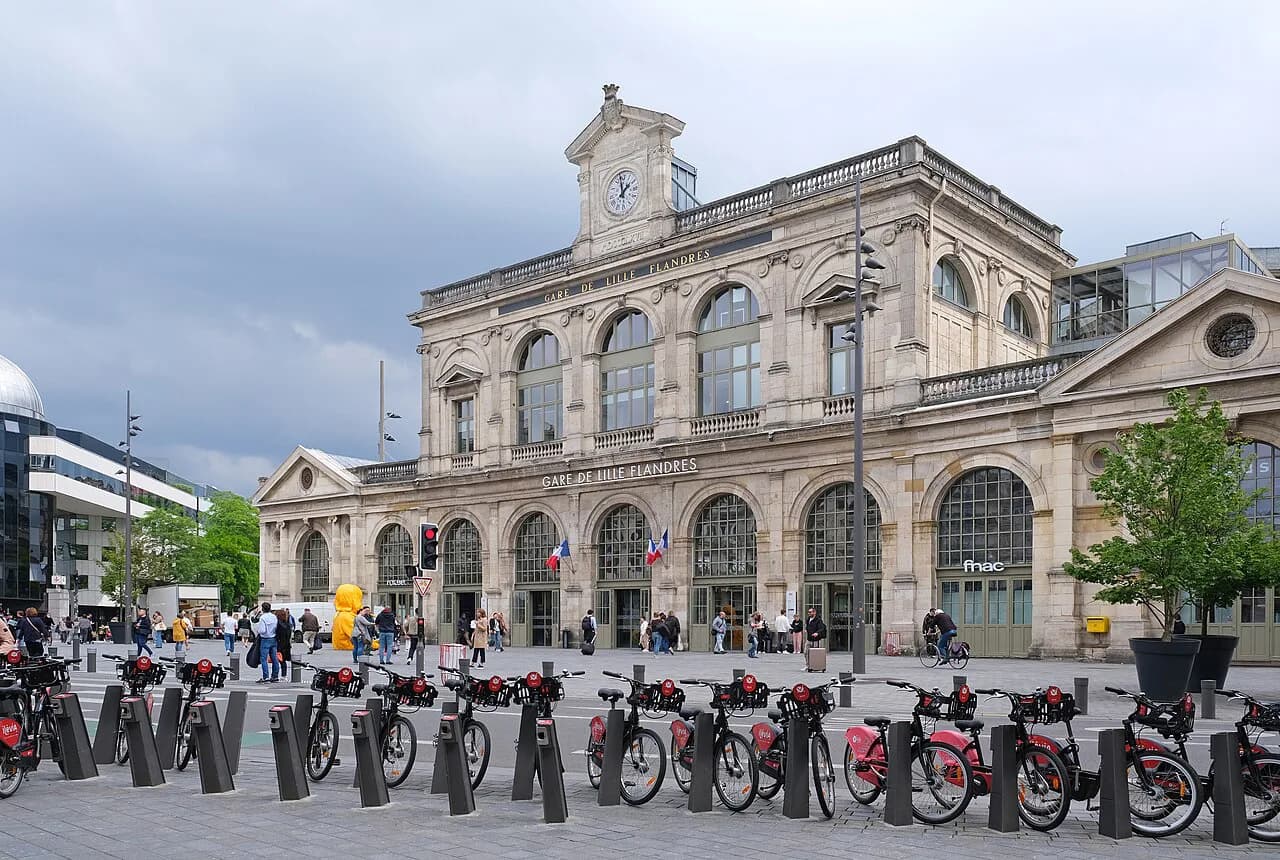
Gare de Lille Flandres and Gare de Lille Europe are the two busiest pressure points for pickpocketing in the city, simply because they concentrate distracted travelers, luggage, and ticket queues in one place. The crush around ticket kiosks and departure boards is the moment thieves count on: attention on a screen or a phone, hands full of bags, and a crowd dense enough to disguise a hand slipping into a pocket or an open backpack. The weekly market at Wazemmes creates a similar crush at ground level, where stalls packed tightly together slow foot traffic to a shuffle and make an unzipped bag an easy target. For a rundown of which neighborhoods warrant extra caution beyond these two hotspots, see areas of Lille to avoid. On the metro and tram network, keep bags zipped and in front of you through the busiest interchange stops, and check the wider public transport safety in Lille guidance before relying on the network for late-night connections.
The Broken Ticket Machine and Helpful Stranger Ruse
A second pattern plays out specifically at ticket machines, both inside the train stations and at metro and tram stops operated by Ilevia, Lille's public transport authority. A stranger positions themselves near a machine that looks out of order, or simply hovers close by, and offers to 'help' a visitor who is struggling with the interface — particularly English-speaking travelers who look unfamiliar with the French-language menus. The help either ends with a request for cash to cover the 'transaction,' or the stranger uses the moment of distraction to swap or pocket a card or a handful of coins. International arrivals via Eurostar at Gare de Lille Europe are a common target for this version, since jet-lagged travelers carrying unfamiliar currency are quicker to accept an offer of help. Buy tickets only at staffed counters or official Ilevia machines, and treat any unsolicited offer of assistance at a ticket machine as a reason to step back, not lean in.
Both the locked-car and ticket-machine scams exploit transit situations and ask for immediate cash. Legitimate help—whether for genuine emergencies or machine difficulties—always directs you to staffed counters or official channels rather than requesting cash directly from a stranger.
How to Tell Genuine Help from a Scam
Not every approach in Lille is a con — station staff, police, and genuinely helpful locals exist alongside the small number of people working an angle. The difference usually comes down to a few consistent signals worth checking before you respond, especially in the seconds right after someone starts talking to you near a station or a busy square.
High-traffic locations—stations, markets, and Grand Place—share the same vulnerability. Each creates crowd distraction that enables the same two-part scam formula: pressure for immediate cash instead of directing you to official help.
| Signal | Likely genuine | Likely a scam |
|---|---|---|
| Sense of urgency | Calm, willing to let you check information first | High pressure, rushes you before you can think it through |
| Physical distance | Keeps a normal distance and respects your space | Crowds close, blocks your path, or touches your arm or bag |
| Payment method requested | Directs you to an official machine or staffed counter | Asks you to hand over cash directly to them |
| Story details | Consistent and checkable via signage or a uniform | Vague, built around a sudden emergency involving a train or a car |
| Follow-up | Comfortable with you asking staff or police to confirm | Discourages you from asking anyone else for help |
Evening Risk: Grand Place After Dark and the Christmas Market
Lille's evening scene around Grand Place, along with the Christmas market that runs through the winter season, draws large crowds into a compact area — exactly the kind of density that favors distraction theft over anything more aggressive. Stalls, mulled wine queues, and photo spots all create natural bottlenecks where a phone left on a café terrace or a bag left unzipped is an easy target. The city's general night-time profile is calmer than the daytime crush around the stations, but the same basic rules apply: keep valuables zipped and close, and avoid flashing a phone or wallet in a tightly packed queue. The dedicated guidance on Lille safety at night covers which streets stay busy late and which quiet down earlier in the evening.
What to Do if You Are Scammed in Lille
If a scam does succeed, or you simply want to report a suspicious approach, the Commissariat Central de Lille handles police reports for the city center and can issue the paperwork needed for insurance or bank claims. In an emergency, dial 17 for police anywhere in France, or 112 for the general European emergency number, which also reaches English-speaking operators in major tourist areas. The Préfecture du Nord and the Lille Office de Tourisme are useful secondary contacts for visitors who want official guidance or need to flag a scam pattern for other travelers, particularly around the train stations. Acting quickly matters most for anything involving a stolen card or phone: cancel cards immediately and file a report before leaving the station area, since most banks require a police reference number for a fraud claim.
Station Layout: Where to Be Most Alert
The easiest place to lose awareness is the short corridor of movement between Gare de Lille Flandres, Gare de Lille Europe, and the Euralille shopping centre. Gare de Lille Flandres opens directly toward the city centre, with busy flows around the main concourse, ticket machines, departure boards, and exits toward Place des Buisses and Rue Faidherbe. This is where a “helper” can step in beside a machine or where a bag can be nudged while you are checking a platform number.
Gare de Lille Europe feels more modern and open, but Eurostar, TGV, and long-distance arrivals still create a predictable target: tired travelers pausing with luggage, phones, passports, and wallets all visible at once. Move away from escalators, station doors, and machine queues before checking directions. If you need to buy tickets or sort a problem, use an official counter or machine yourself, then put cards and phones away before leaving the station area.
Frequently Asked Questions
Is Lille safe for tourists in 2026?
Yes, in our editorial assessment Lille remains one of the calmer major cities in northern France for visitors, with most safety concerns centered on opportunistic theft rather than violent crime. The scams covered in this guide — the locked-car ruse, petition scams, and station pickpocketing — are avoidable with basic vigilance and represent the bulk of what tourists actually report.
What is the most common scam at Gare de Lille Flandres?
The crush around ticket machines and departure boards is where most pickpocketing happens, since travelers are distracted by luggage, screens, and queues. The locked-car and train-ticket ruse also frequently starts near station exits, where a stranger can approach a visitor who looks unfamiliar with the area.
Should you give money to someone who says they are locked out of their car?
No. Decline politely and keep moving, even if the story sounds specific or urgent. Genuine emergencies are handled by station staff or police, not by asking a passing tourist for cash toward a train ticket.
Are pickpockets common in the Wazemmes market?
The market's tightly packed stalls create the kind of slow-moving crowd that pickpockets favor, so keep bags zipped and positioned in front of you, and avoid carrying a wallet in a back pocket while browsing.
What number should you call if you are scammed in Lille?
Dial 17 for the police anywhere in France, or 112 for the general European emergency number. For a non-urgent report, the Commissariat Central de Lille handles paperwork for incidents in the city center.
Are 'friendship bracelet' scams common in Lille like they are in Paris?
No, that specific approach is rare in Lille compared with tourist-heavy landmarks in Paris. The more common version locally involves ticket machines and station exits rather than bracelets tied onto a wrist near a monument.


